


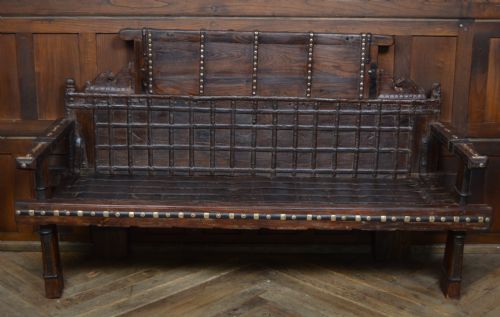


Traditional Wooden Daybed
These traditional wooden daybed pieces span centuries of global craftsmanship, offering versatile seating and sleeping quarters shaped from rich hardwoods.

Traditional Wooden Daybed
A traditional wooden daybed combines the functions of a seat and a bed, appearing across multiple periods including the 18th century, Regency, and Victorian eras. Buyers seeking a traditional wooden daybed will encounter various forms ranging from Chinese marriage beds and opium beds to Swedish settle benches and English mahogany day beds.
The selections on this page demonstrate diverse regional origins such as Chinese Qing Dynasty workshops, French chateaus, and Indian vernacular makers. Forms vary widely from carved teak floor seats and bullock cart benches to mahogany scroll-end sofas and elm sleeper settles.
Most pieces date from the 19th century, though examples stretch from 1750 through to the early decades of the 20th century. Structural designs incorporate four-poster frames, enclosed marriage beds, open benches, and simpler pine child's beds.
Materials and construction
Construction relies heavily on dense timbers including mahogany, teak, elm, oak, pine, and exotic hardwoods such as huanghuali and ebony. Joinery techniques connect heavy wooden frames without modern fasteners, supporting intricate carved details and structural longevity.
Surface treatments range from clear lacquers and red painted finishes to ebonised details and exposed natural wood grains. Metal elements such as brass occasionally appear on fittings, while upholstered fabric sections complement the primary wooden structures.
Several pieces are listed under unexpected names like stargazers chairs and bullock cart benches, proving that ancestors knew how to nap in transit.
Judging quality in traditional wooden daybeds
Quality rests in the integrity of the timber selection and the depth of the carving. Dense woods like huanghuali and well-figured mahogany hold crisp details in carved panels much better than softer pine or secondary timbers.
The preservation of original surface finishes dictates the desirability of a piece. Retained red lacquer, period paintwork, or patinated natural hardwood surfaces demonstrate a higher standard of historical survival than stripped or heavily restored alternatives.
The Traditional Wooden Daybed Glossary
- Daybed
- A piece of furniture serving as both a sofa and a bed. These versatile items appear in various historical styles from Chinese opium beds to Regency scroll-end sofas.
- Settle
- A wooden bench with a high back, solid arms, and often a storage box beneath the seat. Early examples served to block draughts in traditional interiors.
- Lacquer
- A protective and decorative coating derived from tree sap, applied in multiple layers. Red lacquered finishes are particularly common on traditional Chinese marriage and opium beds.
- Regency
- An English stylistic period spanning the early 19th century. Pieces from this era often feature classical lines inspired by ancient Greece and Rome.
Traditional Wooden Daybed: Frequently Asked Questions
What is a traditional wooden daybed used for?
These pieces function as dual-purpose furniture for daytime lounging and nighttime sleeping. Historically, forms like opium beds or settle benches served social gatherings as well as resting.
Today, they fit easily into living rooms, studies, or guest rooms as statement seating that doubles as an auxiliary bed.
How do I care for antique wooden daybeds?
Maintain the timber by keeping the furniture away from direct heat sources and sudden temperature fluctuations. Regular dusting with a dry cloth protects the polished surfaces and historical finishes.
Avoid using harsh chemical polishes that can degrade original lacquers or painted surfaces over time.
How can I tell the period of a daybed?
Dating relies on examining the timber species, joinery methods, and stylistic motifs present in the carving. Regency pieces display classical proportions, while 18th-century settles show heavier, utilitarian construction.
Regional characteristics also help, such as Chinese Qing Dynasty framing techniques versus European painted Gustavian or English country styles.
Where were these daybeds originally made?
The pieces originate from diverse workshops across Britain, Sweden, France, China, and India. Each region utilised local timbers and traditional vernacular designs suited to domestic life.
Chinese examples often feature intricate relief carvings and rich lacquers, whereas European iterations reflect regional neoclassical or vernacular tastes.