


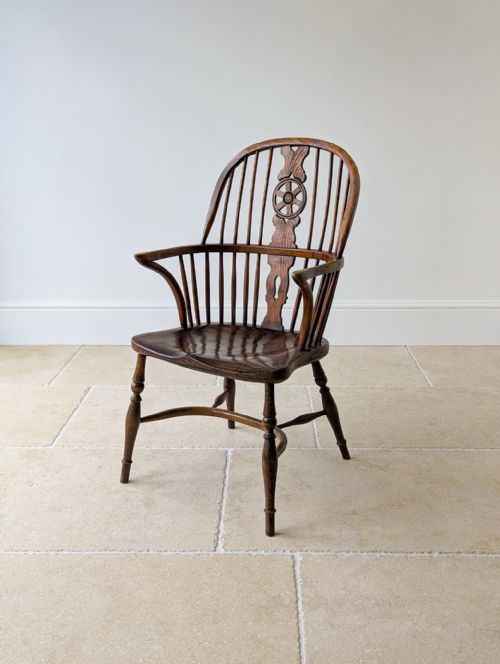
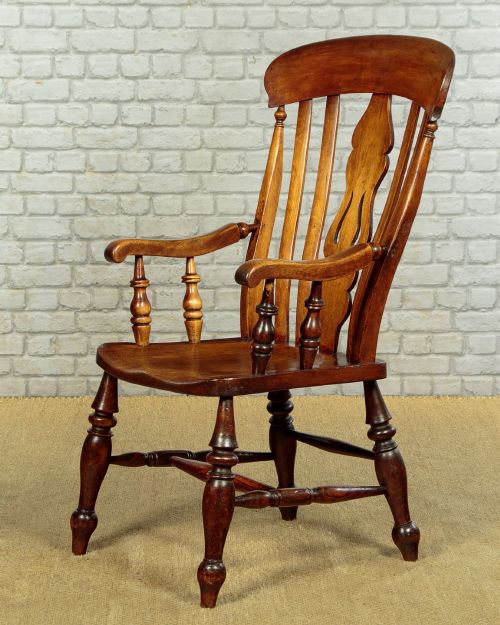
Traditional Windsor Carver Chair
A traditional windsor carver chair offers sturdy vernacular comfort built from native English timbers across the eighteenth and nineteenth centuries.
Traditional Windsor Carver Chair
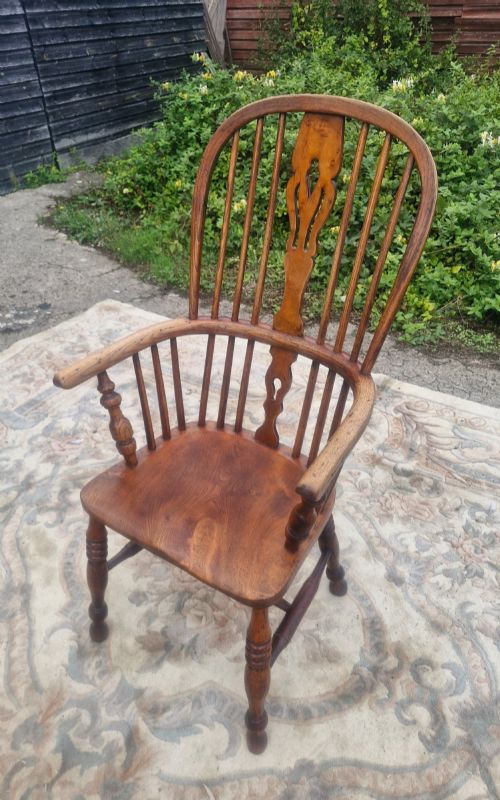
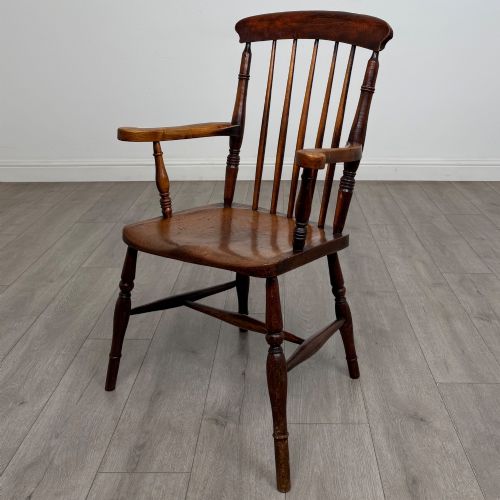
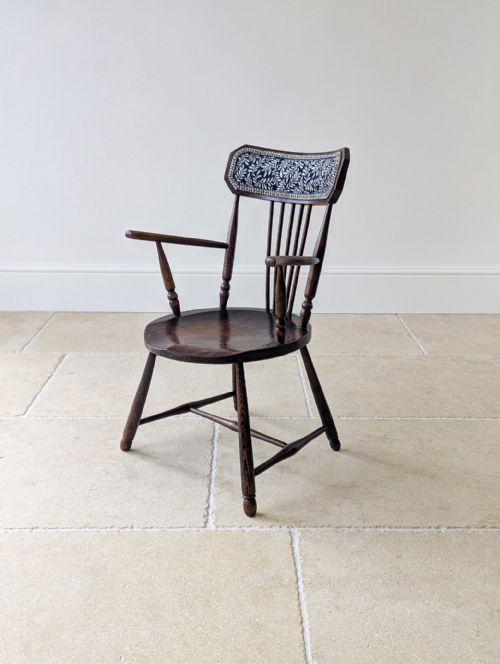
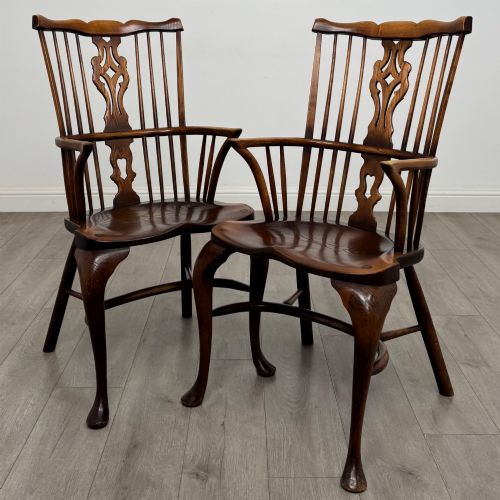
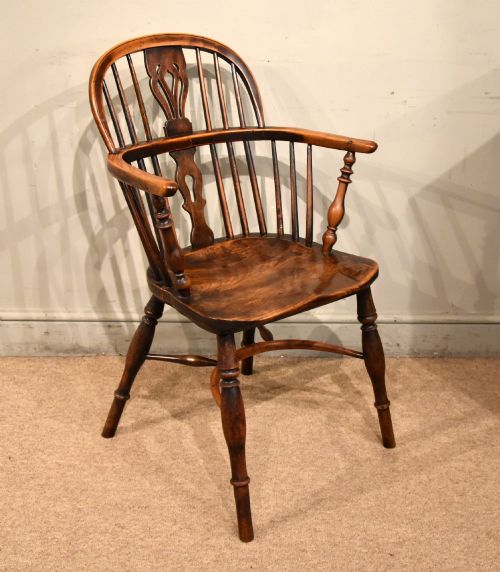
A traditional windsor carver chair is a distinct wooden armchair defined by a heavy saddled seat into which the legs and back spindles are wedged directly. You will find these pieces spanning the Georgian, Regency and Victorian eras, shaped by regional English vernacular traditions.
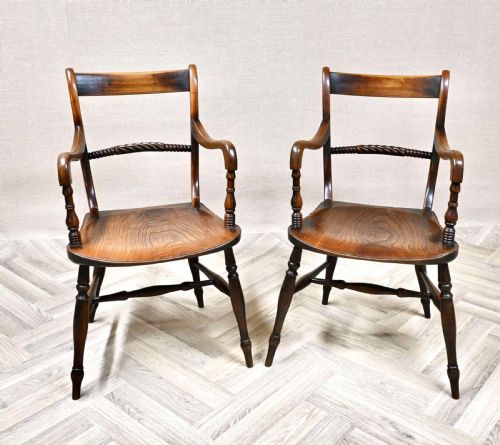
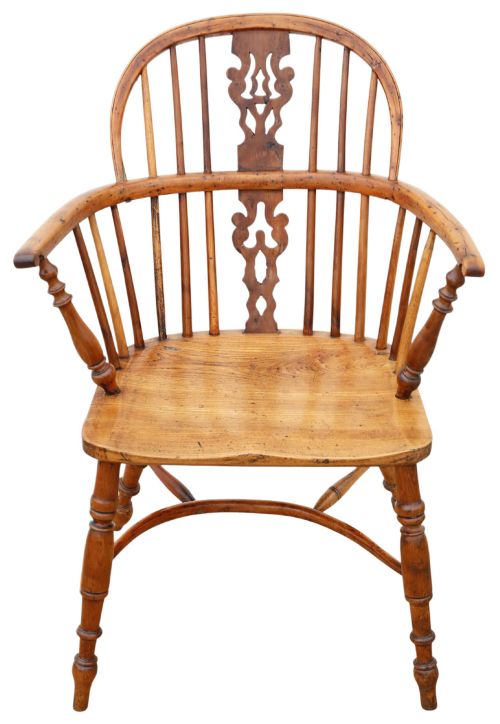
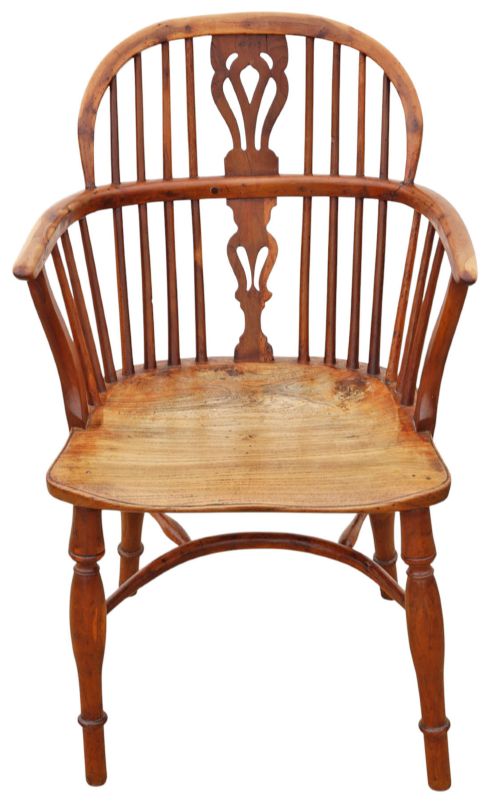
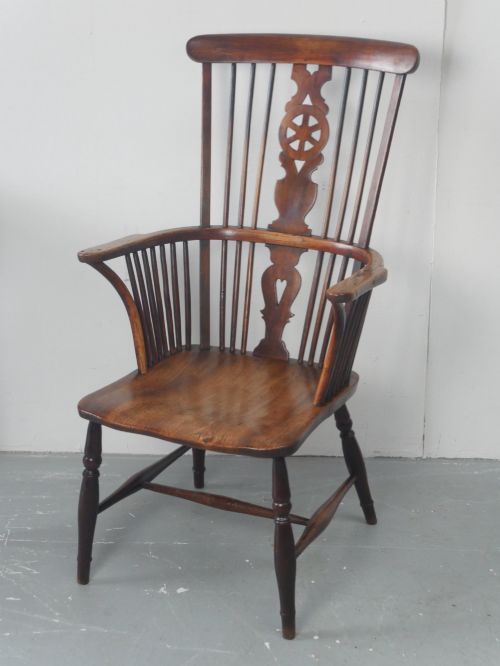
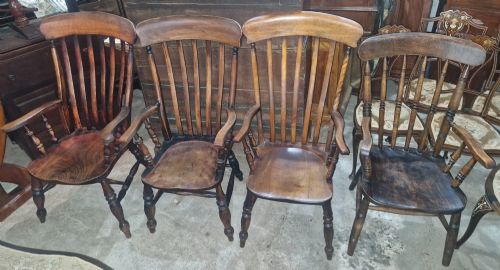
The selections on this page concentrate heavily on nineteenth-century examples alongside eighteenth-century Georgian pieces. Common regional variations include wheelbacks, comb backs, bar backs and low-back or high-back farmhouse forms intended for everyday domestic use.
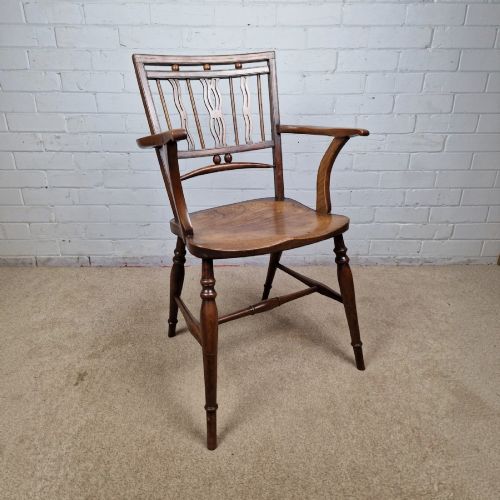
Makers ranged across English counties from Nottinghamshire to Lincolnshire and Mendlesham, building sturdy armchairs for country houses and kitchens. These pieces serve equally as dining carvers or fireside armchairs.
Timbers and construction methods
Makers constructed a traditional windsor carver chair by combining contrasting native woods chosen for specific structural strengths. Elm typically provided the thick, deeply dished solid seat because its interlocking grain resisted splitting under weight.
Bends and spindles relied on resilient timbers such as ash, yew, beech and fruitwood that could be steamed and shaped into hoops, bows and arm-bows. Hardwoods like oak and birch frequently formed the turned legs and underframe stretchers.
Current listings feature traditional windsor carver chair examples spanning the Georgian, Regency, and Victorian periods, constructed from elm, ash, yew, beech, and fruitwood.
Judging quality and timber selection
Quality in a traditional windsor carver chair rests upon the choice of timber and the depth of the sculpted seat. Figured yew wood combined with richly grained elm commands greater regard than simpler beech and ash combinations.
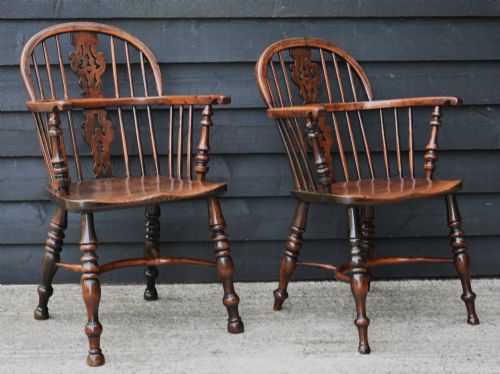
Proportion and retention of original components dictate value, as does the complexity of the back design, such as an intricate wheelback or a crinoline stretcher underneath.
The Traditional Windsor Carver Chair Glossary
- Carver
- An armchair designed to match a set of dining chairs, typically featuring open arms and a wider seat. These pieces often sat at the head of a table.
- Saddled seat
- A wooden seat base carved into a concave, ergonomic shape resembling a horse saddle. This technique provided comfort before the widespread use of upholstered cushions.
- Crinoline stretcher
- An arched underframe connecting the legs of a chair in a curved loop resembling a hoop skirt. This structural addition strengthens the lower legs.
- Comb back
- A chair back style featuring a low hoop surmounted by a small headrest rail supported by vertical spindles. The shape resembles an eighteenth-century hair comb.
- Wheelback
- A Windsor chair back design incorporating a pierced wooden splat carved in the shape of a spoked carriage wheel. This motif gained popularity during the Georgian period.
- Vernacular
- Localized furniture design rooted in regional craftsmanship rather than formal London pattern books. These pieces utilised readily available local materials and traditional methods.
Traditional Windsor Carver Chair: Frequently Asked Questions
What is a traditional windsor carver chair?
A traditional windsor carver chair is an armchair characterised by a thick solid wooden seat into which independent legs and back spindles are tenoned directly.
These pieces developed through English country and provincial workshops, utilising native timbers like elm, ash, and yew to create sturdy seating for domestic kitchens and dining rooms.
How do I date a traditional windsor carver chair?
Dating relies on examining the timber combinations, tool marks, and stylistic indicators such as comb backs, wheelbacks, or crinoline stretchers. Eighteenth-century Georgian examples often display deep yew wood figuring and slender turned components.
Victorian and later nineteenth-century versions frequently employ beech and elm with heavier proportions and standardised factory or regional workshop turnery.
Where were these chairs made?
These armchairs were produced across various English rural counties and regional centres, including Nottinghamshire, Lincolnshire, and Mendlesham. Local bodgers and village chairmakers supplied timber components to larger assembly workshops.
Regional preferences heavily influenced whether a maker built a low back, high back, or bar back variant.
Are these chairs comfortable for daily use?
The saddle-shaped wooden seats are surprisingly ergonomic, carved to distribute weight naturally without needing upholstery. They provide sturdy support when used as desk chairs, fireside seats, or carvers at a dining table.
Adding a loose sheepskin or linen cushion can increase softness for prolonged sitting.