
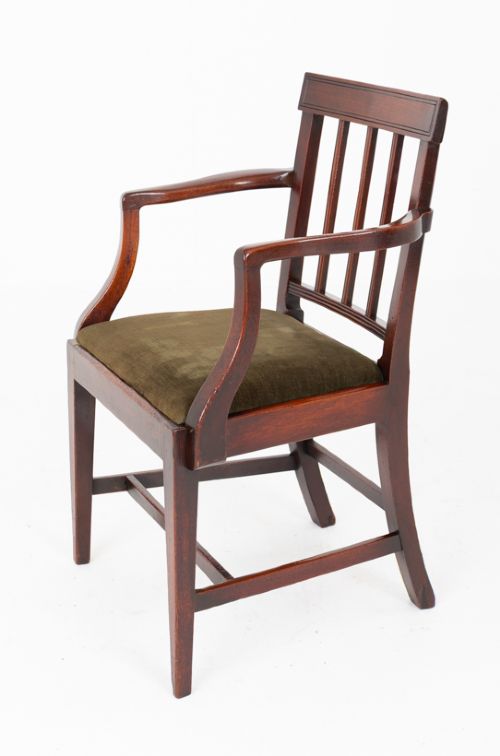
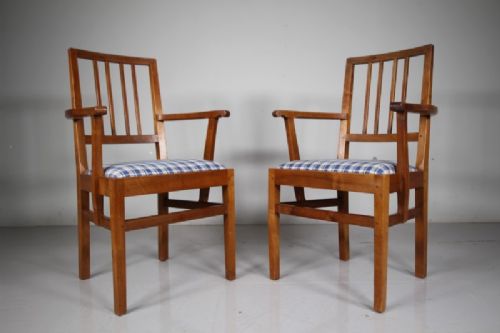
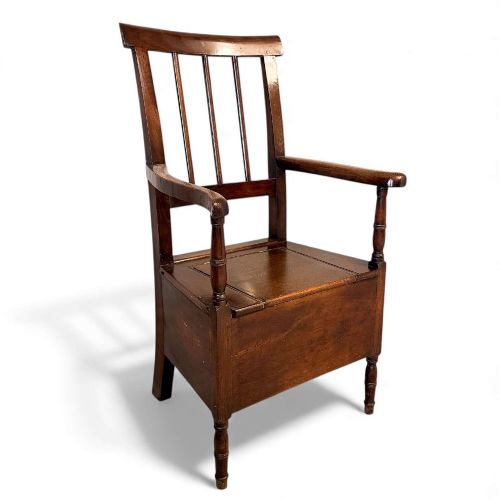
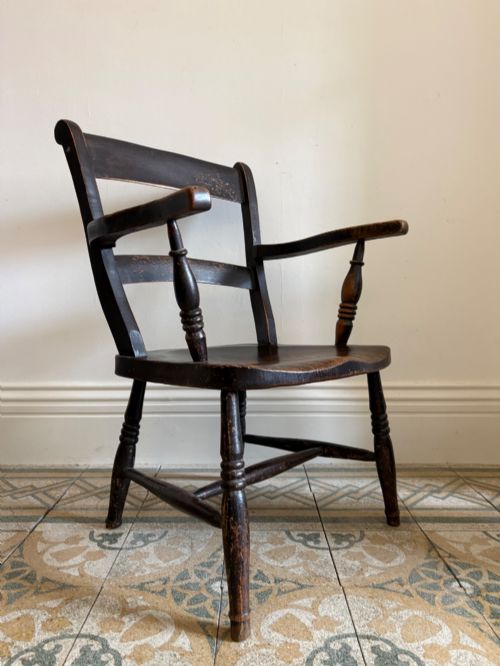
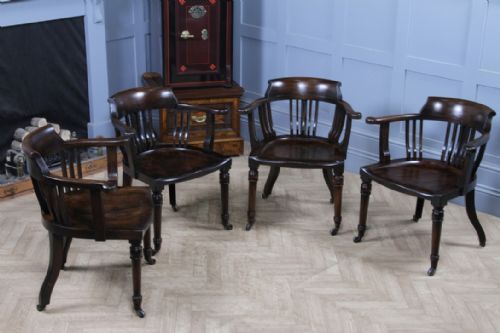


Slat Back Wooden Armchair
A slat back wooden armchair offers simple structural honesty and sturdy seating, bringing tactile warmth and straightforward historic utility to any room.
Slat Back Wooden Armchair
A slat back wooden armchair relies on vertical wooden slats for back support, drawing from robust vernacular and formal traditions. When searching for a slat back wooden armchair, buyers encounter various forms including office swivel chairs, Windsor variants, country fireside seats, and formal Georgian or Victorian carvers.
The pieces span centuries of production, originating from rural workshops and urban cabinet makers alike. Examples range from early Georgian country elm pieces and Welsh oak armchairs to Edwardian oak desk chairs and later 1930s designs.
Regional variations appear across domestic output, utilising local timbers and traditional joinery to produce sturdy seating suited for daily domestic or professional use. Buyers find both simple utilitarian seating and more decorative inlaid or upholstered variants.
Materials and Construction
These chairs utilise a range of native hardwoods, prominently featuring oak, elm, mahogany, ash, and beech, often combined within a single piece for structural strength and contrasting grain. Seat boards typically employ solid elm or oak, while uprights, legs, and back slats use complementary timbers selected for resilience and flexibility.
Construction techniques rely on traditional joinery such as mortise and tenon joints, steam bending for curved components, and turned spindle work. Swivel office variants incorporate early mechanical turning mechanisms and brass hardware to allow movement.
Surface treatments vary from polished mahogany finishes to ebonised surfaces and waxed natural oak or elm. Upholstery, where present, utilises drop-in pads covered in leather, fabric, or tapestry.
Listings feature periods spanning from the late seventeenth century through the Georgian, Victorian, and Edwardian eras up to the 1930s.
Assessing Merit
The distinction between standard examples and superior pieces rests upon timber selection, grain figure, and the crispness of turning on spindles and legs. Master makers and notable workshops achieve harmonious proportions where the rake of the back and the curve of the arms offer ergonomic comfort alongside visual balance.
Structural integrity depends on the preservation of original joints and the minimal intervention of later repairs or replaced components. Retaining the original timber surface patination without excessive sanding or stripping preserves the historical depth of the object.
Edward Barnsley·James Shoolbread·E W Godwin
The Slat Back Wooden Armchair Glossary
- Slat back
- A chair back constructed from flat wooden slats arranged vertically or horizontally between the crest rail and seat. This design provides robust lumbar support and straightforward construction.
- Windsor chair
- A chair built with a solid wooden seat into which the legs, back spindles, and arms are separately inserted. This form often incorporates steam-bent components for the back bow.
- Carver chair
- An armchair, typically designed as part of a dining set or for use at a desk, featuring open arms. The term distinguishes the larger seated chair from smaller side chairs.
- Vernacular furniture
- Items made by local craftspeople using regional traditions and readily available materials rather than following strict high-style London fashions. These pieces emphasise utility and local character.
- Commode chair
- A seating item constructed with a concealed cavity beneath the seat for a chamber pot. They frequently share the enclosed or semi-enclosed structural forms of standard armchairs.
Slat Back Wooden Armchair: Frequently Asked Questions
What is a slat back armchair?
A slat back armchair is a wooden seat featuring distinct vertical wooden slats forming the backrest. These chairs range from simple rural workshop creations to formal parlour and office seating.
They combine practical back support with visible joinery, utilising native hardwoods like oak, elm, and ash to achieve structural longevity.
How do I date an antique wooden armchair?
Dating relies on observing timber choices, tool marks, joinery methods, and the overarching style of the piece. Georgian and Victorian examples display different turning profiles and construction tolerances.
Secondary woods, nail types, and wear patterns around the foot and armrests further help narrow down the manufacturing period.
Were these chairs used at desks?
Many slat back chairs served specific working purposes, particularly in offices and libraries during the Victorian and Edwardian eras. Swivel mechanisms, castors, and wider armrests were added to accommodate prolonged daily use.
Office and desk variants often feature revolving bases or sturdy ash and elm frames built to withstand heavy daily wear.
How should I care for antique wood?
Maintain antique wooden chairs by keeping them away from direct heat sources and rapid humidity fluctuations. Regular dusting with a soft, dry cloth preserves the finish.
Occasional application of appropriate microcrystalline wax helps protect the surface patination without building up heavy residues.