
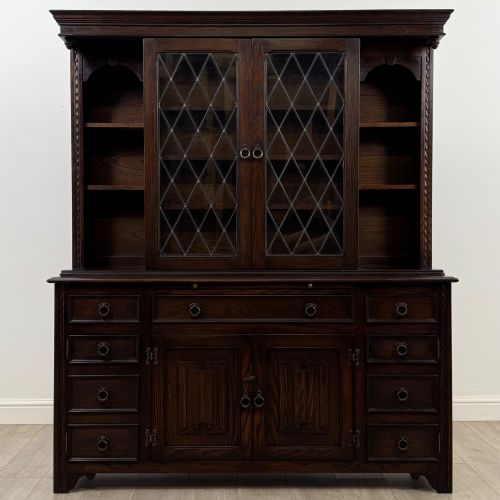

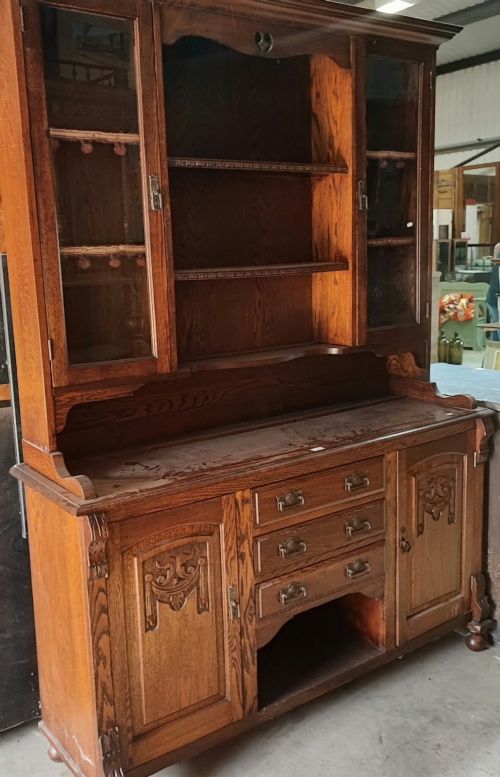
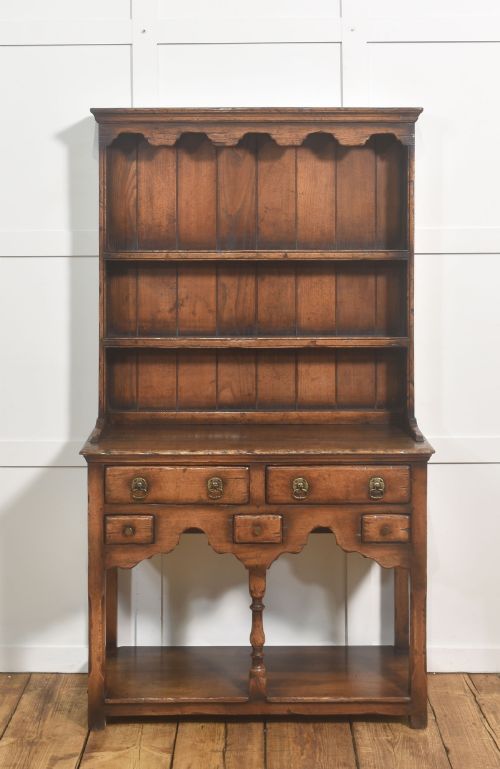
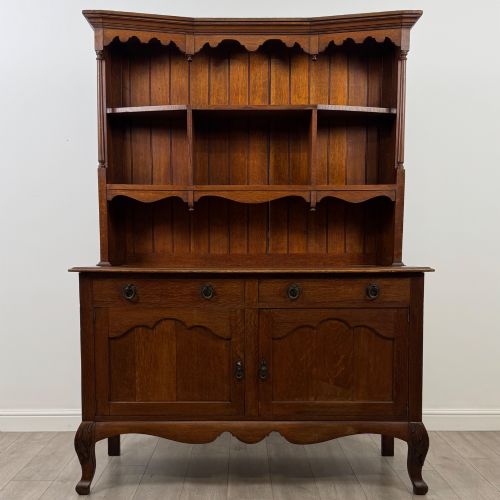



Traditional Welsh Oak Hutch
A traditional welsh oak hutch brings solid regional character and open shelving into a room.
Traditional Welsh Oak Hutch
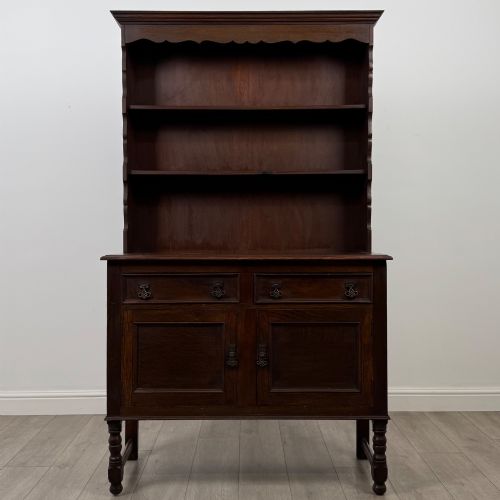
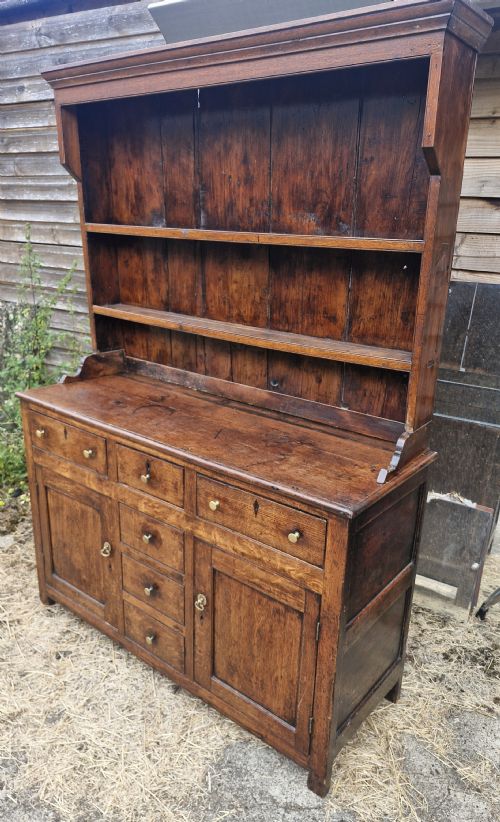
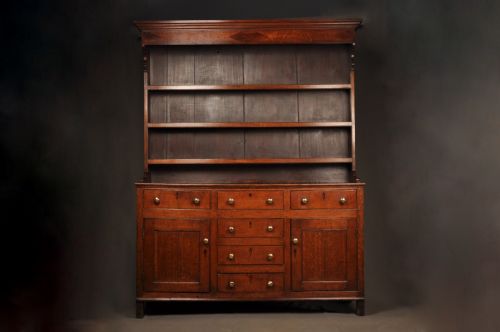
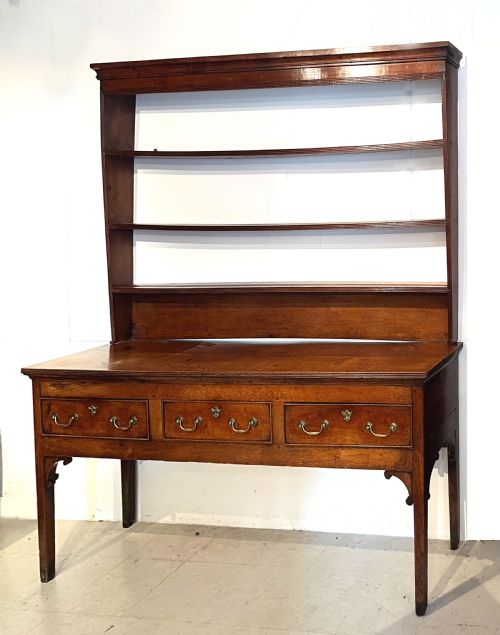
A traditional welsh oak hutch is a sturdy kitchen or dining furniture piece, commonly known as a Welsh dresser, combining base storage with an upper plate rack. You will regularly find 18th-century and 19th-century examples alongside later Georgian vernacular and Victorian country variations.
The form typically pairs a set of base drawers or cupboards with graduated shelving above for displaying crockery. Pieces originate from periods spanning the Georgian era through to the Edwardian period and the early twentieth century.
How they were made
Cabinet makers built these pieces primarily using solid oak, occasionally incorporating secondary timbers such as elm, mahogany, or walnut. Brass and iron hardware provided functional handles, hinges, and escutcheons.
Construction methods rely on traditional joinery techniques, uniting heavy timber frames with pegged joints, panelled doors, and carved details on regional styles like Jacobean revival or Snowdonia pieces.
Selected pieces include carved kings and tiger oak finishes, proving that country cabinet makers enjoyed adding personality to everyday kitchen storage.
What varies in quality
Quality rests on the integrity of the timber selection, the crispness of hand-carved details, and whether upper plate racks remain original to the base. Pieces retaining original brass fittings and untouched surface patination command stronger interest.
Construction depth also distinguishes standard vernacular workshops from finer cabinet work, evident in drawer linings, backboards, and the balance of proportions between the upper display section and lower cupboards.
The Traditional Welsh Oak Hutch Glossary
- Plate rack
- The upper open shelving structure attached to a dresser for displaying plates and dishes. This component is sometimes called a delph rack.
- Pot-board
- A low open lower shelf fitted between the legs of an early dresser, originally designed for storing heavy pots and pans.
- Breakfront
- A cabinet design where the central section projects forward from the flanking outer sections.
- Vernacular
- Furniture built by local country craftsmen following regional traditions rather than strict London academic styles.
Traditional Welsh Oak Hutch: Frequently Asked Questions
What is a Welsh hutch used for?
These pieces served as the central storage and display unit in farmhouse kitchens, holding everyday crockery on the open upper shelves while keeping food supplies and utensils securely locked away in the lower cupboards and drawers.
Today, they function well in dining rooms or modern kitchens as practical storage for tableware and a display surface for ceramics.
How do I date an oak hutch?
Dating relies on observing construction methods, timber patination, and stylistic details such as hardware and mouldings. Eighteenth-century pieces often show hand-planed surfaces and pegged joinery, while Victorian and Edwardian examples may feature machine-sawn timber and different drawer construction.
Regional variations and carved motifs like those found on Snowdonia or Jacobean revival pieces also provide clues to the period of manufacture.
Are all these hutches from Wales?
While the form originates from Welsh farmhouse traditions, the listings include English country pieces, Georgian vernacular designs, and later revival styles built across various regions.
Makers adopted the functional layout of base storage and plate racks, adapting local timber choices like oak, elm, and walnut to suit prevailing tastes.
How should I care for antique oak?
Keep wooden furniture away from direct heat sources and sudden temperature shifts to prevent the timber from splitting or warping. Dust gently with a dry cloth and occasionally apply a traditional beeswax to maintain the finish.
Avoid modern silicone polishes, as they build up residue and can damage the historical surface patination over time.