
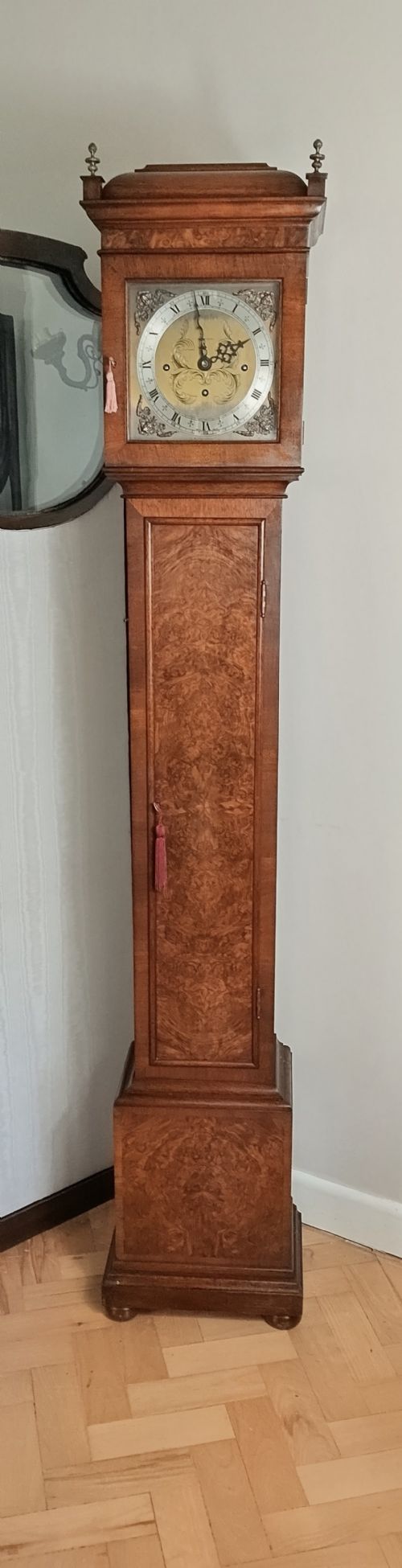
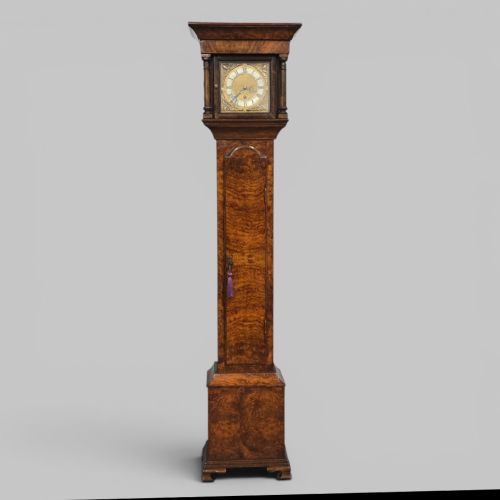


Traditional Walnut Grandfather Clock
A traditional walnut grandfather clock anchors a room with its height and the steady tick of an 18th-century movement.
Traditional Walnut Grandfather Clock
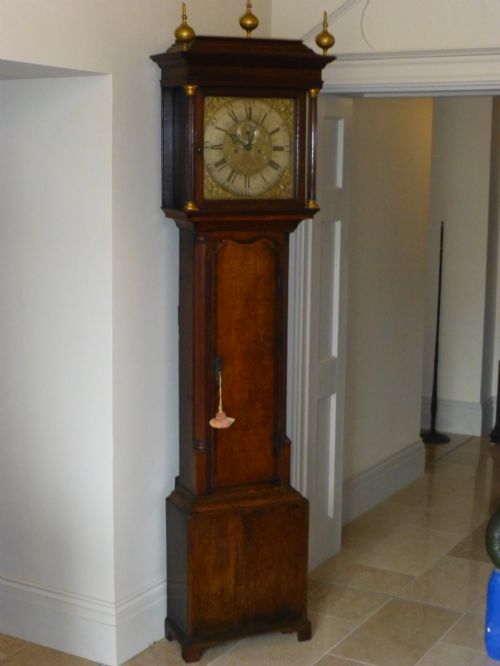
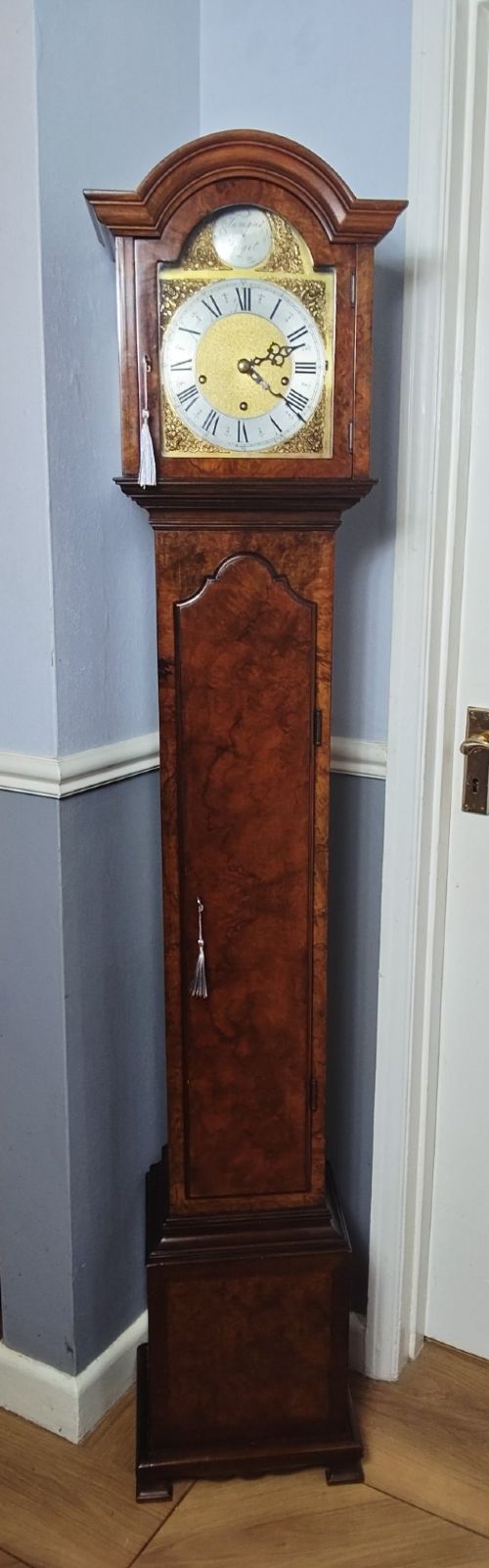
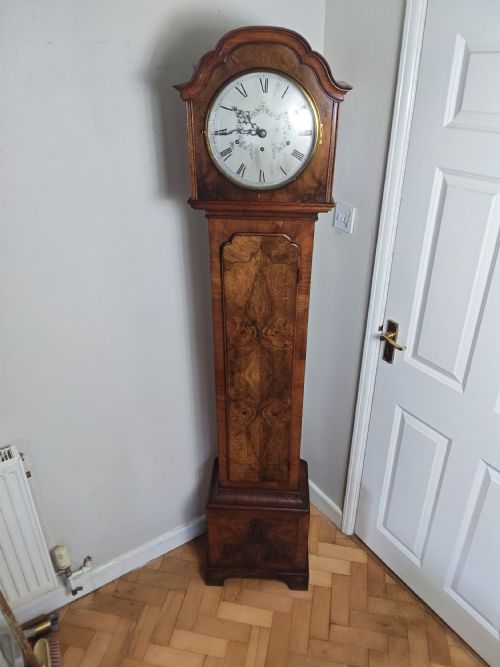
A traditional walnut grandfather clock is a tall floor-standing timekeeper housed in a wooden case, often referred to in the records as a longcase clock or long case clock. These pieces range from early examples made in the 1700s and the Georgian period to revival pieces produced in the twentieth century.
Buyers will encounter variations in scale, including smaller grandmother and granddaughter clocks alongside full-sized versions. The listings show forms spanning 17th-century styles, Queen Anne designs, and later 20th-century musical iterations.
How they were made
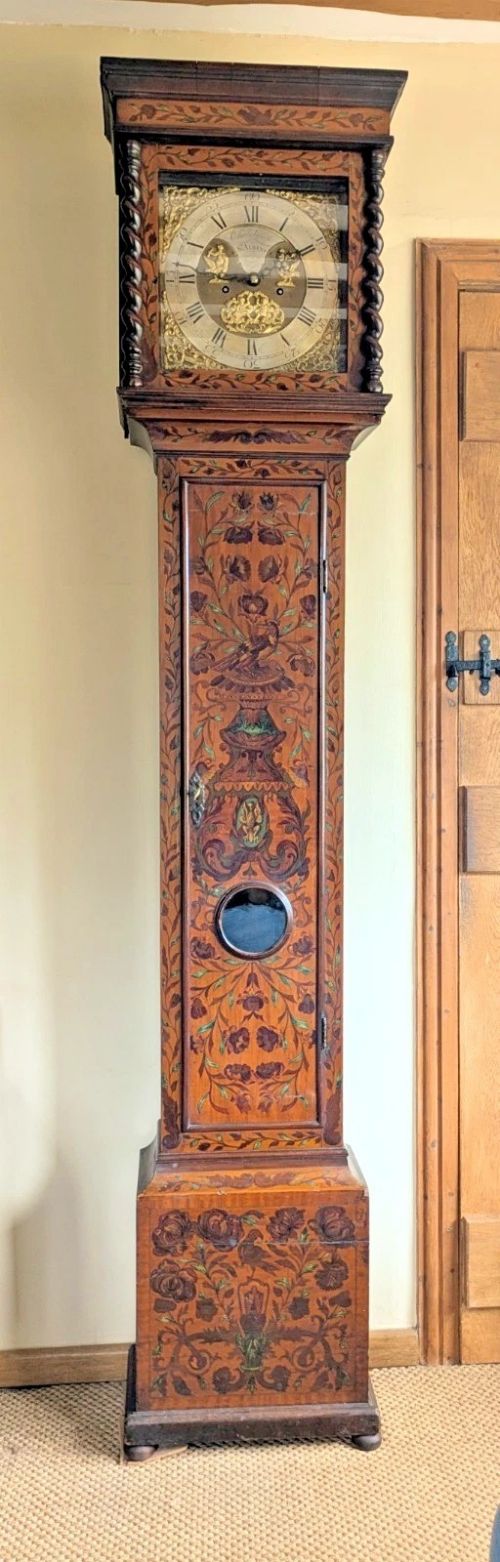
Casework relies on walnut timbers, frequently enhanced by burr walnut veneers, figured grain patterns, or marquetry inlay. Oak and mahogany also appear in subsidiary parts or secondary timbers within the construction.
Dials incorporate brass for chapter rings and faceplates, paired with glass to protect the hands and movement. Clockwork mechanisms utilise metal components driven by weights, often featuring quarter-chiming or musical options.
Some diminutive descendants carry the cheerful title of a grandaughter clock, proving that even towering timekeepers have a humorous family tree.
What varies in quality
Quality rests in the depth and figuring of the walnut veneer and the precision of the marquetry work on the case. Finer pieces display careful selection of burr timber across the entire height of the trunk rather than isolated panels.
The sophistication of the internal mechanism distinguishes the standard of manufacture. Examples featuring musical movements, tubular bells, or multiple weights represent greater complexity than simpler time-only layouts.
Smith of Chester·Charles Louch St. Albans·Henry Massy·Samuel Young Nantwich & Bunbury·Edward Stanton·Joseph Jackeman London·James Drury of London
The Traditional Walnut Grandfather Clock Glossary
- Longcase clock
- The formal term for a grandfather clock, describing a tall floor-standing clock case that encloses the weights and pendulum.
- Grandmother clock
- A smaller version of the traditional longcase clock, typically produced in the twentieth century.
- Burr walnut
- A prized timber veneer taken from the growth excrescences of walnut trees, noted for swirling and mottled patterns.
- Marquetry
- Decorative inlay work using various tinted woods to create pictorial or geometric patterns across the clock door and trunk.
- Quarter chiming
- A mechanical function where the clock strikes the quarters of the hour on bells or gongs.
Traditional Walnut Grandfather Clock: Frequently Asked Questions
How do I wind a grandfather clock?
Winding involves using a key or crank to raise the internal weights suspended inside the trunk. Care must be taken not to over-wind the mechanism.
Different movements require different intervals, usually needing attention once a week or occasionally more frequently for musical variants.
What is the difference between a grandfather and a grandmother clock?
A grandfather clock is a full-sized floor clock originating primarily in the 17th and 18th centuries. Grandmother clocks are noticeably shorter in stature and appear more frequently in twentieth-century productions.
Both utilise the same longcase structure to house weights and pendulums, but the scale differs significantly to fit smaller modern rooms.
How can I tell an 18th-century clock from a revival piece?
Early 18th-century examples display construction methods, timber patination, and dial layouts characteristic of periods like the Georgian era or the reign of Queen Anne. Makers signed their brass faces directly on the metalwork.
Twentieth-century revival pieces, including those from the 1920s and 1930s, often incorporate musical or quarter-chiming mechanisms housed in figured burr walnut cases.
Where should I place a longcase clock in my home?
Longcase clocks require a stable, level floor against a secure interior wall to keep the pendulum swinging evenly. Avoid placing them in areas subject to dampness or direct sunlight.
Because of their height, they need adequate vertical clearance and a spot where the chimes can be heard clearly without disturbance.