


Traditional Velvet Reading Chairs
Traditional velvet reading chairs offer deep seating and period character, bringing tactile comfort and history into a study.
Traditional Velvet Reading Chairs
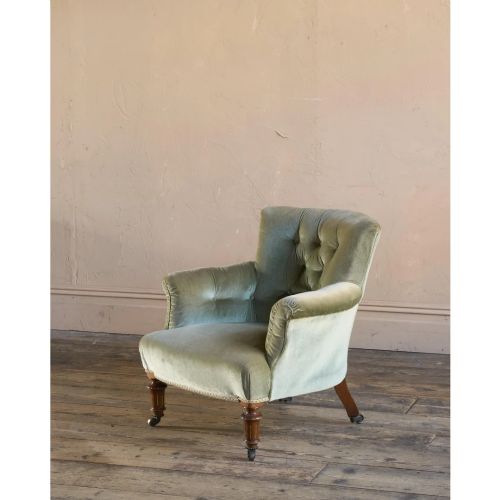
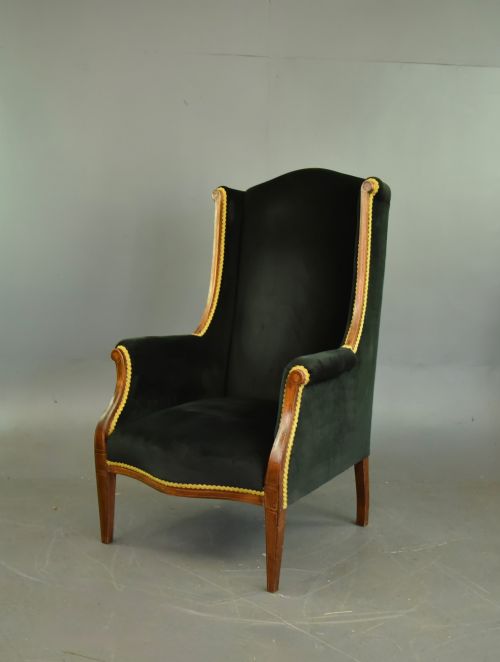
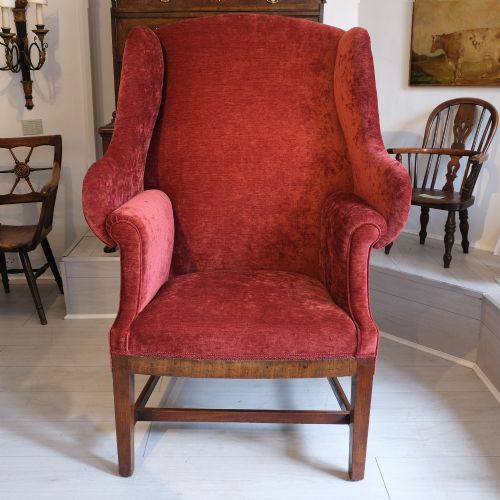
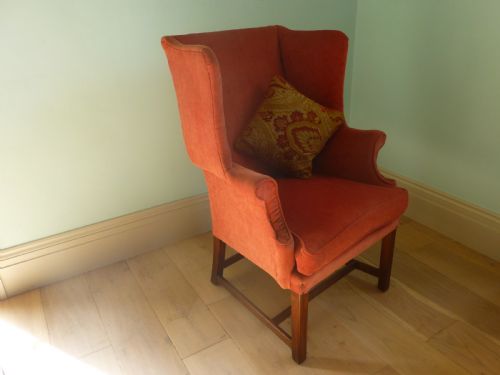
Traditional velvet reading chairs comprise upholstered armchairs, wingbacks, and library chairs designed for prolonged sitting. These seating forms span the Georgian, Victorian, Edwardian, and Regency periods, drawing on English traditional and French styles.
The versions met on this page include mahogany, walnut, and rosewood frames paired with textile covers. Such seating combines structural timber framing with soft piled cloth to create supportive domestic furniture.
How they were made
Construction relies on hardwood timbers such as mahogany, walnut, and rosewood to form the internal frames and exposed legs. Wood and timber components are shaped into wingbacks, library chairs, and tub chairs.
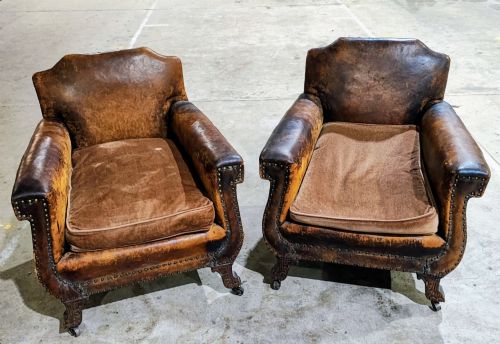
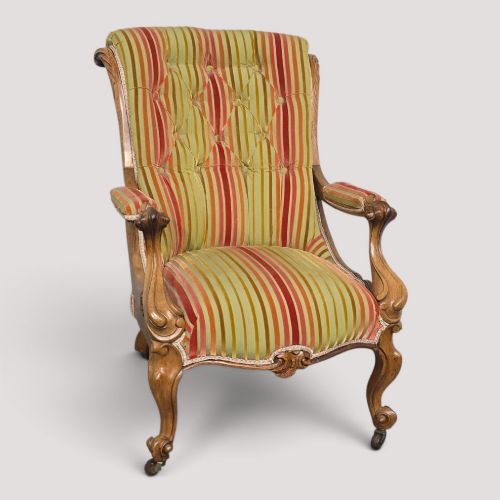
Upholstery techniques utilise textile coverings, specifically velvet, chenille, and leather, often secured with buttoning. Brass hardware and castors frequently complete the lower framework of these pieces.
Materials documented in the inventory include mahogany, walnut, rosewood, brass, and textile coverings.
What varies in quality
The refinement of the timber frame and the precision of the joinery set pieces apart. Dense hardwoods like mahogany and walnut display greater structural integrity than softer woods.
The quality of the upholstery execution, from buttoning detail to the depth of the textile pile, determines the finish. Maker attribution to known firms like Gillows or Howard and Sons elevates the standing of an armchair.
Gillows·Howard and Sons·Hampton and Sons
The Traditional Velvet Reading Chairs Glossary
- Bergere
- An enclosed upholstered armchair with wooden framing around the sides and back. This French style often incorporates cane work.
- Wingback
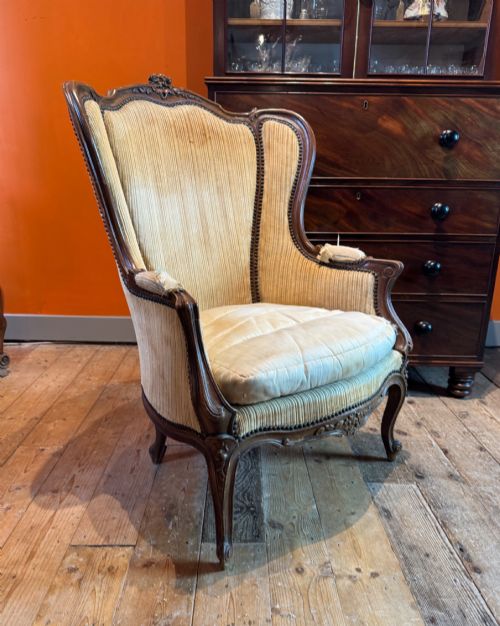
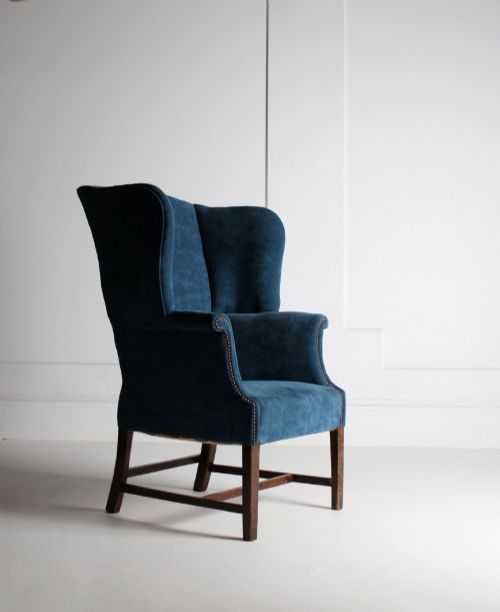
- An armchair featuring projecting side panels designed to shield the sitter from drafts. These high-backed seats date back to the Georgian era.
- Library chair
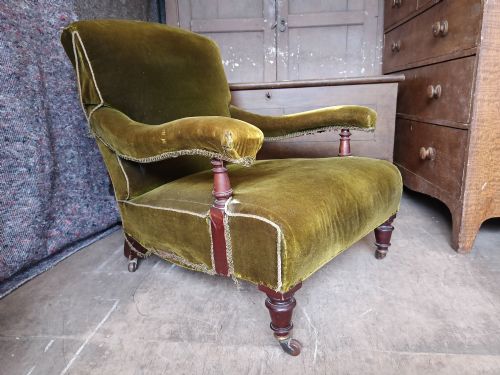
- A heavy, stable armchair intended for reading rooms and studies. These typically feature robust timber frames in mahogany or walnut.
- Button back
- An upholstery technique where depressions are formed in the padding by stitching buttons through to the frame. This secures the filling and creates a patterned surface.
- Spoon back
- A padded chair back shaped in a concave oval resembling the bowl of a spoon. This silhouette is common in Victorian seating.
Traditional Velvet Reading Chairs: Frequently Asked Questions
How do I identify a Victorian reading chair?
Victorian models often feature walnut or mahogany frames with buttoned upholstery and deeper proportions. Look for characteristic Victorian design markers in the woodwork and sprung seating.
Heavier frames and darker polished timbers distinguish these pieces from lighter Edwardian alternatives. The upholstery frequently employs patterned textiles or deep pile fabrics.
Are these chairs suitable for daily use?
These chairs are built with sturdy hardwood frames of mahogany, walnut, or rosewood, making them durable for regular sitting. Their original purpose was domestic comfort in studies and libraries.
Periodic checks of the internal webbing and padding help maintain their support over time. The solid timber construction ensures structural stability for everyday placement.
What is a Howard style armchair?
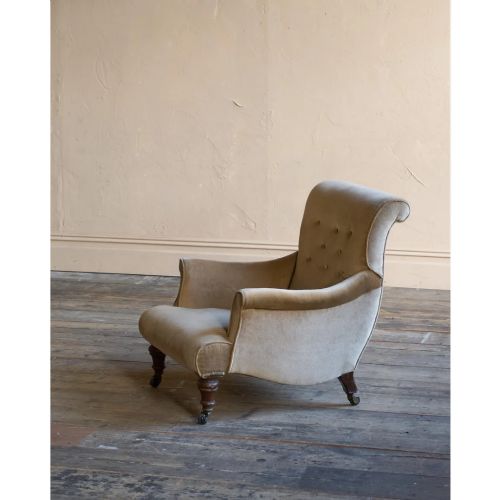
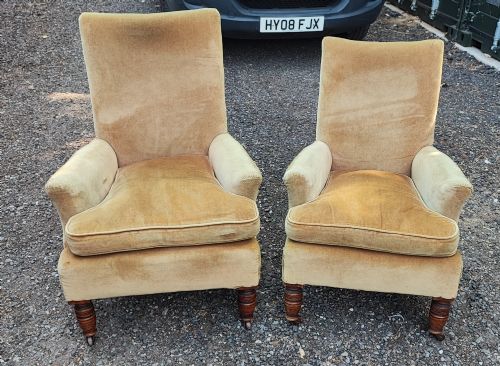
Howard style refers to low-slung, deeply cushioned armchairs associated with the Victorian and Edwardian manufacturing tradition. They are known for generous proportions and rolled arms.
These pieces prioritise comfort through thick padding and robust internal framing. They often appear upholstered in velvet or similar tactile textiles.
How do I care for antique velvet?
Velvet upholstery requires gentle brushing along the grain to prevent the pile from crushing. Avoiding direct sunlight preserves the depth of the textile colour.
Professional cleaning is recommended for maintaining the fabric integrity over the years. Regular light dusting keeps the pile free from settled particles.