


Traditional Umbrella Holder
A traditional umbrella holder keeps wet coats and walking sticks in order while setting a practical tone in the hallway.
Traditional Umbrella Holder
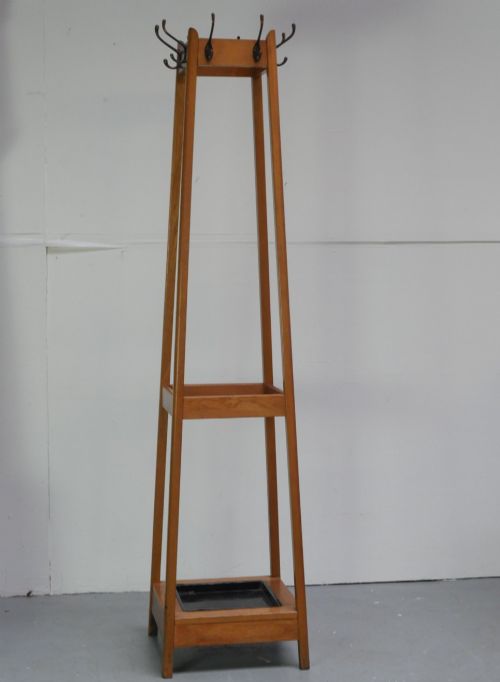
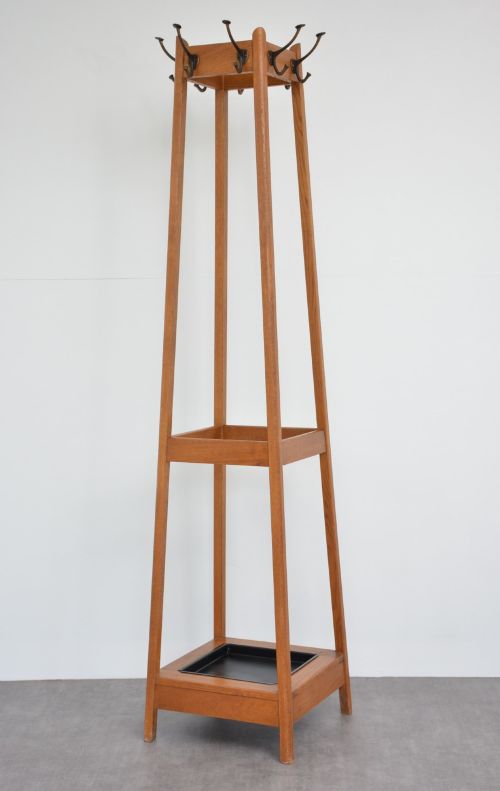
A traditional umbrella holder serves as a dedicated station for walking sticks, canes, and wet umbrellas within the hallway or boot room. These functional hall accessories appear in various forms, from compact corner designs to large pieces integrated with coat hooks and mirrors.
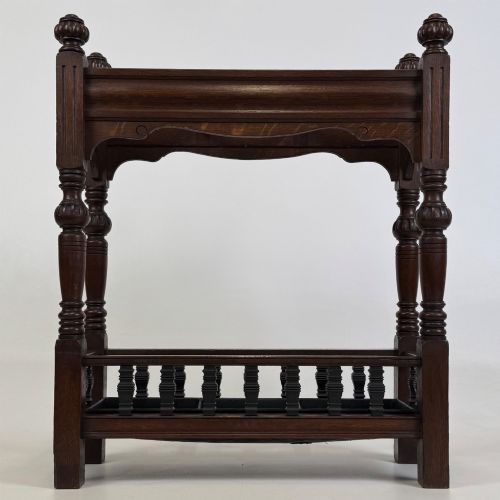
The pieces seen here date from the Victorian and Edwardian eras through to the mid-century, reflecting the changing needs of the domestic entranceway. Oak, mahogany, and walnut feature alongside robust metals such as brass, cast iron, and zinc.
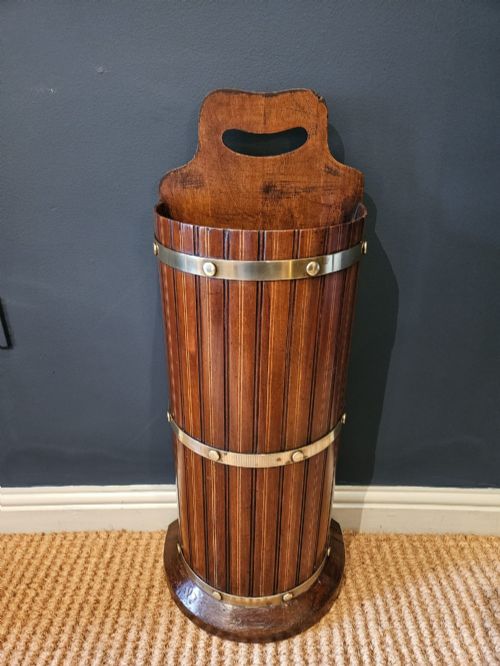
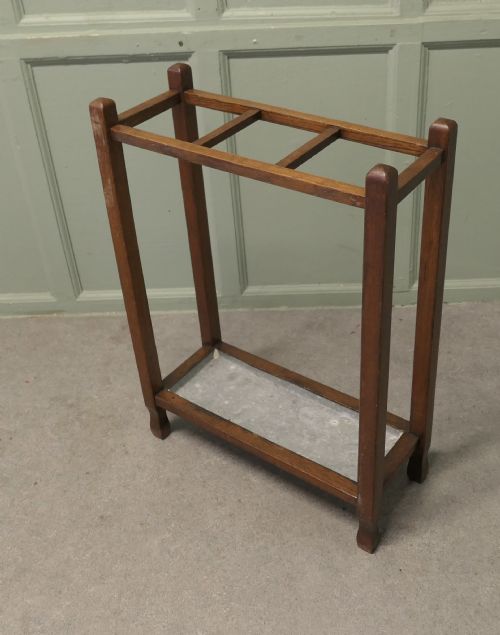
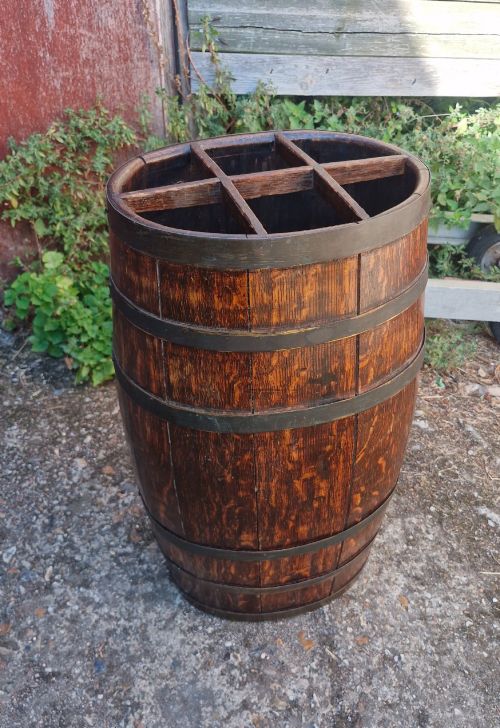
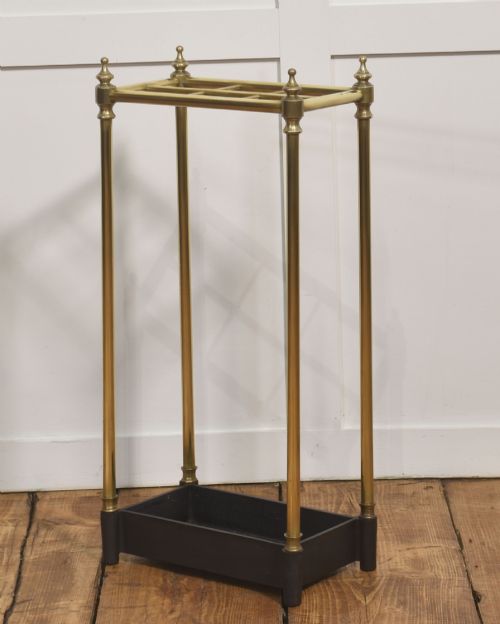
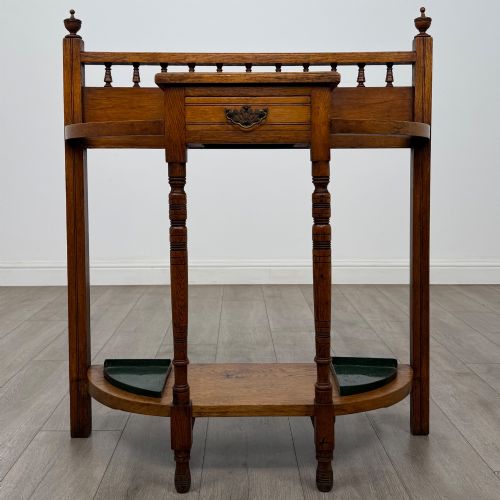
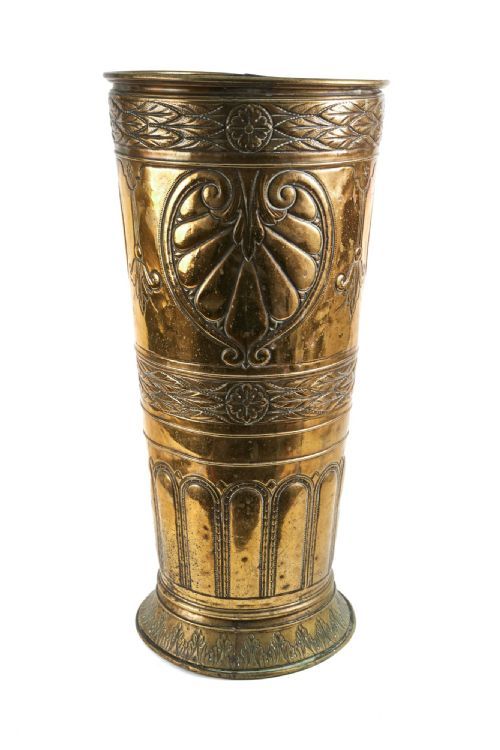
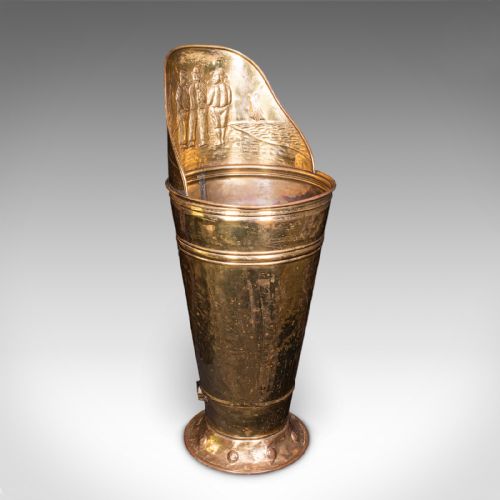
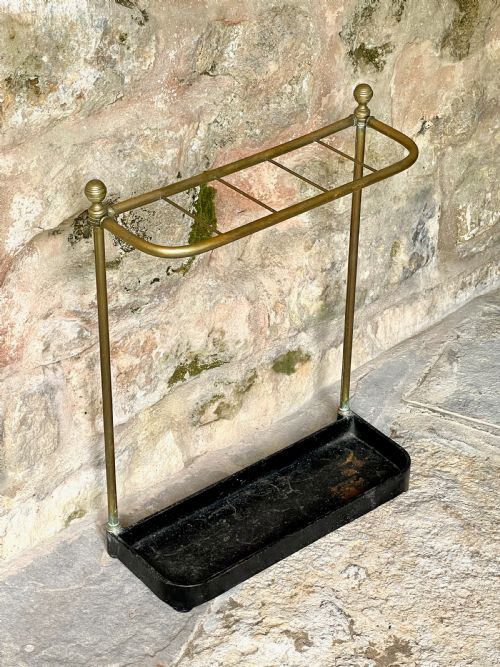
The most common versions on this page are oak and mahogany barrel stands bound in brass, alongside cast iron frames designed for heavy daily use. Many examples incorporate original metal drip trays at the base to protect wooden floors from moisture.
How they were made
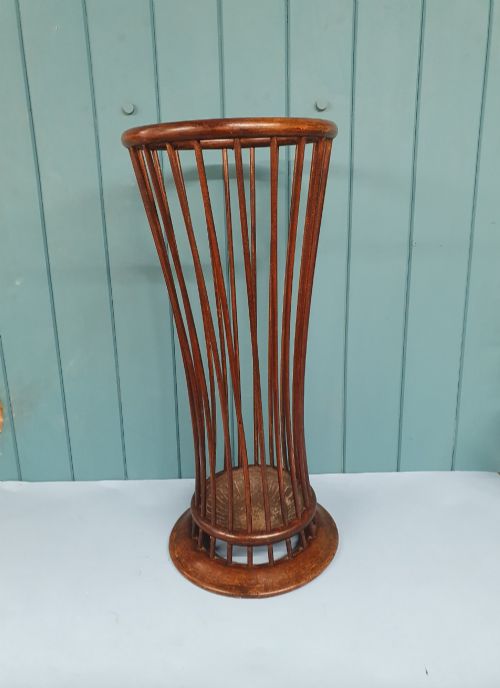
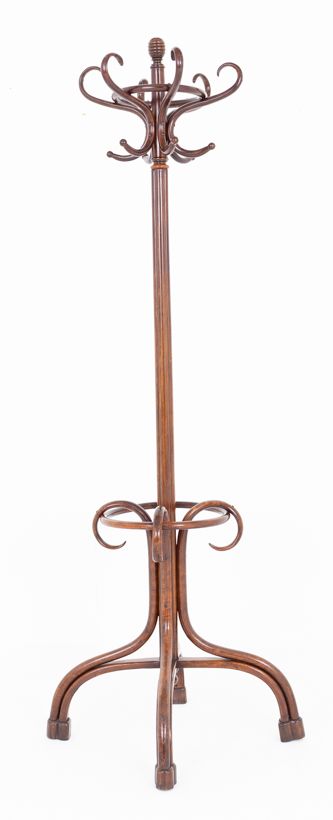
Cabinet makers utilised solid hardwoods like oak, mahogany, and walnut, often employing traditional coopered construction techniques with curved staves bound by brass bands. Turned wooden spindles and steam-bent wood appear in Austrian bentwood and Arts and Crafts examples, creating structural strength and decorative form.
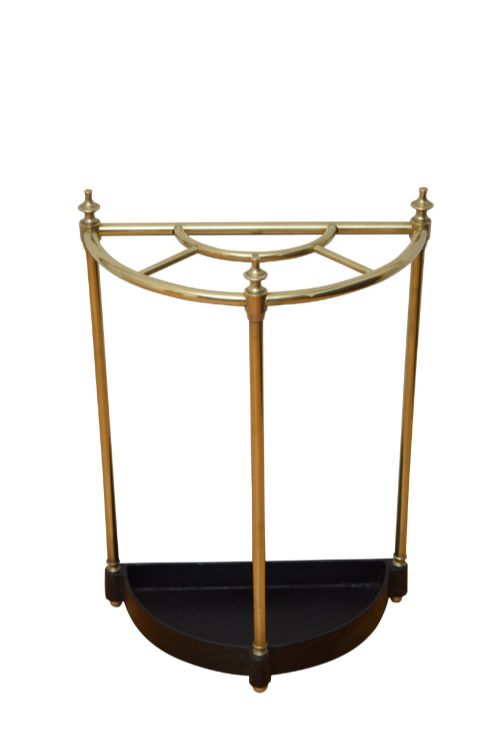
Metal components were cast or hammered into shape, utilising brass for corner stands and cast iron for heavier Victorian frames. Zinc and iron inserts formed the waterproof drip trays essential for catching rainwater from wet umbrellas.
Some Victorian hallway stands doubled as a polite hint for visitors to leave their muddy walking sticks at the door.
What varies in quality
The distinction between standard utility items and finer pieces lies in the selection of timber and the complexity of the joinery. Well-figured oak and rich mahogany timbers with tight, secure coopered staves represent superior workmanship compared to simpler utilitarian frames.
Detailing on the metalwork also separates pieces, with cast iron foundries producing crisp, ornamental frames and heavy brass mounts showing careful finishing. The retention of original drip trays adds significantly to the integrity of an antique holder.
Falkirk Foundry
The Traditional Umbrella Holder Glossary
- Coopered
- Constructed from curved wooden staves joined edge-to-edge and bound with metal hoops, much like a traditional barrel. This method provides the sturdy circular or oval shape seen in many wooden umbrella stands.
- Demi lune
- Half-moon shape designed to sit flat against a hallway wall. This profile allows the holder to occupy minimal floor space.
- Drip tray
- A removable metal basin placed at the base of the stand to catch water from wet umbrellas. Original trays are an important feature for collectors.
- Stick stand
- A piece of furniture designed specifically for long-handled items like walking canes and riding crops. They share similar forms with umbrella holders.
- Arts and Crafts
- A design movement favouring handcraftsmanship, simple forms, and visible construction methods. Pieces from this style often display honest use of solid oak.
Traditional Umbrella Holder: Frequently Asked Questions
Where should an umbrella holder go?
These pieces belong in the entrance hall, porch, or boot room where wet outerwear and walking sticks accumulate upon entry.
Positioning the holder near the main doorway protects interior wooden floors and carpets from moisture brought in from outside.
What is the difference between a stick stand and an umbrella holder?
Historically, stick stands were built for walking canes and riding crops, while umbrella holders accommodated larger rain gear.
Over time the terms became interchangeable as makers adapted the same basic frame sizes to serve both purposes in the hallway.
How do I protect my floors from water?
Most traditional holders include a metal drip tray at the bottom to collect runoff from wet umbrellas and walking sticks.
Checking that the zinc or iron tray remains intact ensures that water stays contained and does not seep into antique floorboards.
How do I date a wooden umbrella stand?
Dating relies on observing the timber species, construction methods, and overall decorative style such as Victorian turning or Arts and Crafts simplicity.
Comparing the hardware, such as brass bands and cast iron trays, against known period characteristics provides further clues to the age.