


Traditional Twin Beds
Traditional twin beds offer matching sleeping quarters for a room, drawing on periods from the late nineteenth century up to the nineteen thirties.
Traditional Twin Beds
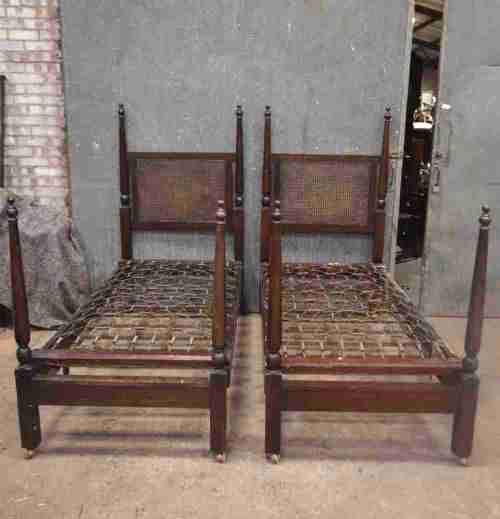
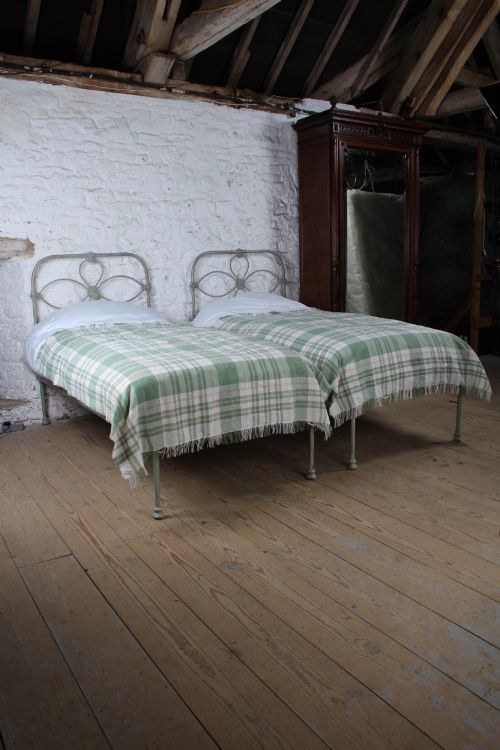
Traditional twin beds comprise matching pairs of single beds, bedsteads, and four posters designed to sit together in a shared sleeping space. Buyers seeking traditional twin beds will find examples spanning the Victorian and Edwardian eras, alongside early twentieth-century designs in wood and metal.
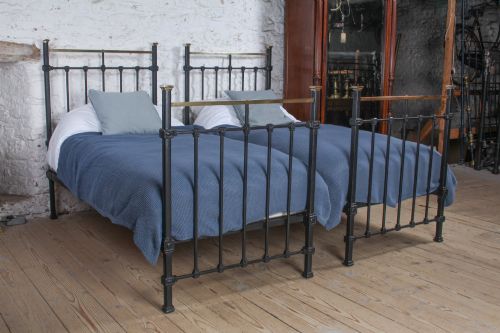
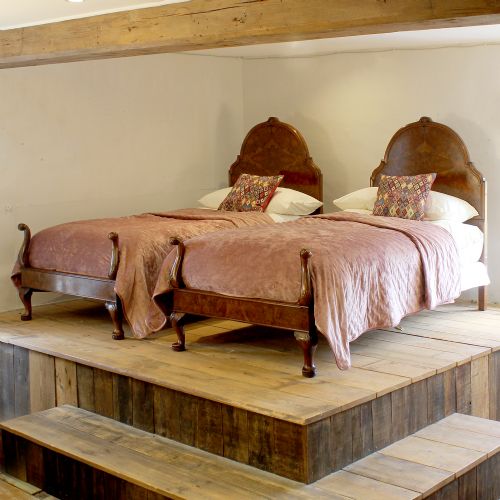
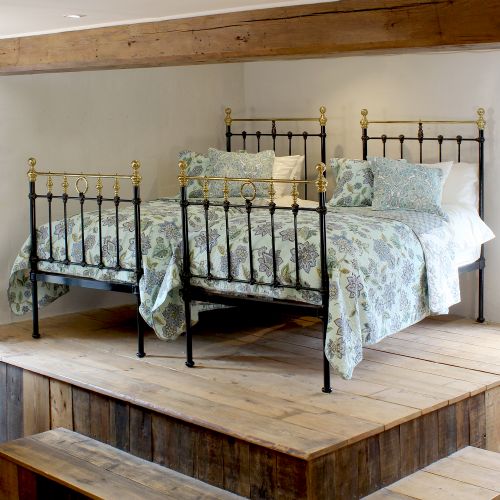
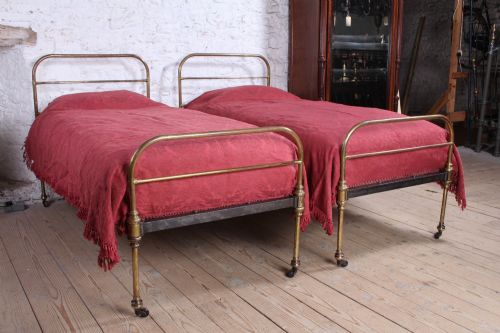
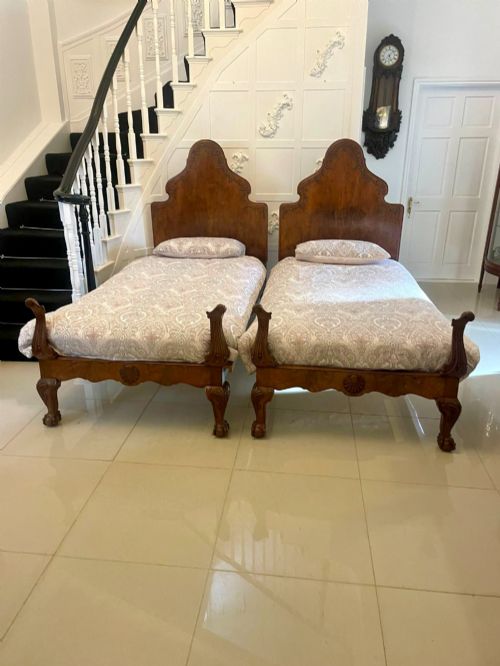
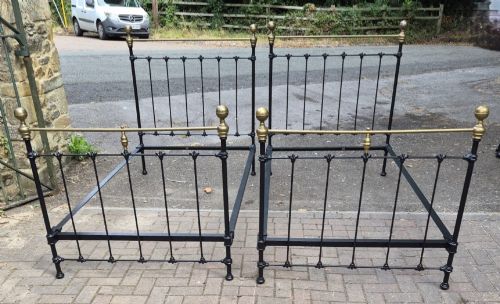
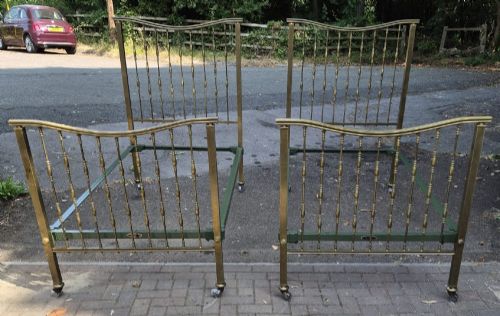
The selection ranges from robust cast iron and brass frames to timber constructions in oak, mahogany, and burr walnut. Many metal variants are built to be joined together as a larger configuration or used separately as individual single beds.
Stylistic influences vary widely across the inventory, touching upon Queen Anne style, Arts and Crafts, French Empire, and Colonial Revival. The most common format on this page is the pair of metal or wooden single bedsteads dating between eighteen eighty and nineteen twenty.
How they were made
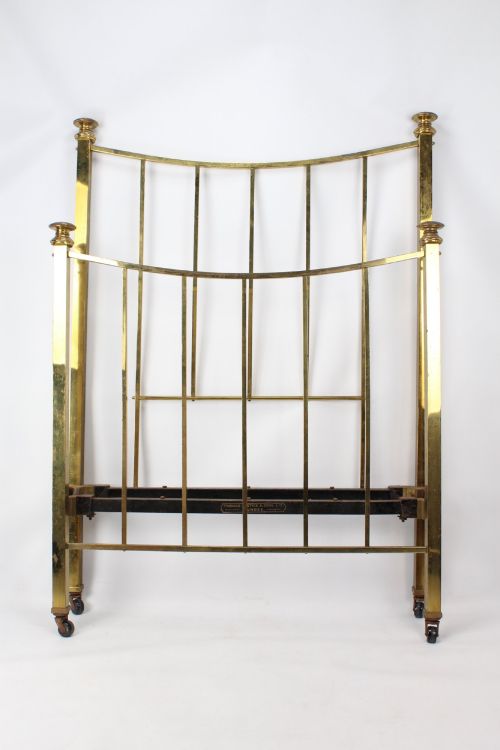
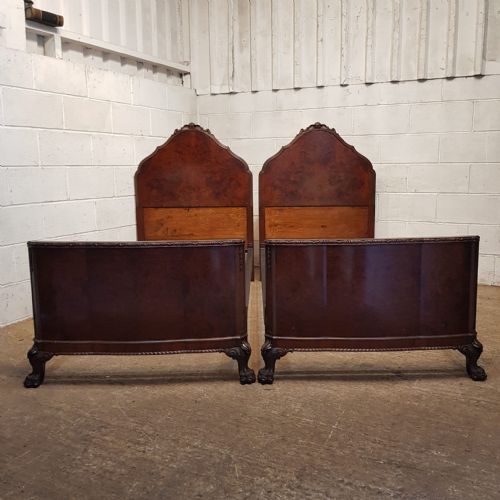
Metal frames rely on cast iron, wrought iron, and brass components, often featuring decorative rings and brass ornamentation joined securely to the main structure. Wooden variants employ solid oak, mahogany, and burr walnut, incorporating carved details, inlaid panels, and woven bergere or painted leather inserts.
Makers utilised traditional joinery and metalcasting techniques suited to domestic furniture production of the Victorian and Edwardian periods. Platform bases and four poster structures demonstrate carpentry skills typical of early twentieth-century workshops.
Listings feature metal and wooden materials including brass, cast iron, walnut, oak, and paint across the Victorian and Edwardian periods.
What varies in quality
The standard of timber selection and cabinetwork distinguishes basic wooden frames from finer examples featuring burr walnut veneers, intricate carving, or mahogany inlay. Metal frames show variation in the weight of the castings, the crispness of brass detailing, and the integrity of the original joints.
Design ambition separates standard utilitarian sleeping frames from pieces exhibiting distinct stylistic vernaculars such as Arts and Crafts joinery or French Empire upholstery. The coherence of the matching pair and the preservation of original surfaces also dictate the overall calibre of the bedstead.
Hoskins & Sewell·R W Winfield·Heal & Son
The Traditional Twin Beds Glossary
- Bedstead
- The framework of a bed, comprising the headboard, footboard, and side rails. This term specifically refers to the structural housing rather than the mattress or bedding.
- Bergere
- A type of enclosed armchair or bed panel featuring woven cane or wickerwork. It provides a lighter texture within wooden frames.
- Four poster
- A bed with four vertical columns supporting a tester or canopy frame overhead. Examples in this inventory pair the form with single bed dimensions and oak framing.
- Inlaid
- Decorated by embedding pieces of contrasting wood or other materials into the surface to form a pattern. This technique appears on Edwardian mahogany frames.
- Cast iron
- Iron poured into a mould to create rigid structural components and decorative motifs. It forms the primary material for many nineteenth-century sleeping frames.
Traditional Twin Beds: Frequently Asked Questions
Can these traditional twin beds be joined together?
Many of the metal and iron single bedsteads listed are noted as capable of being joined together to form a wider sleeping arrangement. Buyers should inspect individual descriptions to confirm whether connecting brackets or fixings are included.
Wooden pairs are typically designed to remain as distinct, matching single units placed side by side or on opposite sides of a room.
What wood types appear in these beds?
The wooden bedsteads and single frames utilise a range of timbers including oak, mahogany, and burr walnut. Some examples incorporate decorative elements such as painted leather panels or woven bergere.
These materials reflect the cabinetmaking preferences of the Victorian, Edwardian, and nineteen twenties periods.
How do I identify a Victorian bedstead?
Victorian bedsteads often feature heavy cast iron or brass construction, sometimes combined with iron no-end designs or decorative brass rings. The styling tends to reflect nineteenth-century revivals such as Rococo or straightforward utilitarian metalwork.
Dates range from eighteen seventy up to the end of the Victorian reign around nineteen hundred.
What is the difference between a single bed and a bedstead?
A bedstead refers specifically to the structural framework of the bed, including the head and foot boards and side supports. A single bed is a broader term encompassing the complete sleeping unit of that size.
Both terms describe furniture built to accommodate a single mattress.