







Traditional Tribal Textile
Traditional tribal textile pieces encompass woven rugs, bags and embroidered hangings created across Central Asia and the Caucasus during the nineteenth and early twentieth centuries.
Traditional Tribal Textile
A traditional tribal textile connects a buyer to nomadic and village cultures through utility items such as storage bags, saddle covers, floor rugs and ceremonial coats. Pieces originate from distinct groups including Turkmen tribes, Uzbek communities, Baluch weavers and Qashqai makers across regions spanning Turkmenistan, Afghanistan, Uzbekistan and Persia.
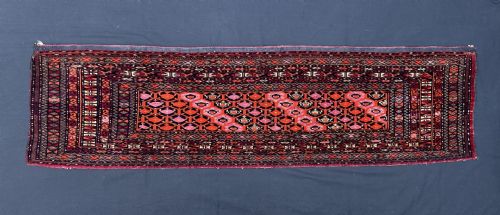
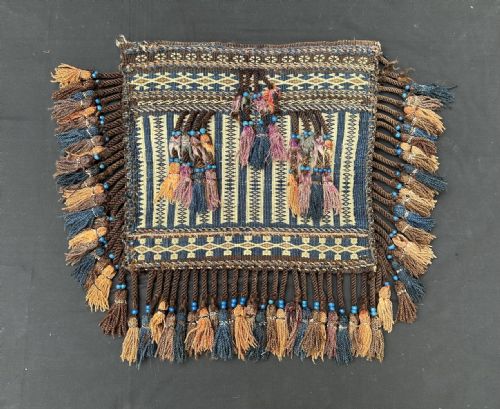
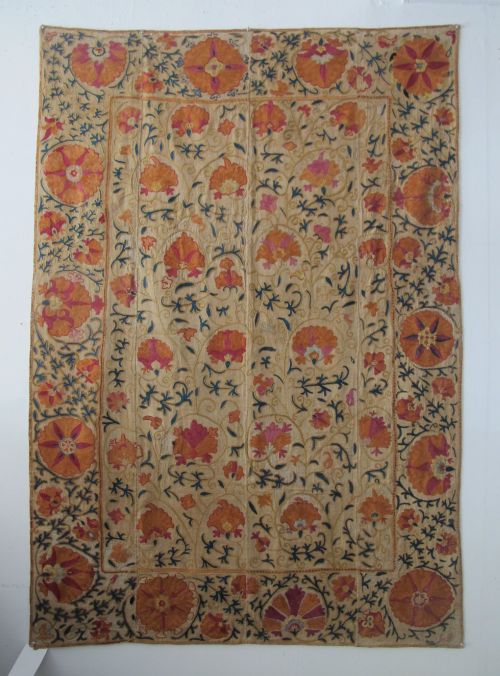
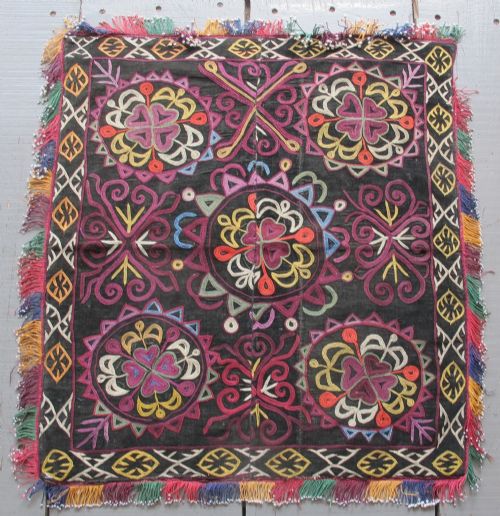
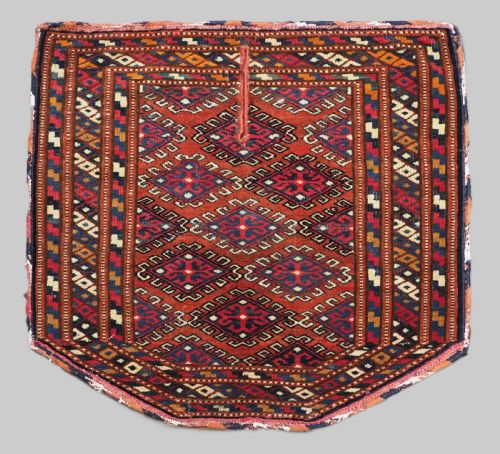
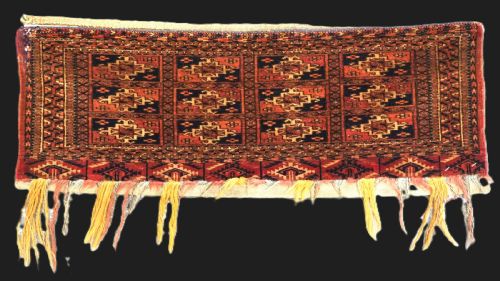
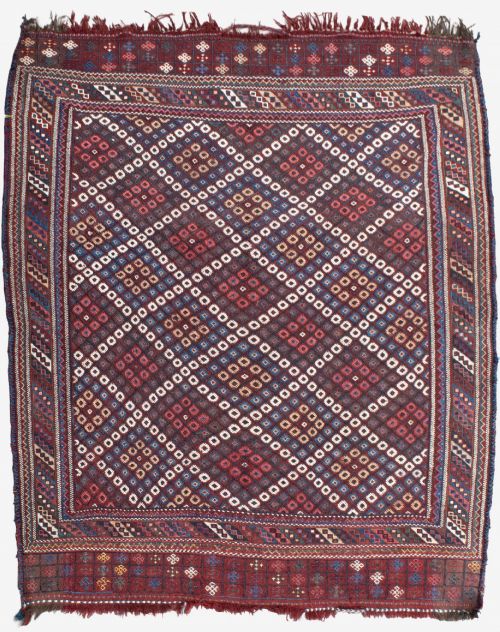
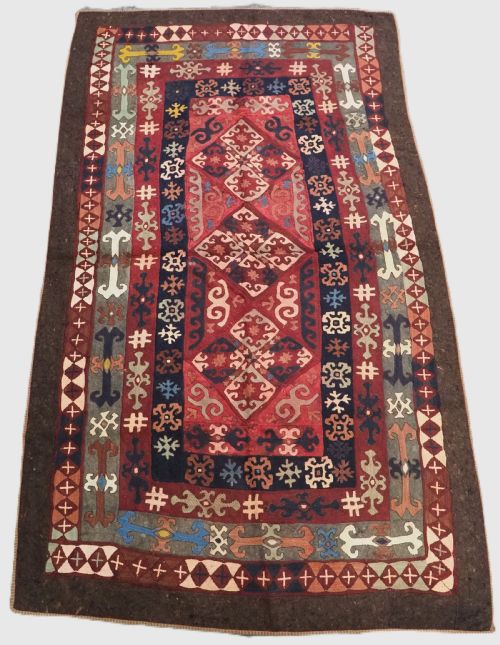
The inventory on this page centres on domestic and ceremonial pieces produced across the nineteenth century and the early decades of the twentieth century. Common formats include bags such as torbas and chuvals, embroidered wall panels known as suzanis, felt rugs and flat-woven covers.
Makers fashioned these works for daily nomadic life, dowries and tribal identity rather than for export markets. Their regional motifs and structures encode tribal lineage and domestic function.
Materials and construction methods
Weavers relied principally on locally sourced wool, cotton and silk, spinning yarns by hand and treating them with natural dyes to achieve deep reds, golds and indigos. Embroidered suzanis and hangings utilise fine silk thread stitched onto cotton or wool foundations, sometimes incorporating metal threads or glass beads.
Nomadic groups also exploited felted wool for durable floor coverings and utilitarian panels, applying appliqué and embroidery directly to the dense fabric. Structural techniques range from piled knotting in rugs to sumac weave, flat-weaving and intricate needlework.
Traditional Tribal Textile Retail Price Guide 2026
Typical asking prices for traditional tribal textile among the pieces listed under this phrase on Sellingantiques today, from the lower quarter to the upper quarter. They describe what is for sale here now, not the wider market.
Camel wedding trappings remind us that nineteenth-century nomads accessorised their livestock with finer embroidery than most modern living rooms ever see.
Quality variations in weaving and embroidery
Quality rests upon the fineness of the weave, the tightness of the knotting or stitching, and the integrity of the natural dye palette. Earlier nineteenth-century works display greater saturation and complexity in secondary colours, whereas later pieces often show shifts towards synthetic colourants.
The precision of tribal drawing and the preservation of original structures, such as complete plain weave backs on bags or intact borders, separate standard domestic examples from masterworks. Handling reveals the suppleness of the wool and the density of the foundation, which dictate longevity.
The Traditional Tribal Textile Glossary
- Torba
- A small tent-storage bag produced by Turkmen tribes, typically wider than it is tall and hung inside the yurt.
- Suzani
- An embroidered silk wall hanging or cover from Uzbekistan, stitched in large floral roundels and vine motifs.
- Chuval
- A large Turkmen storage bag used within nomadic tents for household belongings and bedding.
- Sofreh
- A woven spread or cloth used for sharing meals or processing bread dough in Persian and tribal households.
- Asmalyk
- A pentagonal camel caparison woven by Turkmen tribes for wedding processions and festive occasions.
Traditional Tribal Textile: Frequently Asked Questions
How were these textiles used?
Nomadic weavers created these pieces for functional domestic service inside tents and permanent dwellings, storing grain, bedding and clothing within woven bags. Other formats served as ceremonial coats, wedding trappings for camels, dining spreads and wall hangings.
Over time, families passed down these textiles as dowry items and symbols of tribal status. Their practical construction allowed them to withstand the rigorous movements of nomadic life.
How do I care for a tribal textile?
Protect these pieces from direct sunlight to prevent natural dyes from fading over the years. Vacuum gently through a mesh screen on low suction to remove dust without catching loose embroidery threads.
Avoid hanging heavy textiles by isolated points; instead, distribute the weight evenly across a sleeve or backing. Professional textile conservation cleaning is recommended rather than domestic washing.
How can I tell tribal groups apart?
Tribal groups employed distinct palettes, structural formats and repeating geometric motifs that identify their origins. Turkmen weavers favoured deep madder reds and octagonal gul motifs, whereas Baluch and Afshar makers utilised darker tones and camel-hair accents.
Uzbek suzanis display large circular medallions and silk embroidery styles specific to regional centres like Bukhara or Shakrisabz. Examining the knotting style and border structures clarifies the specific maker tribe.
What is a natural dye?
Natural dyes derive from plants, insects and minerals gathered locally by tribal dyers before the introduction of synthetic aniline colours. Common sources include madder root for reds, indigo for blues and weld or pomegranate rinds for yellows.
These colourants age gracefully, developing complex patinas and subtle tonal shifts across the surface of the wool or silk. Their presence is a primary indicator of nineteenth-century production.