


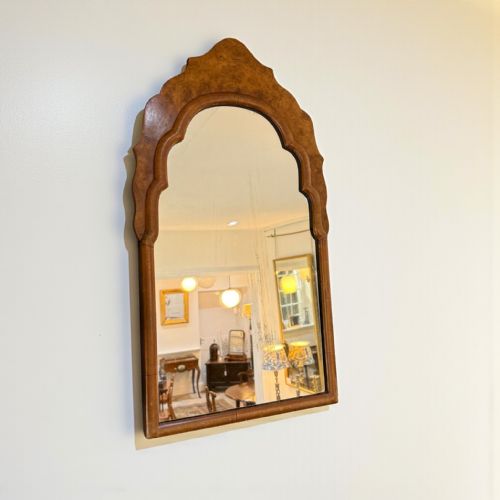

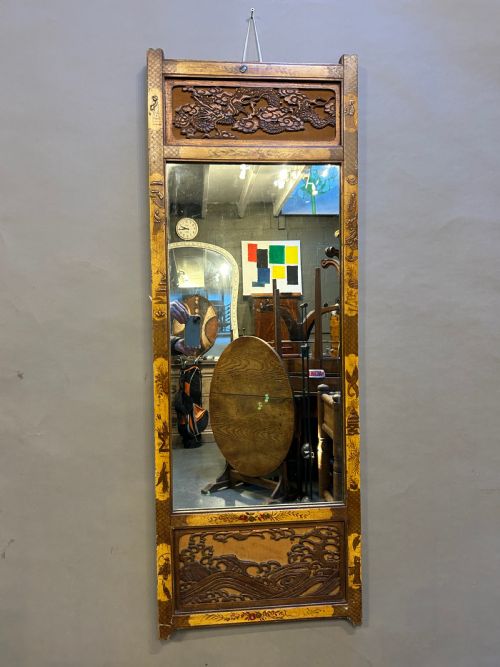


Traditional Timber Mirror
These traditional timber mirror pieces bring warmth and functional depth to an interior through honest materials and period craftsmanship.
Traditional Timber Mirror
A traditional timber mirror encompasses wall-hung pieces, cheval mirrors, and overmantels originating from periods such as the Georgian era, the Victorian epoch, and Edwardian decades. Buyers search for these items to introduce genuine period character and functional reflection into domestic spaces.
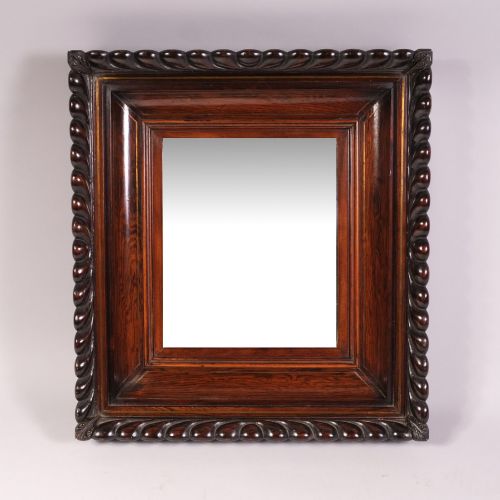
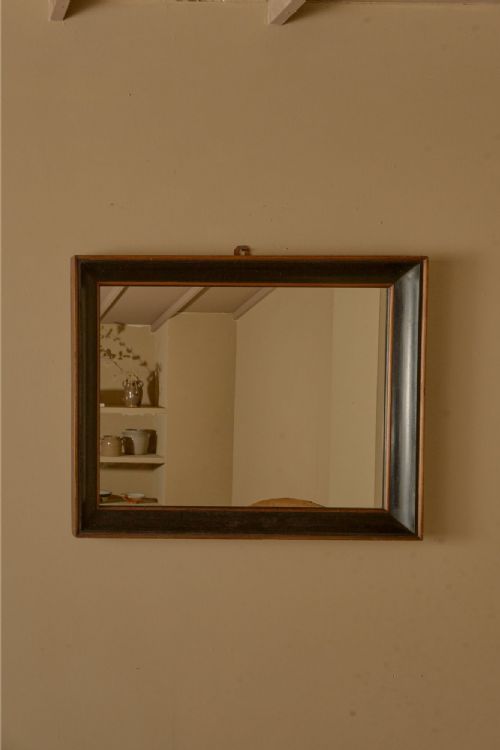
The selections available here lean heavily towards mahogany, walnut, and oak constructions, frequently appearing in styles ranging from English Country and Regency to French Provincial and Chinoiserie. Wall mirrors and overmantels dominate the current forms, reflecting how previous generations utilised timber frames to anchor a room.
Origin variations include specific regional expressions such as Anglo-Indian and Dutch pieces, alongside domestic British workshop traditions. Each piece serves as a direct link to the historic preference for durable wood framing over synthetic alternatives.
How they were made
Construction relies upon traditional joinery techniques applied to dense hardwoods like mahogany, walnut, oak, and rosewood. Craftsmen shaped these timbers using hand tools, often incorporating carved details, gesso layers, or partial ebonisation directly into the wooden substrate.
Surface treatments involve polishing, painting, or applying giltwood elements to enhance the visual weight of the timber frame. Glass plates are integrated securely within the wooden rabbets, sometimes accompanied by secondary backing boards appropriate to the period of origin.
Traditional Timber Mirror Retail Price Guide 2026
Typical asking prices for traditional timber mirror among the pieces listed under this phrase on Sellingantiques today, from the lower quarter to the upper quarter. They describe what is for sale here now, not the wider market.
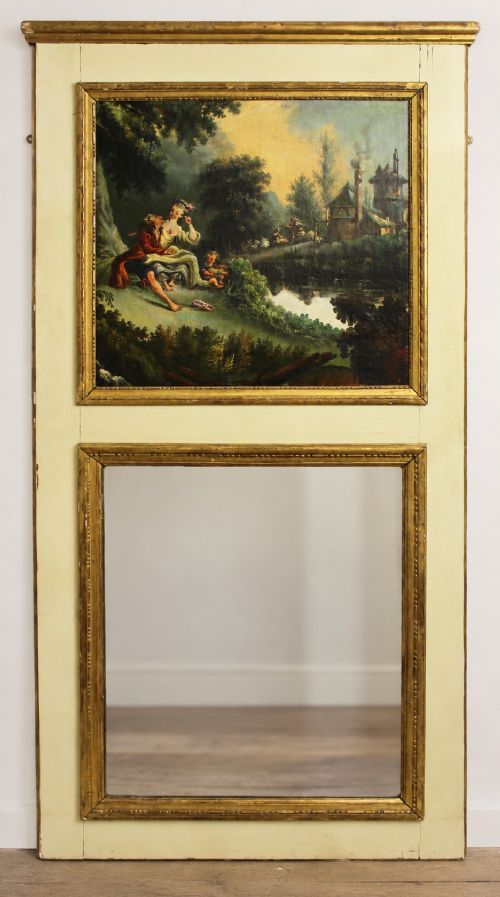
Some mirrors double as secret social commentators by reflecting pastoral oil paintings right above the daily commotion.
What varies in quality
Quality differences stem from the selection of timber and the precision of the joinery rather than mere age. Denser woods like pollard oak and well-figured mahogany indicate higher initial expenditure by the original commissioner.
The refinement of carved ornament and the integrity of applied finishes, such as gesso or gilding over timber, separate standard workshop output from exceptional examples. Original mirror glass retention and the stability of the framing joints further dictate the tier of craftsmanship.
The Traditional Timber Mirror Glossary
- Overmantel mirror
- A large horizontal mirror designed to sit directly above a fireplace mantelpiece. These pieces often feature decorative crestings or painted panels to dominate the chimney breast.
- Cheval mirror
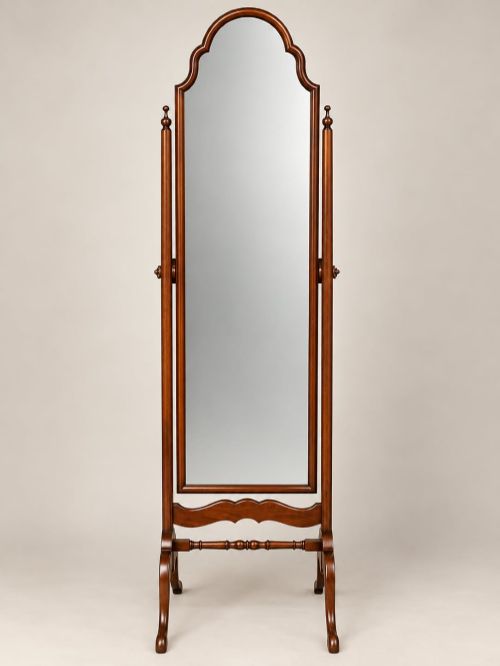
- A freestanding full-length mirror mounted on a vertical swivel frame between two pillars. This form allows the glass to tilt for viewing attire.
- Giltwood
- Timber carved and coated with a thin layer of gold leaf or gold paint. This technique creates a brilliant reflective contrast against the darker wood body.
- Pier mirror
- A tall, narrow mirror specifically built to hang on the wall space between windows. They frequently coordinate with pier tables placed underneath.
- Chinoiserie
- A European decorative style reflecting Chinese artistic influences. It appears on timber frames through hand-painted motifs and lacquered surfaces.
Traditional Timber Mirror: Frequently Asked Questions
Where should I hang an overmantel mirror?
An overmantel mirror traditionally rests securely above a fireplace, anchoring the main wall of a reception room.
Ensure the hanging brackets engage solidly with the structural wall studs to support the substantial timber and glass weight.
How do I clean a historic wood frame?
Dust the timber gently with a dry, soft cloth to remove surface particles without disturbing the underlying finish.
Avoid commercial liquid sprays that can penetrate porous old wood or damage delicate gesso and gilt layers.
Are cheval mirrors stable on carpets?
Cheval mirrors rely on wide feet or trestle bases to maintain balance while the mirror plate tilts on its pivots.
Place them on flat, firm flooring to prevent wobbling when adjusting the angle of the glass.
Can I identify the wood type easily?
Close inspection of the grain pattern and colour reveals whether a piece utilises mahogany, walnut, or oak.
Georgian and Victorian makers often left timber unpainted to highlight these natural grain variations.