


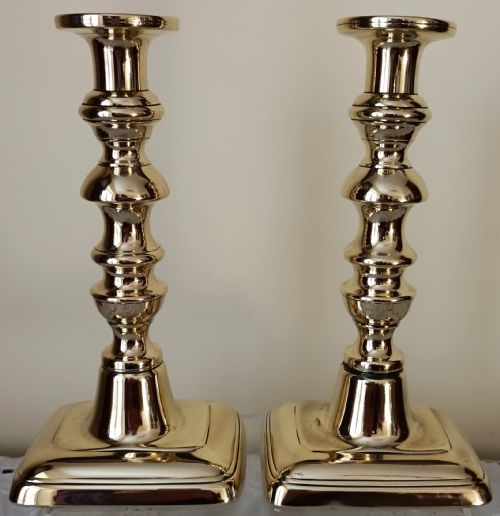
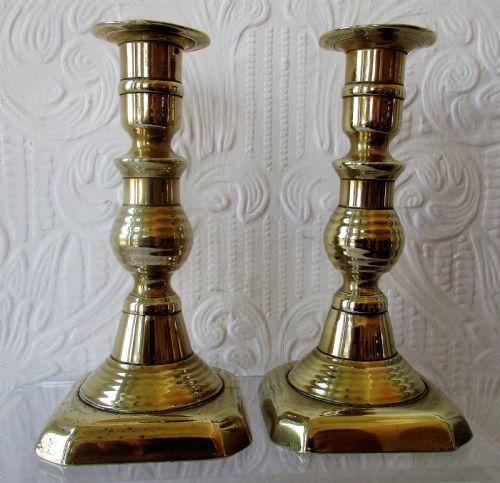
Traditional Taper Holders
Traditional taper holders are practical lighting antiques designed to burn thin candles safely, bringing period character and warm illumination to any room.
Traditional Taper Holders
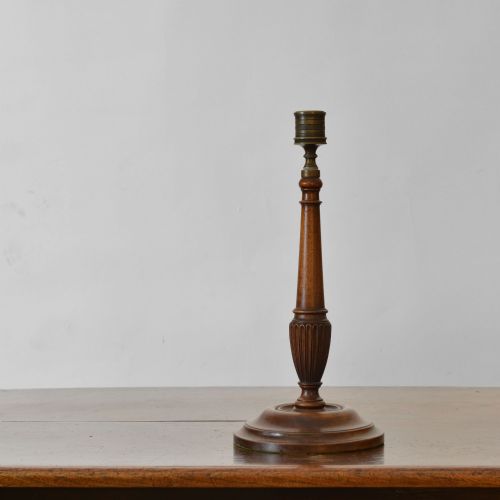
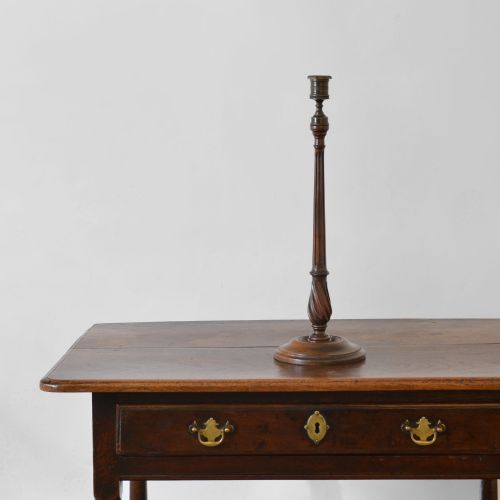
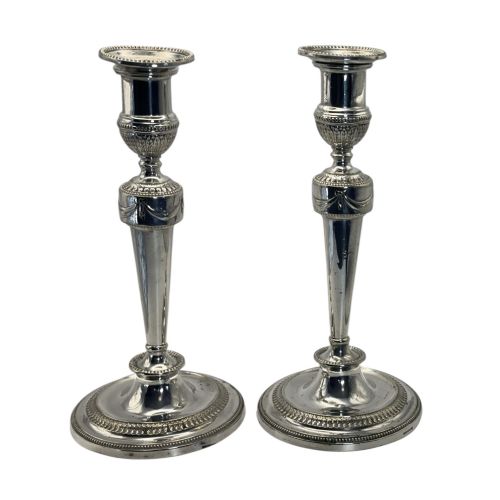
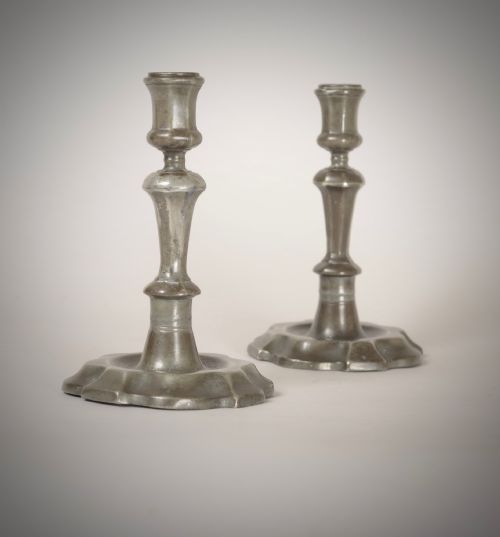
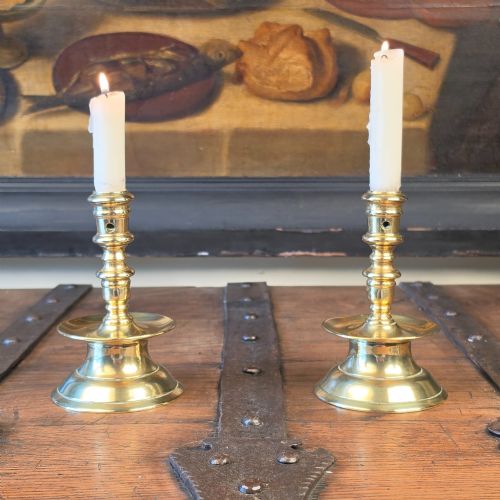
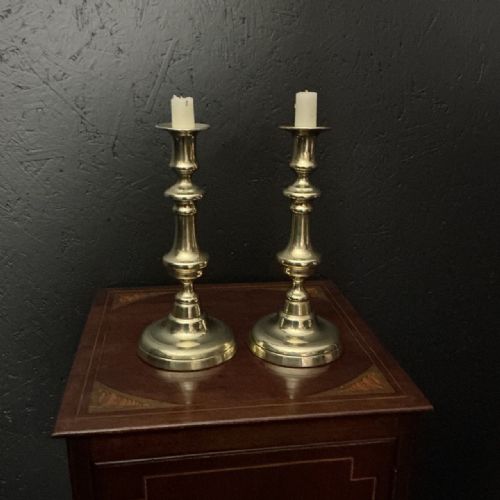
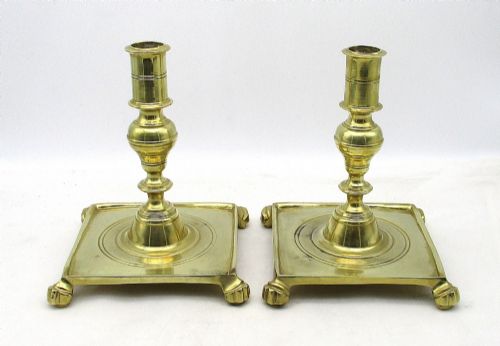
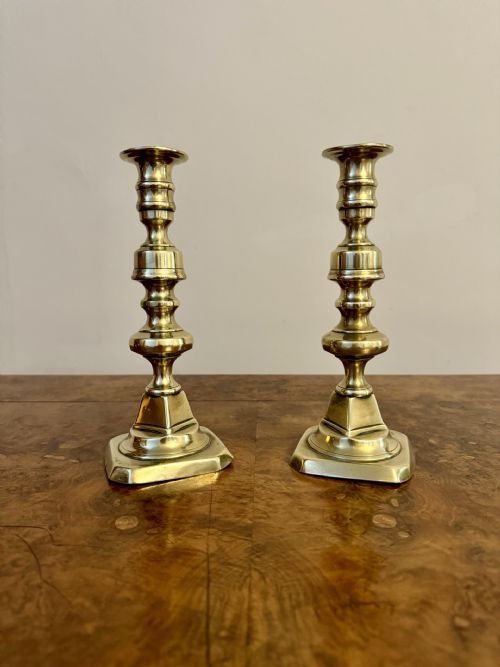
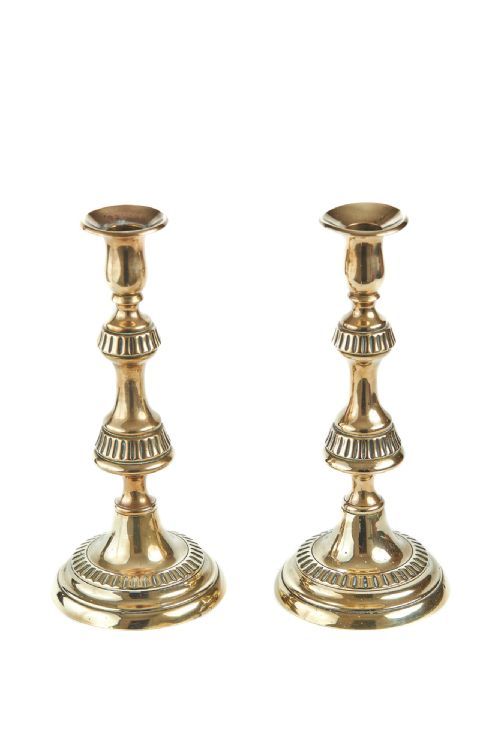
Traditional taper holders appear primarily as candlesticks shaped to support narrow candles used for sealing letters, lighting larger lamps, or providing small points of illumination. Buyers exploring traditional taper holders will most frequently encounter brass examples, alongside pieces made from silver plate, pewter, mahogany, ceramic, and bronze.
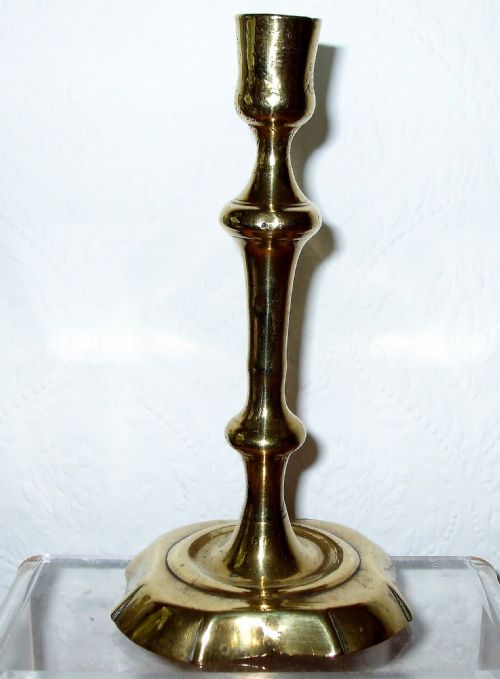
The selections span several centuries of design, covering the eighteenth century, the nineteenth century, the Georgian, Victorian, and Edwardian periods, and revivals of earlier styles like Queen Anne and the seventeenth century. Forms range from small single sticks to tall pairs, including seamed ejector models, petal bases, and church candlesticks.
How they were made
Makers utilised casting techniques for brass and bronze, often working in sections that were joined together or finished on a lathe to create smooth profiles and twisted shafts. Seamed construction involved shaping metal sheets and joining the edges down the stem, a method visible on eighteenth-century and nineteenth-century ejector candlesticks designed to push out remaining wax.
Woodworking traditions produced mahogany and treen taper holders turned on lathes to achieve slender, balanced forms. Plating methods applied thin layers of silver onto base metals to simulate solid silver wares, while ceramic and pewter examples relied on moulding and casting.
Some nineteenth-century brass candlesticks hid tiny internal push-rods just waiting to launch your old candle stub across the table.
What varies in quality
The crispness of casting detail distinguishes ordinary production from superior examples, particularly in ornamented surfaces, petal bases, and moulded collars. Heavier gauge metal and substantial weight indicate better material use, whereas thin or worn components suggest lower durability.
Proportion and balance dictate visual success, with superior pieces displaying harmonious heights and stable bases. Original components, consistent patination, and clean joints separate well-preserved antiques from heavily altered or restored items.
Mappin and Webb·WM Tonks and Sons
The Traditional Taper Holders Glossary
- Ejector candlestick
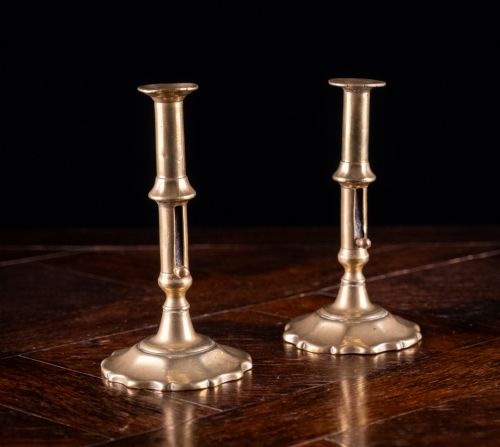
- A brass candlestick fitted with an internal mechanism to push out the stub of a spent candle. This clever device uses a small sliding button set into the stem.
- Petal base
- A candlestick foot shaped with lobes resembling flower petals, typical of early eighteenth-century designs. This style provides both visual weight and a stable footprint.
- Silver plate
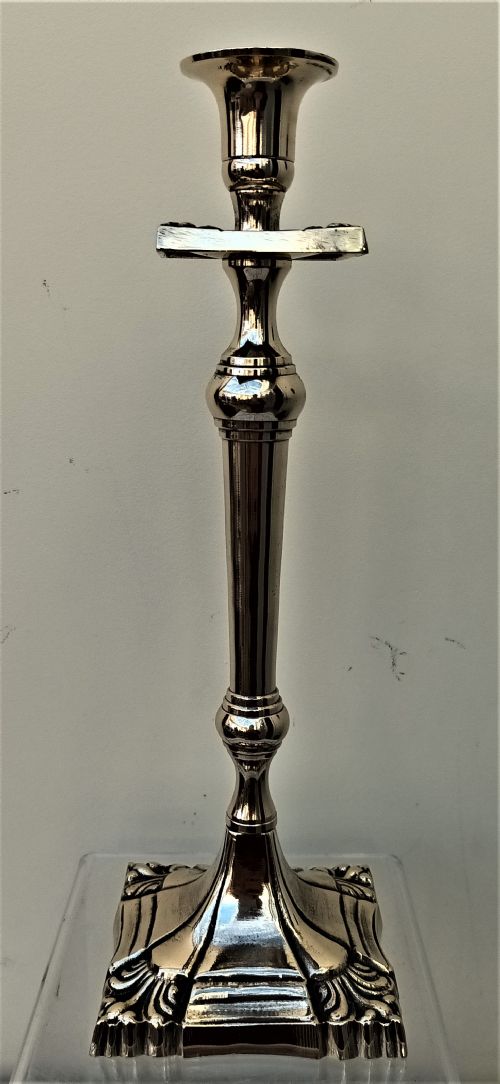
- A thin layer of silver bonded to a base metal such as copper or brass. This technique offered the appearance of solid silver at a lower cost.
- Seamed
- Formed from sheet metal bent into shape and joined along a vertical seam. This method was common in mid-eighteenth-century brass production.
Traditional Taper Holders: Frequently Asked Questions
What is a taper holder?
A taper holder is a small candlestick specifically designed to burn thin wax tapers rather than thick household candles.
These slim candles were traditionally utilised for sealing correspondence with hot wax or carrying a portable flame between rooms.
How do I date an antique brass candlestick?
Dating involves examining the manufacturing methods, base construction, and stylistic details such as moulded collars or petal feet.
Earlier eighteenth-century pieces often feature seamed construction and wider drip pans, while later nineteenth-century examples display heavier cast decoration and machine tooling.
Can I use modern candles in them?
Modern taper candles frequently vary in diameter, meaning they might not fit securely into antique sockets.
Using candle fitters or gently shaving the base of a modern taper ensures the candle stands upright and burns safely without tipping.
What metals were used?
Brass remains the most common metal found in these listings, appearing in cast, polished, and twisted forms across multiple periods.
Other materials include silver plate on base metal, bronze, pewter, and turned mahogany or treen.
How should I clean antique brass?
Antique brass benefits from gentle dusting and occasional cleaning with a soft cloth to preserve its natural patination and age.
Aggressive metal polishes remove the historical surface darkening that collectors value, so minimal intervention is generally preferred.