
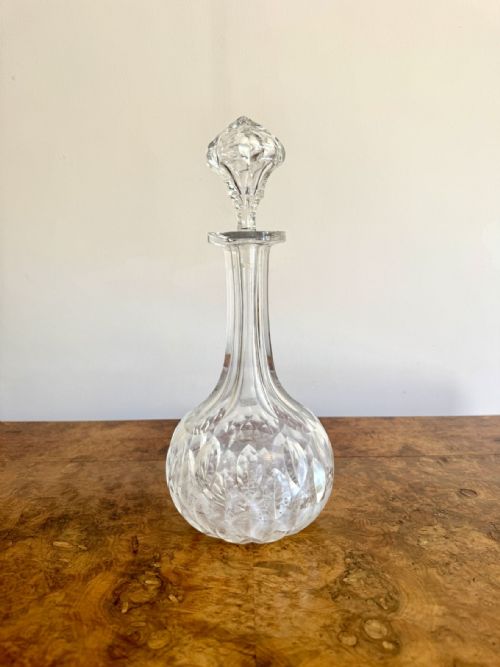


Traditional Spirit Carafe
These traditional spirit carafe examples are brilliant glass vessels designed for holding spirits, offering both period charm and practical utility for any table.
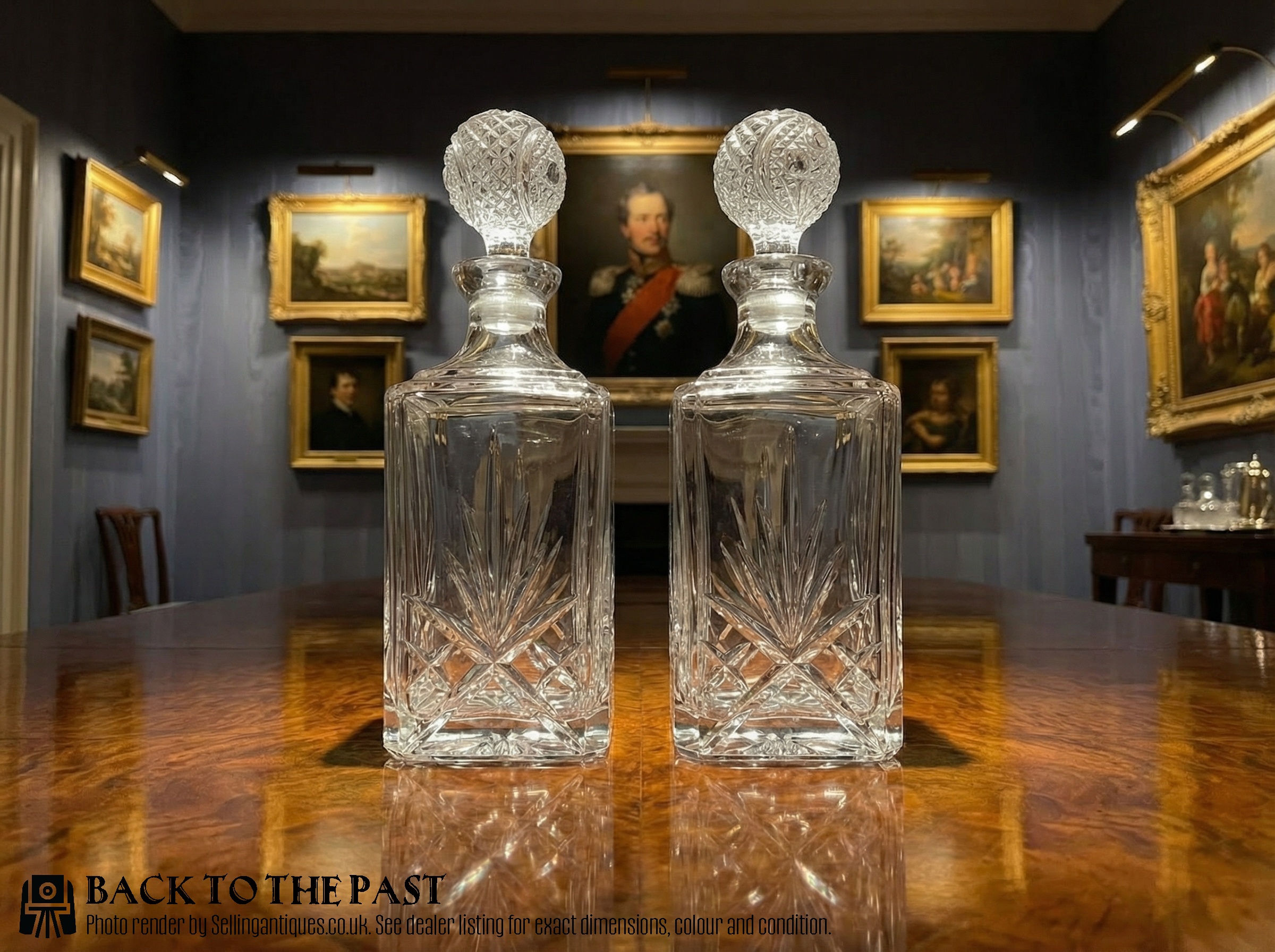
Traditional Spirit Carafe
When you search for a traditional spirit carafe, you encounter heavy glass vessels originating from the Victorian, Edwardian, and Regency eras. These pieces typically take the form of decanters designed to hold and serve spirits in domestic settings.
The versions most commonly met on this page span from eighteen thirty to nineteen ten. They include single vessels and matching pairs shaped in bell profiles or tall silhouettes.
How traditional spirit carafe vessels were made
Makers shaped these vessels using lead crystal, clear glass, and heavy crystal. The material determines the considerable weight and clarity of each piece.
Artisans applied deep wheel cutting and engraved decoration to the glass surfaces. This technique produces the distinct faceted patterns seen across Victorian and Edwardian examples.
Materials recorded across the inventory include lead crystal, clear glass, and heavily cut crystal.
What varies in quality
The depth and precision of the cut glass facets dictate the refinement of a traditional spirit carafe. Sharper, cleaner geometric cuts reflect light more intensely than softer patterns.
Overall form and glass weight separate standard production from superior examples. Tall, well proportioned silhouettes with clear metal demonstrate greater skill in manufacture.
The Traditional Spirit Carafe Glossary
- Cut glass
- Glass decorated by grinding facets and patterns into the surface using rotating wheels. This process enhances the sparkle of lead crystal.
- Lead crystal
- Glass containing metal oxides that increase weight, brilliance, and the refraction of light. It provides the heavy feel characteristic of nineteenth century decanters.
- Bell shaped
- A vessel profile curving outwards toward a broad base. This form offers stability on dining tables and sideboards.
- Regency
- An architectural and decorative style period spanning the early nineteenth century. Pieces from this era often display crisp cutting and elegant proportions.
Traditional Spirit Carafe: Frequently Asked Questions
How do I date a decanter?
Examine the cutting style, glass colour, and overall silhouette to place a vessel in its period. Victorian and Edwardian examples often feature heavy geometric cutting and polished pontil marks.
Comparing the form with dated pieces helps establish whether a decanter belongs to the Regency era or later nineteenth century production.
Are pairs common for these decanters?
Many surviving vessels appear as matching pairs, which decorators frequently sought for symmetrical display on sideboards. Single items also appear regularly in domestic collections.
Pairs offer versatility when serving different spirits during formal dining occasions.
How should I clean cut glass?
Wash glass vessels by hand using warm water and mild detergent. Avoid sudden temperature changes to prevent cracking the heavy material.
Store them away from direct sunlight to maintain the clarity and brilliance of the crystal.
What is lead crystal?
Lead crystal is glass manufactured with added metallic compounds that increase its density and refractive index. This composition allows artisans to cut deep, sharp facets.
The resulting material feels noticeably heavier than standard soda-lime glass.