









Traditional Silk Suzani
Traditional silk suzani panels bring Central Asian needlework into a room, offering rich embroidery and historical depth for walls or beds.
Traditional Silk Suzani
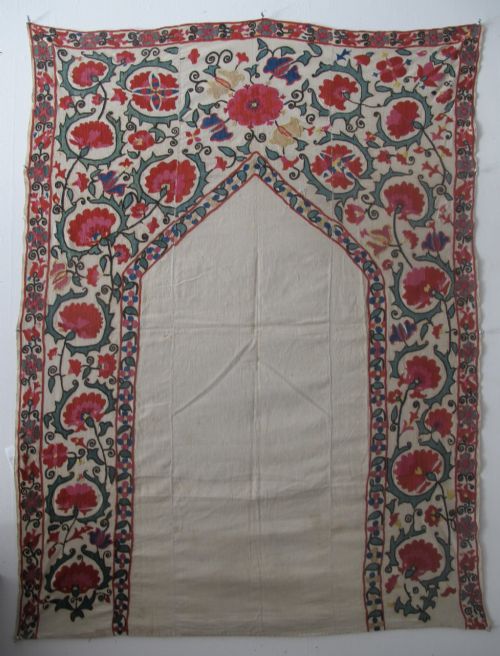
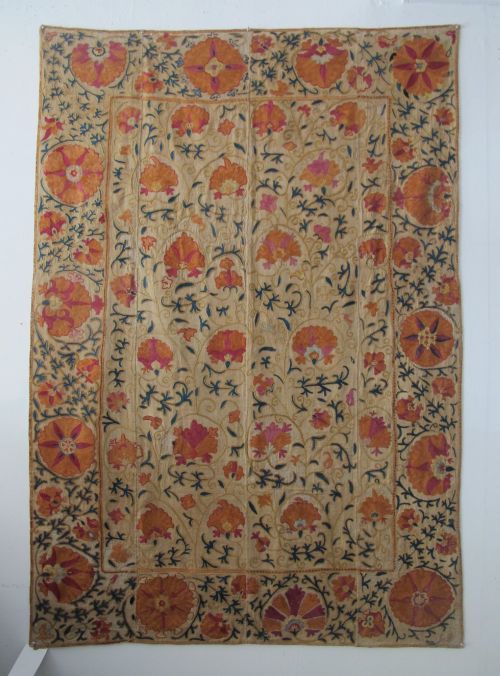
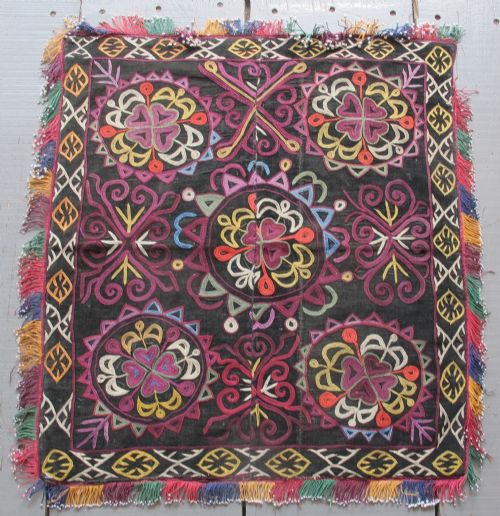
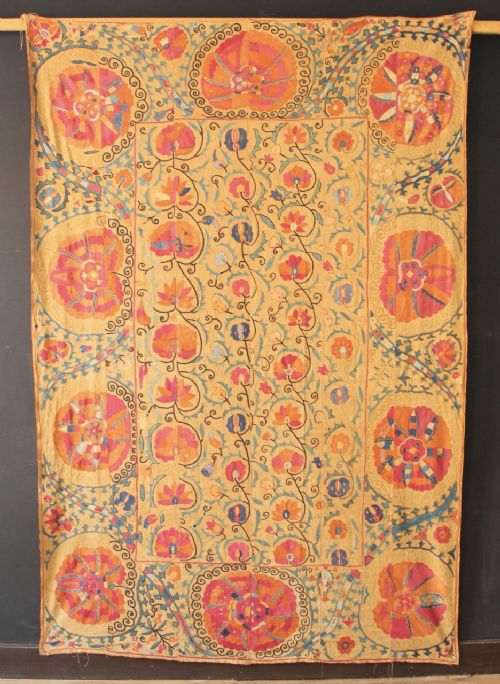
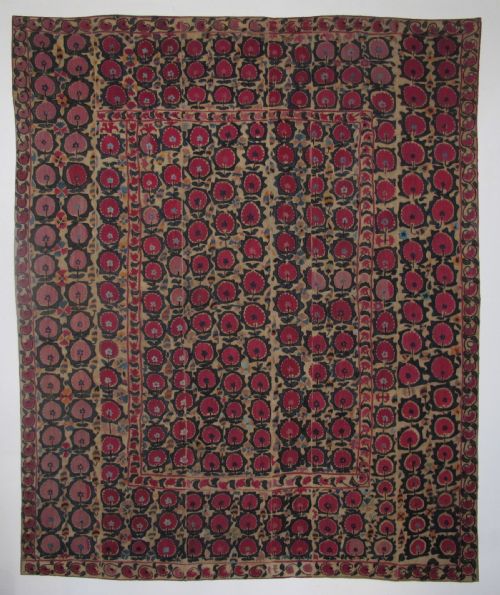
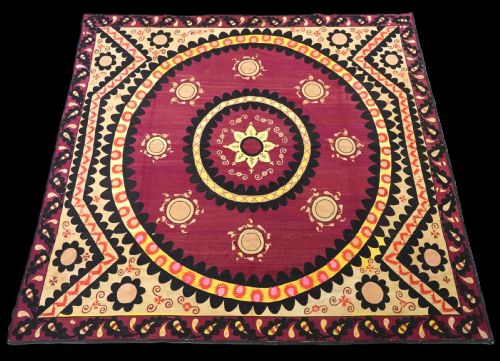
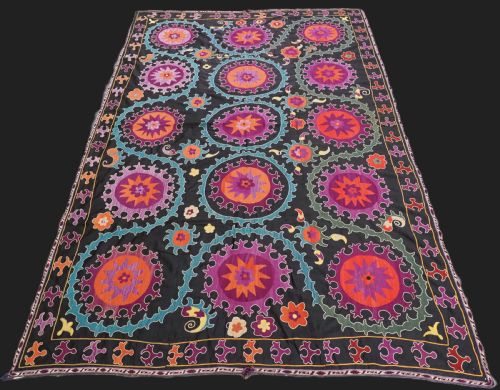
A traditional silk suzani is a decorative embroidered textile originating from Central Asia, particularly Uzbekistan, created in regions such as Bokhara, Tashkent, and Shakrisabz. These textiles take various forms, including large wall hangings, bed covers, mirror covers, and smaller prayer panels.
The pieces encountered on this page date from the nineteenth and early twentieth centuries, spanning periods from around eighteen hundred through to nineteen thirty. They display distinct regional designs, from architectural motifs and large medallions to floral patterns and full work layouts.
How they were made
Artisans embroidered silk thread onto textile grounds made of cotton, wool, red adras silk-cotton mix, or velvet, sometimes incorporating glass beads. Stitching techniques included fine needlework to build up dense floral or geometric patterns across the fabric.
Ground fabrics varied by region and period, with makers utilising yellow, red, or black cotton backgrounds, as well as specialised woven foundations like adras. The interaction between the silk embroidery thread and the contrasting background fabric defines the visual weight of each textile.
Traditional Silk Suzani Retail Price Guide 2026
Typical asking prices for traditional silk suzani among the pieces listed under this phrase on Sellingantiques today, from the lower quarter to the upper quarter. They describe what is for sale here now, not the wider market.
Listings feature pieces spanning the nineteenth and early twentieth centuries, dated from eighteen hundred to nineteen thirty.
What varies in quality
The density of the embroidery separates standard panels from fully worked examples, where the silk covers almost the entire ground fabric. Tashkent full work pieces and dense floral layouts demonstrate greater labour investment than spaced designs.
Precision of the needlework, the vibrancy and condition of the dyed silk threads, and the integrity of the original foundation fabric determine the overall standing of an antique piece.
The Traditional Silk Suzani Glossary
- Adras
- A traditional woven fabric made from a mixture of silk and cotton yarns, frequently utilised as a foundation ground for embroidery. It provides a distinct textured base for the stitching.
- Nim suzani
- A half-sized or smaller variation of the standard textile panel, suited for compact spaces. These smaller formats often share the same intricate designs as larger wall hangings.
- Palak
- A fully embroidered suzani variant where the background fabric is densely covered with silk stitching. This style represents a high level of needlework execution.
- Ru-i-jo
- A traditional Uzbek bed cover format designed for domestic use. These pieces often feature specific layouts suited to covering bedding during the day.
Traditional Silk Suzani: Frequently Asked Questions
How were traditional silk suzani textiles used?
These embroidered panels served practical and decorative roles in Central Asian homes, functioning as wall hangings, bed covers, and mirror covers. Families used them within domestic interiors to add warmth, colour, and status.
They also appeared during important domestic ceremonies, forming part of a bride's dowry. Today, collectors primarily display them as wall art or textile hangings in modern interiors.
How do you date an antique suzani?
Dating relies on examining the materials, natural dye colours, and structural characteristics of the ground fabric. Nineteenth-century examples often display specific regional palettes and hand-spun cotton or silk supports.
Changes in thread types and design layouts across later periods help differentiate pieces from the eighteen fifties through to the nineteen thirties. Expert comparison with documented regional styles provides further chronological context.
What is a Lakai suzani?
Lakai suzanis originate from the Lakai Uzbek nomadic groups, differing from urban workshop pieces through distinct tribal designs and motifs. They frequently employ wool or cotton grounds with bold, dynamic embroidery.
These tribal pieces often take smaller formats, such as torba ilgich or compact hanging panels. Their asymmetrical layouts reflect nomadic artistic traditions rather than formal urban workshop patterns.
How should you care for a textile wall hanging?
Display these textiles away from direct sunlight to protect the natural silk dyes from fading over time. Hanging them with appropriate non-damaging support spreads the physical weight evenly across the fabric.
Avoid excessive cleaning or washing, relying instead on gentle dusting by professional conservators if required. Keeping them in stable humidity conditions preserves both the silk embroidery and the cotton or wool ground.