





Traditional Serving Tray Stand
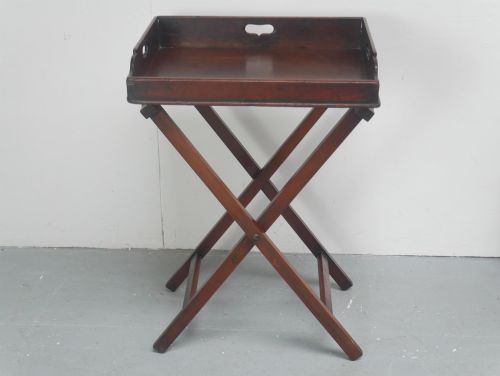
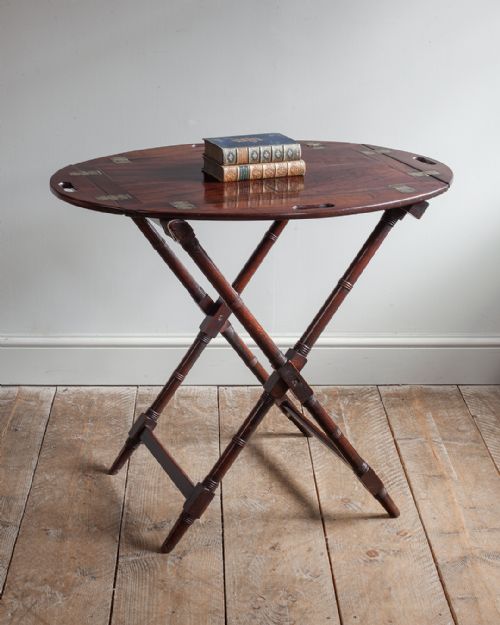
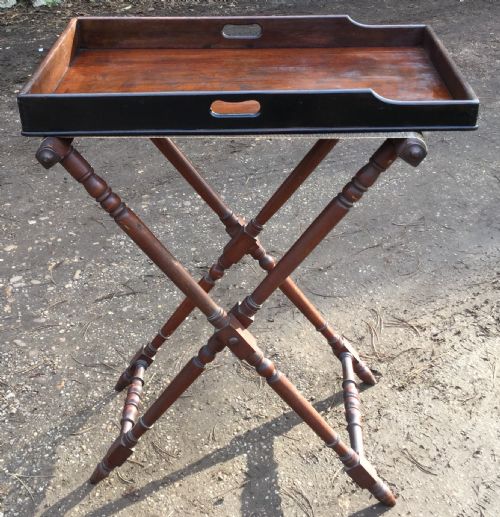
These traditional serving tray stand examples combine a removable upper tray with a collapsible or fixed lower frame for practical entertaining.
Traditional Serving Tray Stand
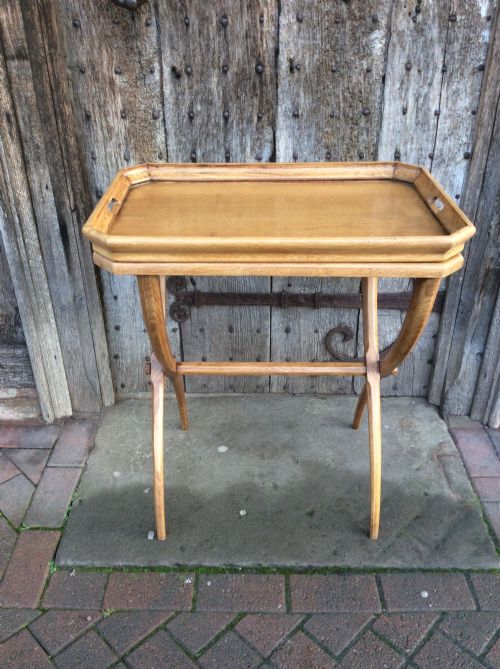
A traditional serving tray stand brings together a portable upper surface and a supporting wooden base designed for easy deployment. Buyers searching for a traditional serving tray stand will encounter forms ranging from Georgian and Victorian folding designs to early twentieth-century oak and Japanese examples.
Mahogany and oak dominate the timber choices across the selection, often taking the form of a butlers tray paired with its original stand. These pieces serve equally as occasional tables and functional side furniture in domestic spaces.
How they were made
Cabinet makers utilised dense hardwoods such as mahogany and oak to construct both the tray rims and the folding leg assemblies. Traditional joinery methods ensure the frames collapse smoothly while maintaining rigidity when locked open.
Surface treatments range from polished mahogany finishes to carved oak details and Japanese lacquer work decorated with gold leaf. Certain examples incorporate canvas webbing or cotton webbing supports within the tray structure.
Traditional Serving Tray Stand Retail Price Guide 2026
Typical asking prices for traditional serving tray stand among the pieces listed under this phrase on Sellingantiques today, from the lower quarter to the upper quarter. They describe what is for sale here now, not the wider market.
What varies in quality
Quality rests upon the fidelity of the timber selection and whether the tray retains its original matching stand rather than a later replacement. Finer examples display crisp carving on the oak frames or superior figured mahogany grain across the tray base.
The precision of the folding mechanism and the tightness of the corner joints distinguish standard utility pieces from more refined examples. Retaining original surfaces without heavy modern intervention preserves the integrity of the piece.
The Traditional Serving Tray Stand Glossary
- Butlers tray
- A rectangular wooden tray featuring raised sides, frequently pierced with handgrips, designed to lift off its support frame.
- Folding stand
- A collapsible wooden base constructed with X-frame legs or hinged supports that allow compact storage.
- Sake table
- A low Japanese table utilised for serving drinks, appearing in early twentieth-century examples alongside matching cups.
- Gold leaf
- Thinly beaten gold applied as a decorative finish to lacquer surfaces on specific imported pieces.
Traditional Serving Tray Stand: Frequently Asked Questions
What is a traditional serving tray stand?
A traditional serving tray stand is a piece of furniture comprising a removable wooden tray set upon a collapsible or fixed support frame. These items were originally utilised for serving food and drinks before folding away when not in use.
Today, they function as versatile side tables or occasional tables in living areas and dining spaces. Their dual nature allows the top to be lifted off for serving while the stand remains in place.
How do I date a tray stand?
Dating relies on observing timber choices, construction techniques, and stylistic markers associated with periods like the Georgian and Victorian eras. Mahogany and heavy oak frames often point to nineteenth-century or earlier craftsmanship.
Examining the joinery at the corners of the tray and the hinges of the stand helps differentiate older handmade pieces from later reproductions. Original stands matched to their trays carry more historical consistency.
Are the trays removable?
Most trays on these stands are entirely detachable, designed to be lifted off the folding base for carrying items between rooms. This portability formed the primary purpose of the original design.
Certain examples feature fixed surfaces or tables where the tray secures to the stand, functioning strictly as an occasional table rather than a serving tray.
How should I care for wood stands?
Maintaining wooden tray stands involves dusting regularly with a soft cloth and avoiding placement near direct heat sources or strong sunlight. Timber finishes such as polished mahogany or oak benefit from occasional appropriate wax application.
Protecting the surface from excessive moisture prevents water rings on the antique wood. Treating the hinges gently ensures the folding mechanism continues to operate smoothly.