



Traditional Salon Sofa
A traditional salon sofa brings period elegance and deep seating to a reception room, offering refined woodwork and plush upholstery.
Traditional Salon Sofa
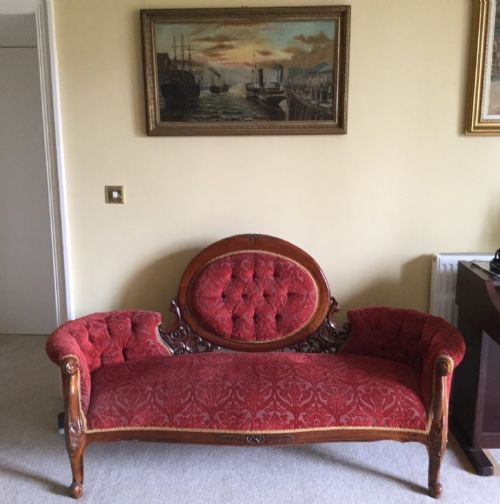
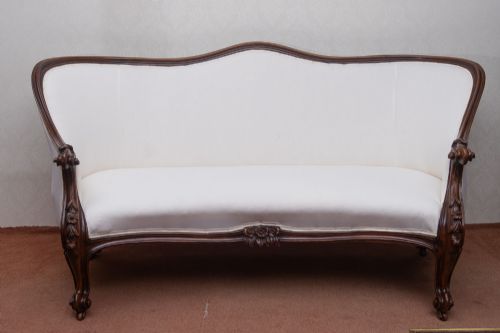
A traditional salon sofa brings together seating designed for formal entertaining and leisurely repose. These pieces span the nineteenth and early twentieth centuries, encompassing Victorian, Edwardian, and Sheraton Revival styles alongside Chippendale influences.
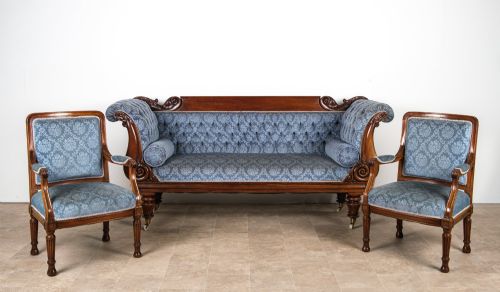
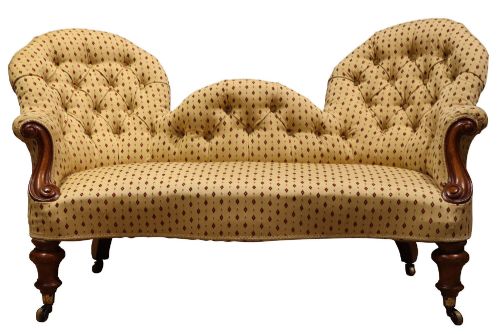
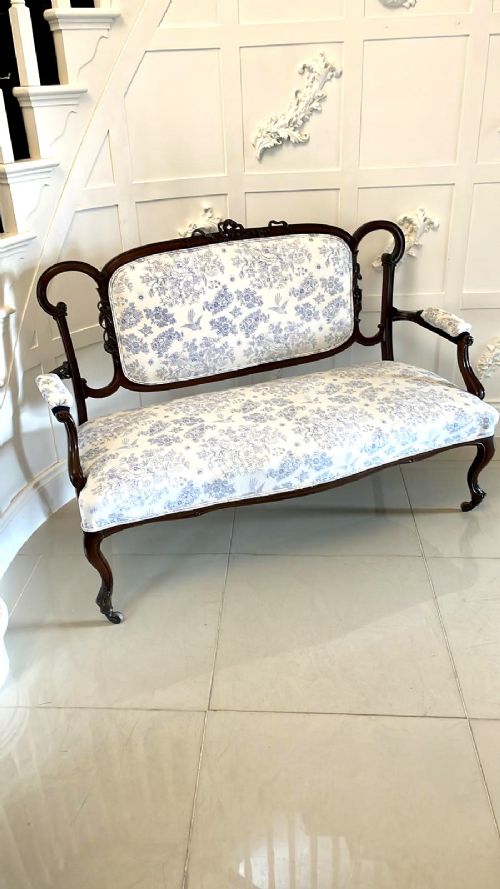
The inventory on this page ranges from compact double ended settees and Chesterfield designs to larger reception salon chaises and complete parlour suites. Frames are typically configured as standalone settees or paired with matching chairs to form cohesive room arrangements.
How they were made
Timbers such as mahogany, walnut, and satinwood form the rigid structural frames of these pieces. Carved details adorn the woodwork, showcasing craftsmanship through shaped rails, lion paw feet, and exposed wooden framing.
Upholstery relies on traditional textiles including velvet, damask, and brocade over sprung settee bases. Brass elements sometimes accent the construction, while deep pile fabrics provide the primary surface texture.
Traditional Salon Sofa Retail Price Guide 2026
Typical asking prices for traditional salon sofa among the pieces listed under this phrase on Sellingantiques today, from the lower quarter to the upper quarter. They describe what is for sale here now, not the wider market.
A settee finished with carved lion paw feet demonstrates that nineteenth-century makers liked their furniture to have a bit of bite.
What varies in quality
The distinction between standard examples and superior pieces rests on the crispness of the timber carving and the selection of cabinet woods. Fine grain mahogany or figured walnut frames with intricate hand-carved motifs indicate higher production standards.
The choice of covering material and the integrity of the underlying sprung base define the upholstery tier. Substantial textiles like heavy damask and deep pile brocade elevate the piece above simpler fabric implementations.
Morison & Co Edinburgh
The Traditional Salon Sofa Glossary
- Settee
- An upholstered seat for more than one person, typically featuring a back and arms. These forms serve as the primary seating units within formal reception spaces.
- Chippendale style
- A design aesthetic characterised by ornate carved woodwork drawing on eighteenth-century traditions. Such pieces often exhibit elaborate wooden frames and cabriole influences.
- Double ended sofa
- A seating form featuring symmetrical raised ends that allow reclining from either direction. This configuration provides balanced proportions for central room placement.
- Damask
- A reversible figured fabric woven on a jacquard loom with patterns visible on both sides. This textile is frequently utilised for formal upholstery applications.
- Chesterfield settee
- A deep-buttoned upholstered seating form with arms and back of the same height. This style offers a distinct silhouette within Victorian seating.
Traditional Salon Sofa: Frequently Asked Questions
What is a traditional salon sofa?
A traditional salon sofa is an upholstered seat produced during the nineteenth or early twentieth centuries, designed for formal reception rooms and parlours. These items combine exposed wooden frames with decorative textile coverings.
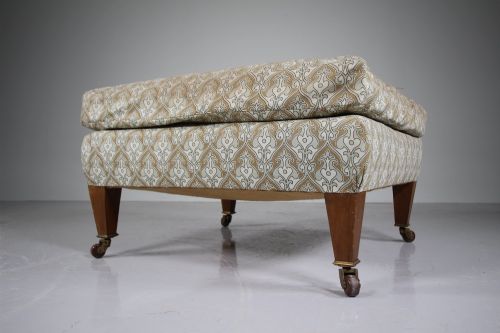
They appear in various formats, from compact double ended settees to larger suites that include matching chairs and footstools.
How do I identify the period of a sofa?
Dating relies on observing the combination of timber framing, carved details, and upholstery style. Victorian pieces often feature heavy mahogany frames and deep buttoning, whilst Edwardian examples may display lighter satinwood.
Looking at the underlying construction and the specific decorative motifs helps place the piece within the nineteenth or early twentieth century.
Where were salon sofas placed?
These sofas were historically positioned in principal reception rooms, drawing rooms, and formal parlours for entertaining guests. Their decorative backs and carved frames suited placement away from walls.
In modern interiors, they function effectively as statement seating in living rooms or studies where period character is desired.
What materials are used in these sofas?
Frames are constructed from hardwoods such as mahogany, walnut, and satinwood, often featuring hand-carved ornamentation. Brass accents may also be present on feet or structural mountings.
Upholstery utilises fabrics like velvet, damask, and brocade, supported by traditional sprung bases designed for comfort.