





Traditional Rural Landscape Painting
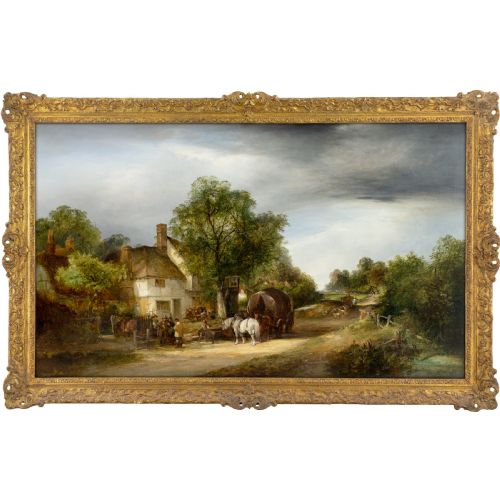
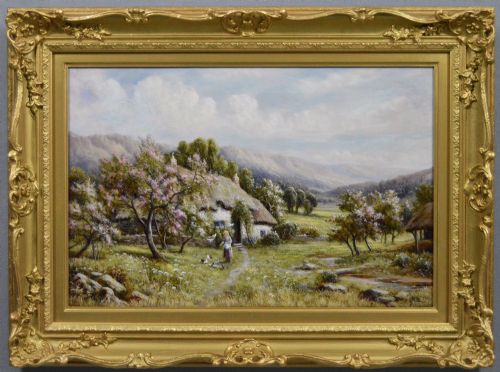
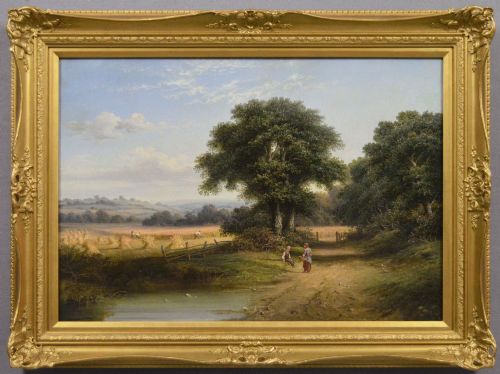
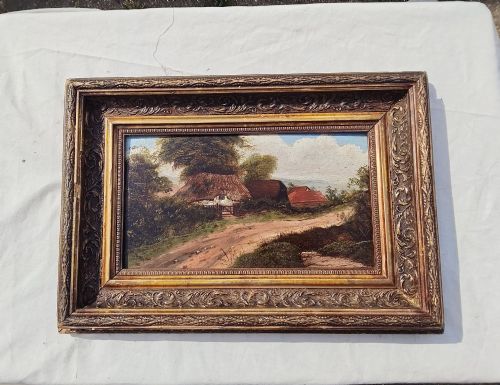
Traditional rural landscape painting captures the pastoral quiet of the British countryside, bringing fields, cottages and rivers into domestic interiors.
Traditional Rural Landscape Painting
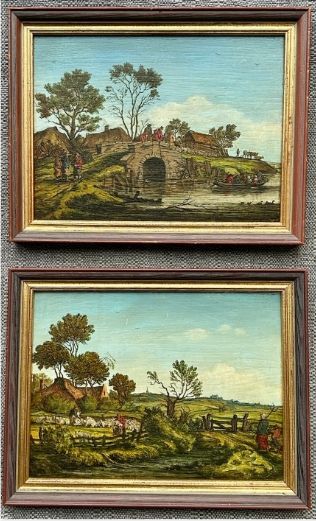
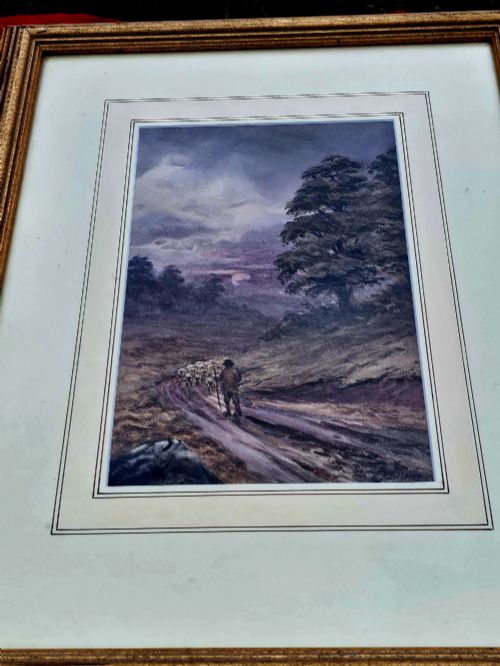
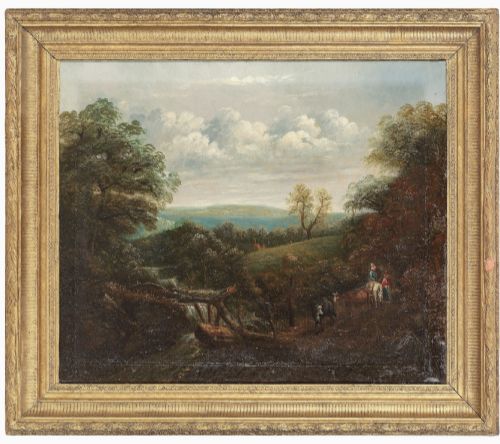
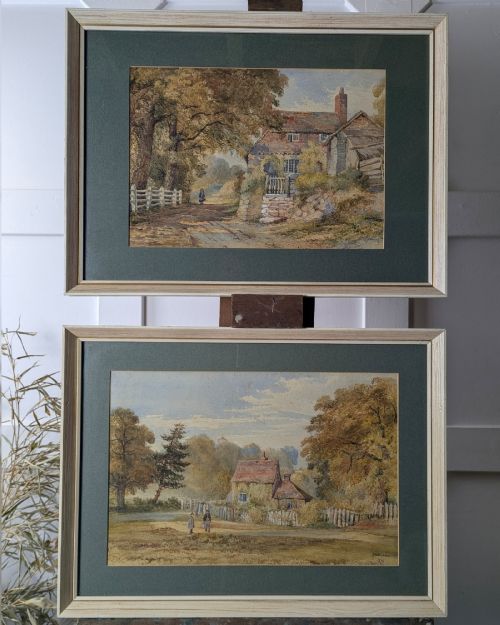
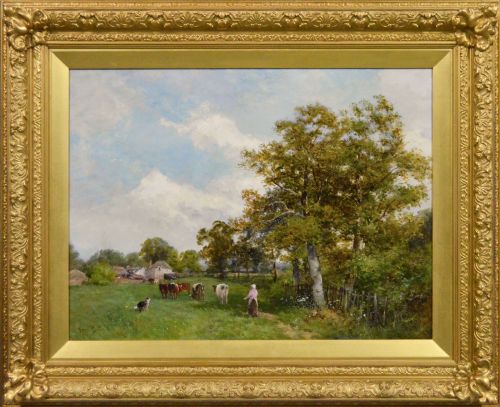
A search for traditional rural landscape painting reveals depictions of farm life, river valleys and coastal villages created during the nineteenth and early twentieth centuries. These works record agrarian scenes through the eyes of British and Flemish artists working in oil and watercolour.
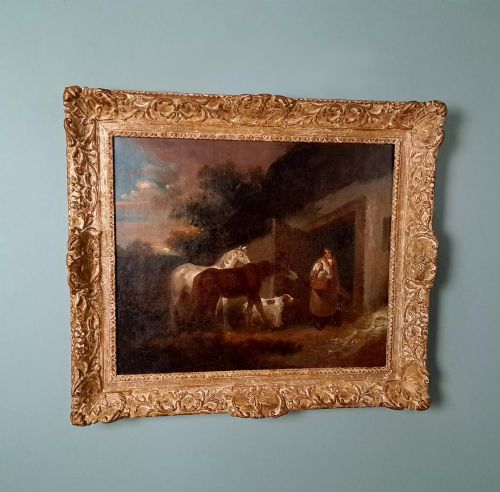
The pieces on this page lean heavily towards Victorian and Edwardian portrayals of cottages, livestock and harvesting. Painters such as William Henry Mander and David Bates placed working figures and animals centrally within rolling countryside settings.
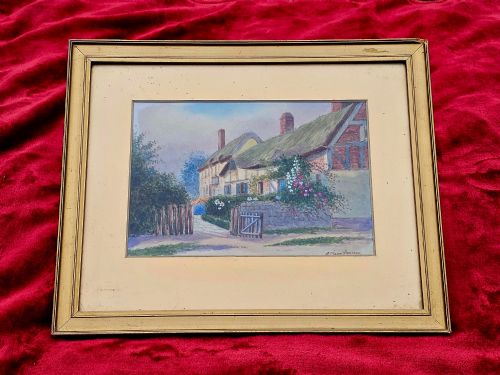
Collectors encounter both oil on canvas and delicate paper watercolours, often housed in original gilt wood and gesso frames. The subjects range from Yorkshire farmsteads to southern pastoral river paths.
Materials and methods
Artists relied primarily on oil paint applied to canvas, wooden panels, board or card, building up texture and depth through layered brushwork. Watercolours on paper offer a lighter, transparent finish, frequently capturing atmospheric skies and damp meadows.
Wooden supports were prepared with gesso before painting, providing a smooth, stable ground for detailed oil compositions. Frames constructed from wood and finished with intricate gesso mouldings completed the presentation of these artworks.
Distinctions in quality
The strength of a composition rests upon the handling of light and the natural integration of figures within the wider terrain. Weaker examples present static subjects and repetitive foliage, whereas accomplished works convey genuine movement in water, clouds and grazing herds.
The condition of the pigment and the integrity of the original support influence the standing of a piece. Works retaining their untouched canvas and period gilt frames preserve their historical character more fully than those subjected to heavy restoration.
Percy Lancaster·David Bates·Robert John Hammond·Walter Heath Williams·John Horace Hooper·George Oyston·Sydney Yates Johnson·William Greaves·Miles Birkett Foster·George Morland·Owen Bowen·Henry Charles Fox·Herbert Royle·Reginald Grange Brundrit·Fred Lawson·Henry John Yeend King·William Hoggatt·William Sydney Cooper·Samuel Joseph Clark·James Orrock
The Traditional Rural Landscape Painting Glossary
- Oil on Canvas
- A traditional painting medium where coloured pigments suspended in oil are brushed onto a stretched woven fabric support. This technique allows for rich colour blending and durable surfaces.
- Watercolour
- A paint consisting of water-soluble pigments applied to paper, known for its translucent washes and luminous effects. It requires swift execution as corrections are difficult to make.
- Gesso
- A plaster-like mixture applied to wood panels or frames to create a smooth, absorbent base for gilding and paint. It gives decorative frames their crisp architectural profiles.
- Victorian Pastoral
- A nineteenth-century artistic genre focusing on idealized, peaceful rural scenes involving shepherds, cattle and rustic cottages. These paintings romanticise the traditional rhythms of agricultural labour.
Traditional Rural Landscape Painting: Frequently Asked Questions
How do I identify the period of a rural painting?
Examine the materials used for the support, such as prepared wooden panels, millboard or heavy canvas. Stylistic clues like Victorian costume and Edwardian palette choices also point to specific decades.
Frame construction provides further evidence, as nineteenth-century gilt wood and gesso mouldings differ noticeably from twentieth-century alternatives. Signatures, when traceable to listed exhibition painters, narrow down the exact working years.
What is the difference between oil and watercolour landscapes?
Oils offer a heavy, textured surface built up with opaque pigments on canvas or wood panels. They tolerate variable indoor environments well and retain deep colour saturation.
Watercolours utilise thin, translucent washes on paper, creating bright, airy effects that require glass protection. They suit delicate interior spaces away from direct sunlight.
Where were these pastoral scenes usually painted?
Artists travelled across rural Britain to sketch and paint working farms, riverbanks and villages from life. Popular sketching grounds included Yorkshire, Dorset, Sussex and Kent.
Many works document specific local landmarks, such as named Yorkshire dales or Sussex pathways, recording agricultural practices that have since vanished.
How should I care for a framed landscape painting?
Keep paintings away from direct sunlight and steady humidity fluctuations to protect both the canvas and the wooden frame. Dust gilt frames gently with a soft, dry brush without using liquid cleaners.
Ensure that paper watercolours remain sealed behind clean glass to prevent moisture damage and fading of the pigments.