



Impressionist Woodland Landscape Painting
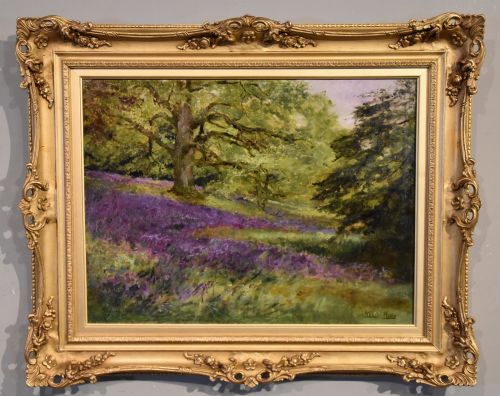
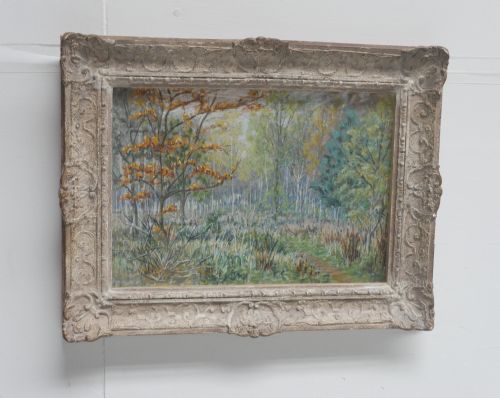
Impressionist woodland landscape painting captures dappled light beneath a canopy, bringing the quiet interior of trees directly to your wall.
Impressionist Woodland Landscape Painting
An impressionist woodland landscape painting places the viewer amidst trees, forest paths, and country lanes, capturing shifting light and shadow through loose brushwork rather than rigid detail. You will encounter these works spanning periods from the nineteenth century through the mid-twentieth century, including Victorian and Edwardian examples.
The compositions vary from intimate watercolours on paper to large oil paintings on canvas and wood panel. French Naturalism and the Barbizon School heavily influence the earlier works, while later pieces show mid-century impressionism and British regional traditions.
How they were made
Artists built these scenes primarily using oil paint on stretched canvas, wooden panels, or occasionally pastel and watercolour on paper. Canvases frequently sit within frames finished with gesso and gold leaf.
Makers applied paint with visible, rapid brushstrokes to record transitory effects of weather and seasonal light, such as autumn foliage or sunset through branches.
Several artists clearly paused their brushwork when the bluebells bloomed.
What varies in quality
The distinction lies in the artist's command of light, atmosphere, and brushwork structure. Superior examples convey the tangible density of a wood and the specific quality of daylight, whereas lesser pieces rely on formulaic repetition of tree trunks and foliage.
Material preparation also separates works, with finer canvases maintaining proper tension and stable paint layers that resist cracking over decades.
Paul Désiré Trouillebert·Thomas Bromley Blacklock·Owen Bowen·Henri Joseph Harpignies·James Proudfoot·Rowland Henry Hill·Ernest Higgins Rigg·Edward H Holder·George F Wetherbee·Herbert Royle·John Falconar Slater·Hans Kappel Øvre·Walter Emsley·Charles Edmond Rene His·Kershaw Schofield·George Neil
The Impressionist Woodland Landscape Painting Glossary
- Barbizon School
- A French movement of landscape painters who worked directly from nature during the mid-nineteenth century. They focused on realism, mood, and loose atmospheric effects.
- Gesso
- A plaster-like mixture applied to wooden panels or frames as a base for painting or gilding. It provides a smooth, stable surface for the subsequent layers.
- Oil on Canvas
- Pigments bound in a drying oil, typically linseed, spread across stretched woven fabric. This medium allows for rich texture and prolonged working times.
- Pastel Painting
- Works created using sticks of powdered pigment held together with a binder. They offer powdery, luminous colour surfaces that require protective framing.
- Watercolour
- A paint consisting of water-soluble pigments applied to paper. It produces translucent washes of colour that let the white paper ground illuminate the scene.
Impressionist Woodland Landscape Painting: Frequently Asked Questions
What is an impressionist woodland landscape painting?
These artworks depict trees, forests, and rural pathways through the lens of impressionism, emphasising light, colour, and brushwork over photographic precision.
Originating across various European and British traditions, they record natural scenery from the nineteenth and twentieth centuries.
How were these landscape paintings displayed?
Most works are set within traditional wooden frames, often accented with gesso and gold leaf to complement the tones of the canvas.
They were intended for domestic interior walls in parlours, drawing rooms, and studies.
How do I identify the period of a painting?
Dating relies on stylistic clues, the framing materials, signatures, and the specific type of canvas or panel preparation used by the artist.
Barbizon and Victorian influences generally point to the nineteenth century, while mid-century impressionism indicates later decades.
Are these paintings executed in oil or watercolour?
The selection includes both oil paint on canvas or wood panel and watercolours or pastels on paper.
Oils provide heavy texture and deep pigment, whereas watercolours offer translucent, delicate views of woods and lakes.
Where do these woodland scenes usually originate?
The pieces originate from British, French, and Scandinavian schools, capturing local rural views such as Yorkshire valleys, French forests, and Danish woods.
Artists often travelled to specific rural regions to paint en plein air.