




Herbert Royle Artwork
Herbert Royle artwork consists of British Impressionism paintings capturing rural scenes.
Herbert Royle Artwork
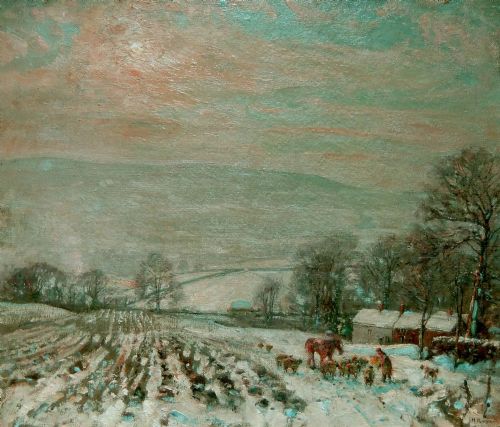
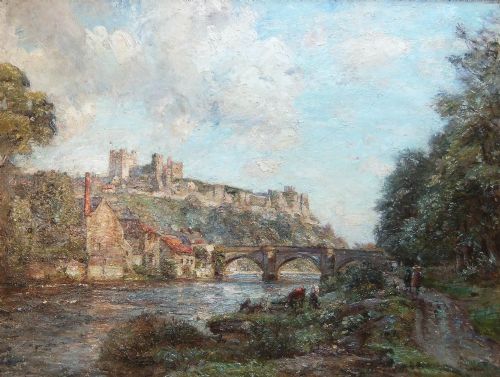
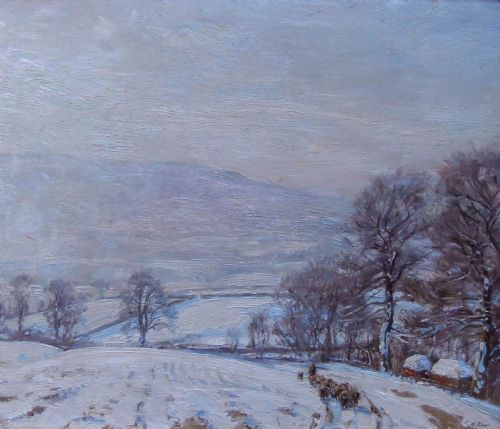
Herbert Royle artwork comprises oil paintings produced during the 1910, 1920, and 1930 periods. These pieces predominantly depict regional landscapes, farmsteads, and seasonal rural activities.
The subjects focus heavily on Wharfedale, Nesfield, and surrounding northern English locations, alongside occasional Welsh coastal scenes. Buyers encounter oil paintings rendered on canvas and wood supports.
How they were made
The works utilise oil paint applied to canvas or wood surfaces. Painters employed impressionistic brushwork to capture natural light and atmospheric weather conditions.
Compositions rely on pigment layering to build texture within pastoral and winter landscapes. Support materials like stretched canvas and wood panels provide sturdy foundations for the oil medium.
Several winter scenes record freezing conditions near Nesfield, proving that Yorkshire frost inspired warmth on canvas.
What varies in quality
Quality differences stem from the handling of light and the complexity of the landscape composition. Stronger examples display more confident brushwork and a distinct sense of atmosphere.
The depth of colour and the precision of tonal transitions distinguish standard topographical records from more accomplished impressionistic studies.
Herbert Royle
The Herbert Royle Artwork Glossary
- Oil painting
- A work of art created using pigments bound in a drying oil medium. This technique allows for rich colour blending and textured surface applications.
- Canvas
- A closely woven heavy fabric used as a surface for oil painting. It provides structural tension when stretched across a wooden frame.
- British Impressionism
- A painting style focusing on light, everyday subjects, and loose brushwork rather than rigid academic detail. Artists working in this manner prioritize visual impressions over precise finishes.
- Fine art painting
- A visual expression created primarily for aesthetic value and conceptual meaning. These works require dedicated skill in draughtsmanship and colour theory.
Herbert Royle Artwork: Frequently Asked Questions
What is Herbert Royle artwork?
Herbert Royle artwork consists of oil paintings created within the British Impressionism style. The subjects focus predominantly on rural landscapes, farmsteads, and seasonal farming scenes.
Production dates span the decades from 1910 through 1930. These works record specific northern English and Welsh locations.
How were these oil paintings constructed?
Artists applied oil paint onto canvas or wood supports using impressionistic brush techniques. This method captures changing natural light and atmospheric conditions.
The physical construction involves durable foundational materials paired with pigment layers. Stretched canvas and wooden panels ensure long-term stability for the painted surface.
Where do these scenes originate?
The recorded locations include Wharfedale, Nesfield, Richmond, and the Dee Estuary. Rural farms, canals, and winter landscapes form the core of the subject matter.
Regional specificity remains a central characteristic across the inventory. Coastal Welsh views also appear alongside Yorkshire pastoral settings.
How do you date these paintings?
Dating relies on recorded periods spanning 1910, 1920, and 1930. Stylistic traits align with British Impressionism traditions from those decades.
Subject matter and materials support chronological placement within the early twentieth century. Documentation attached to individual pieces provides further historical context.