


Traditional Rosewood Seating
Traditional rosewood seating brings rich timber grain and classic forms into a room, offering enduring comfort through dining chairs, armchairs, and stools.
Traditional Rosewood Seating
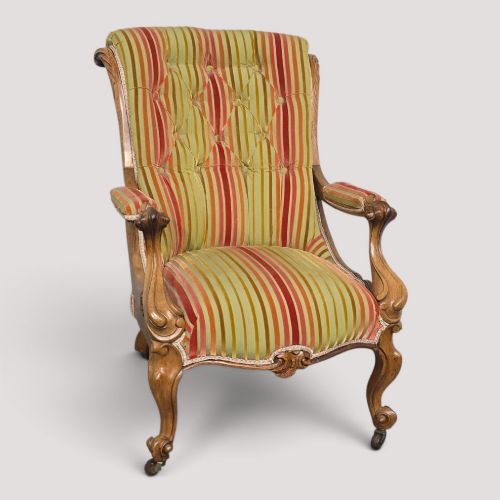
Traditional rosewood seating spans dining chairs, library armchairs, stools, and sofas found in British and Chinese designs. These pieces range from Regency dining sets to Qing Dynasty throne chairs and Victorian balloon back chairs.
The most common examples on this page are dining chairs in sets of four, six, or ten, alongside individual library armchairs and Chinese hardwood hall furniture. British pieces tend to follow Regency, William IV, and Victorian styles, while Chinese examples showcase carved hardwood and hongmu construction.
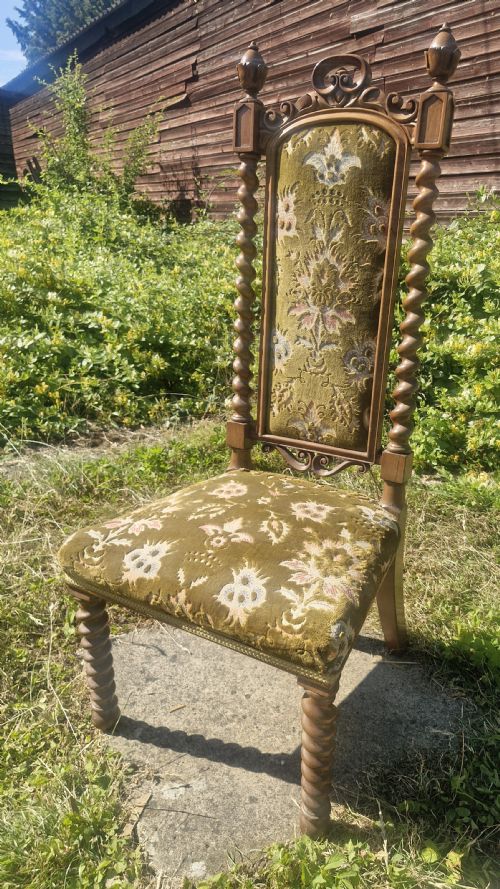
Forms also include chaise longues, daybeds, ottoman stools, and nursing chairs, reflecting domestic routines from the nineteenth century. Buyers encounter everything from simple side chairs to elaborate horseshoe benches and salon suites.
Materials and construction methods
Construction relies heavily on dense timbers such as rosewood, huanghuali wood, and hongmu, often shaped with intricate carving. British pieces frequently utilise solid rosewood frames, while Chinese items employ traditional hardwood joinery.
Upholstery materials include velvet and various traditional fabrics, sometimes accented with brass details. Many chairs incorporate marquetry, inlay, and high backs to combine structural strength with decorative appeal.
Listings feature rosewood, hardwood, hongmu, and huanghuali, paired with velvet and brass across Regency, Victorian, and Qing Dynasty styles.
Distinctions in craftsmanship and design
Quality shows in the depth and crispness of the carved details on the timber frames, particularly on high back chairs and throne chairs. Superior sets display consistent grain matching across multiple dining chairs and robust joinery in the underframes.
The sophistication of the upholstery work and the selection of fine velvet or fabric contribute to a piece's standing. Finer examples maintain structural integrity alongside well-preserved patination on the rosewood surfaces.
The Traditional Rosewood Seating Glossary
- Rosewood
- A dense, heavy timber prized for its dark grain and durability in fine furniture. It takes a high polish and forms the primary material for these seating items.
- Hongmu
- A category of dense traditional Chinese hardwoods often translated as red wood. It appears frequently in Qing Dynasty throne chairs and hall furniture.
- Balloon Back
- A chair design featuring an oval or loop-shaped backrest resembling a balloon, popular during the Victorian era. This form provides ergonomic support while maintaining a delicate silhouette.
- Library Armchair
- A large, sturdy armchair designed for reading rooms, often upholstered in velvet or fabric. These pieces prioritise deep seating and substantial rosewood frames.
- Regency
- An English design period spanning the early nineteenth century defined by classical restraint and neoclassical influences. Furniture from this era often incorporates subtle carving and elegant lines.
Traditional Rosewood Seating: Frequently Asked Questions
How do I clean rosewood furniture?
Dust the timber regularly with a soft, dry cloth to prevent surface scratching. Avoid harsh chemical sprays and excess moisture which can damage the polished finish.
Condition the wood periodically using traditional beeswax to maintain its natural lustre. Keep pieces away from direct heat sources and strong sunlight to prevent fading.
Are dining chair sets complete?
Listings feature sets ranging from four to ten matching chairs. These groups originate from nineteenth-century dining rooms and salons.
Buyers should examine the individual items within a set to confirm uniform timber grain and minor variations in hand-carved details.
What is the difference between Regency and Victorian seating?
Regency seating draws inspiration from classical antiquity with clean lines and restrained ornamentation. Woods are typically dark and polished to a smooth finish.
Victorian pieces often feature heavier proportions, elaborate carving, and curved profiles such as the balloon back. Upholstery styles also shifted to incorporate deeper tufting and varied fabrics.
Can I use antique armchairs every day?
Solid rosewood construction provides robust structural integrity suitable for daily use. Many library armchairs and dining chairs were built to withstand heavy domestic routines.
Regularly check the joints and upholstery support to ensure the piece remains stable under everyday weight.