

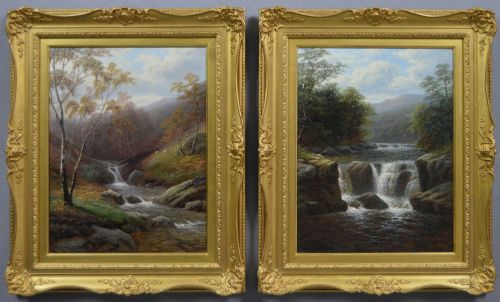
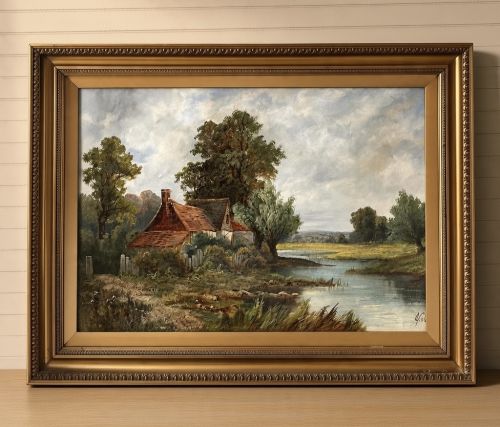
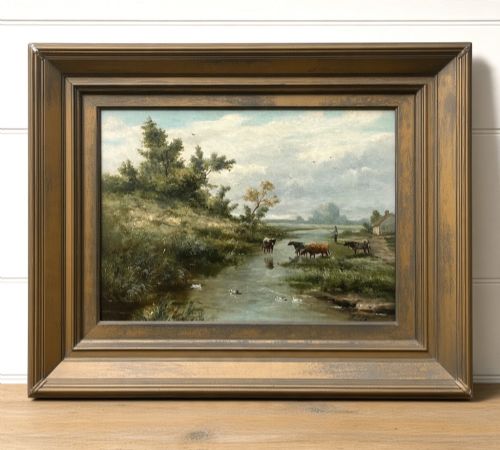
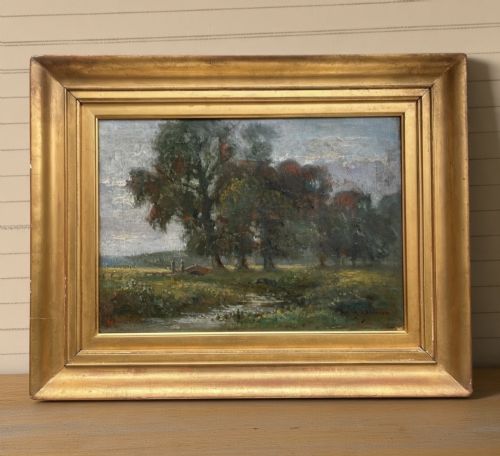
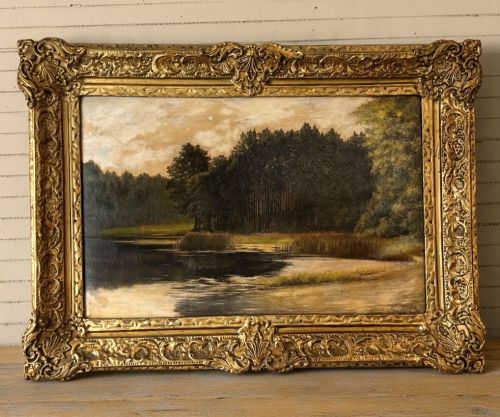
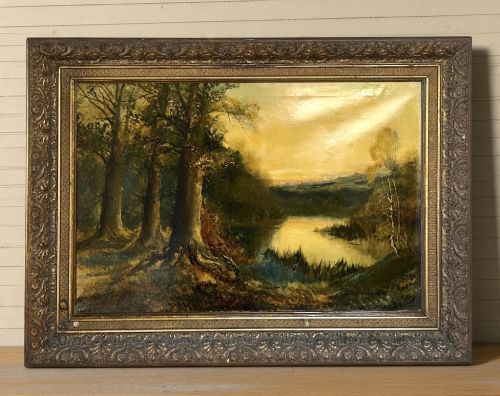
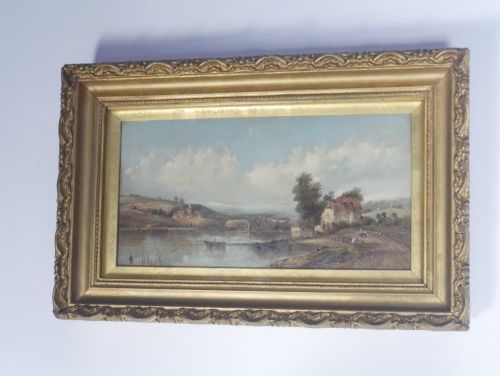
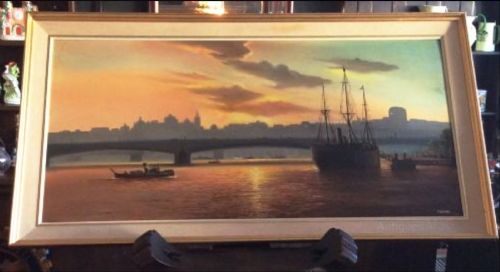
Traditional River Oil Painting
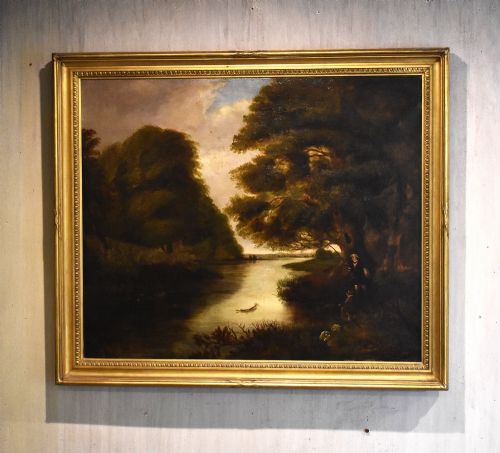
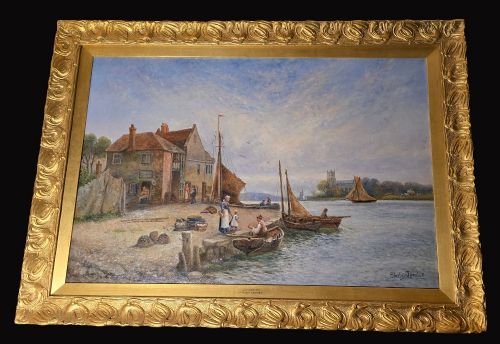
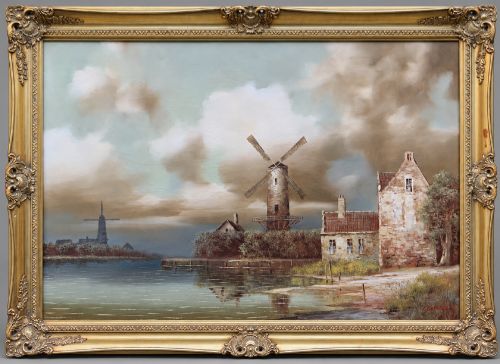
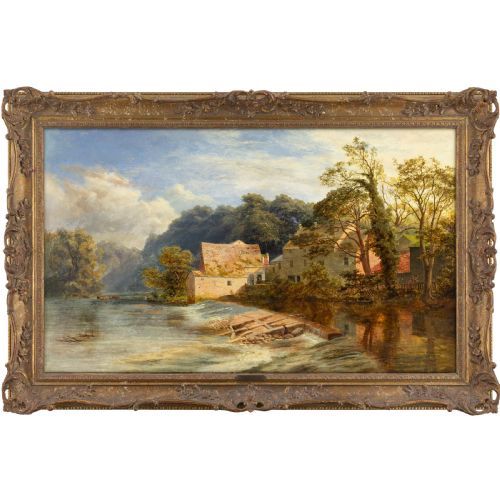
A traditional river oil painting captures the quiet permanence of water, willow banks and stone bridges through the layered pigment of past centuries.
Traditional River Oil Painting
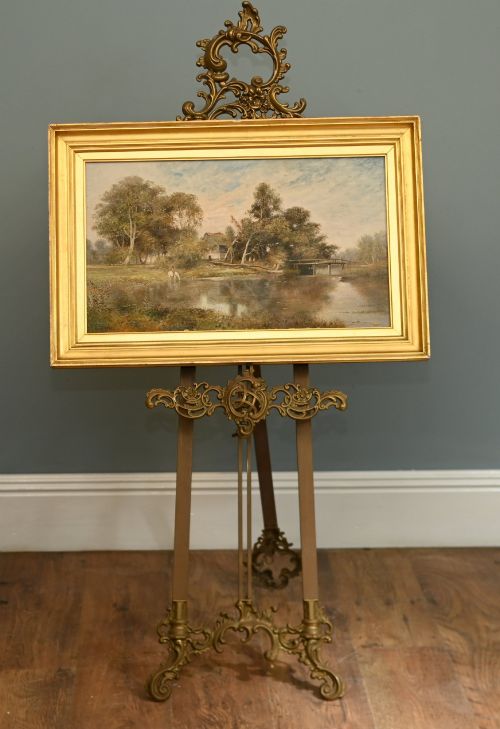
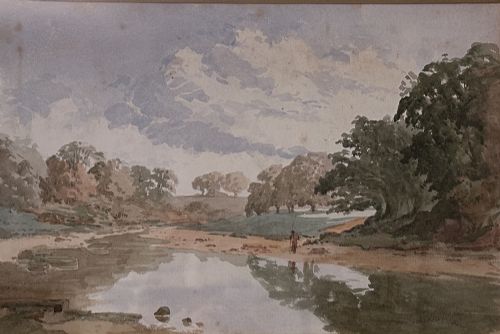
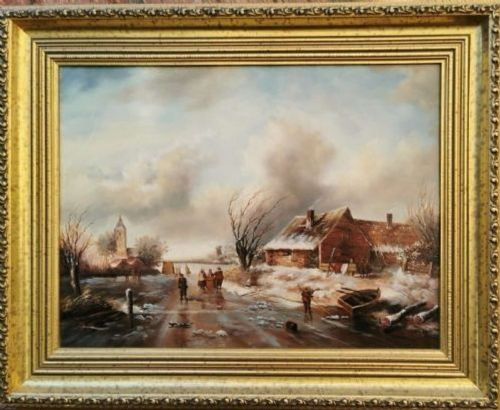
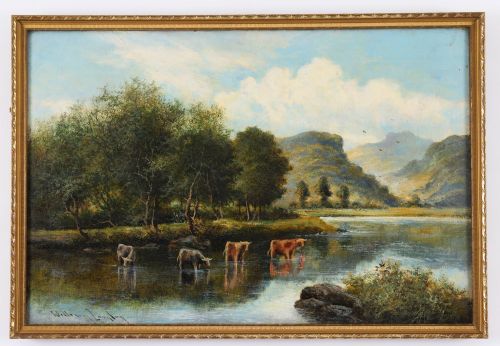
When you search for a traditional river oil painting, you encounter canvases and wood panels depicting rural waterways, pastoral Thames scenes, and Dutch waterways produced across the nineteenth and early twentieth centuries. These works range from intimate depictions of cottages beside the Greta or the Teme to large panoramic vistas framed in gilt wood.
The prevalent examples on this page date from the Victorian and Edwardian periods, capturing scenes of angling, cattle watering, and bridge crossings by named British and European artists. The subject matter reflects a sustained nineteenth-century fascination with the quiet pastoral idyll, rendered through naturalist and impressionist observation.
Markers of Quality
Quality rests in the handling of light and atmosphere, where superior works capture the specific humidity and morning mood of a river valley rather than relying on formulaic foliage. The precision of drawing in architectural elements such as stone bridges or moored boats distinguishes accomplished hands from workshop repetitions.
The integrity of the original paint surface dictates overall excellence, with finer pieces retaining distinct brushwork and rich impasto without heavy overpainting or structural compromise to the canvas.
Traditional River Oil Painting Retail Price Guide 2026
Typical asking prices for traditional river oil painting among the pieces listed under this phrase on Sellingantiques today, from the lower quarter to the upper quarter. They describe what is for sale here now, not the wider market.
The listings feature nineteenth-century and early twentieth-century works executed in oil on canvas and wood panel.
William Mellor·George Cole·Fred Solway Merriman·Henry Cooper·Stanley Leader·Adolf Johann Höffler·Robert Gallon·William Langley·E Steele·F Staple·GEORGE GRAHAM·W Klombeck·Albert Rieger·T C Hofland·Henry H Parker·T. Bergman·Sydney Yates Johnson·John Horace Hooper·Hubert Wellington·Archibald Kay·Alexandre Le Bihan·Thomas Baker
The Traditional River Oil Painting Glossary
- Oil on Canvas
- A traditional painting medium where coloured pigments suspended in drying oils are applied to a woven fabric support. This combination allows for rich blending and deep tonal graduation.
- Gesso
- A white paint mixture consisting of a binder mixed with chalk, gypsum, or pigment, used as a prepared surface on wood panels or frames before gilding or painting.
- Impasto
- The process of laying paint thickly on an area of the surface so that it stands out from it. This technique introduces literal texture to water highlights and foliage.
- Wood Panel
- A rigid support base made from timber used by artists before canvas became universal. Panels offer a stable surface that preserves fine detail over centuries.
Traditional River Oil Painting: Frequently Asked Questions
How do I date a river oil painting?
Dating relies upon stylistic markers in the clothing of figures, the architecture of bridges, and the preparation of the canvas or wood panel support. Nineteenth-century works often bear signatures, dates, or framer labels on the reverse.
Examining the stretcher frames and the type of nails or wedges used behind the canvas provides further chronological evidence for Victorian and Edwardian pieces.
Were these paintings made outdoors?
Many nineteenth-century artists made initial watercolour or pencil sketches beside the water before completing the final oil composition in the studio. The development of portable paint tubes later enabled artists to paint entire landscapes on location.
Works executed directly on the riverbank often possess a more immediate brushstroke and natural light capture than studio reconstructions.
What indicates a British school painting?
British school paintings typically focus on specific regional waterways, rural counties, and coastal estuaries with an emphasis on atmospheric weather conditions. Subject matter frequently includes local landmarks such as mills, locks, and pastoral livestock.
Palettes tend to favour naturalistic greens, earth tones, and muted greys characteristic of maritime and river climates.