
Traditional Refectory Kitchen Table
A traditional refectory kitchen table brings solid wood construction and generous proportions into a home, offering a functional gathering space built to last.
Traditional Refectory Kitchen Table
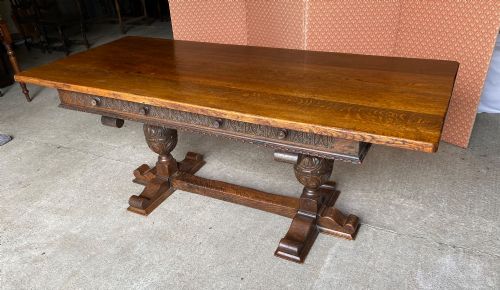
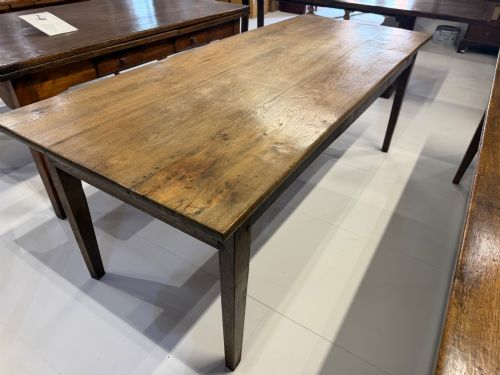
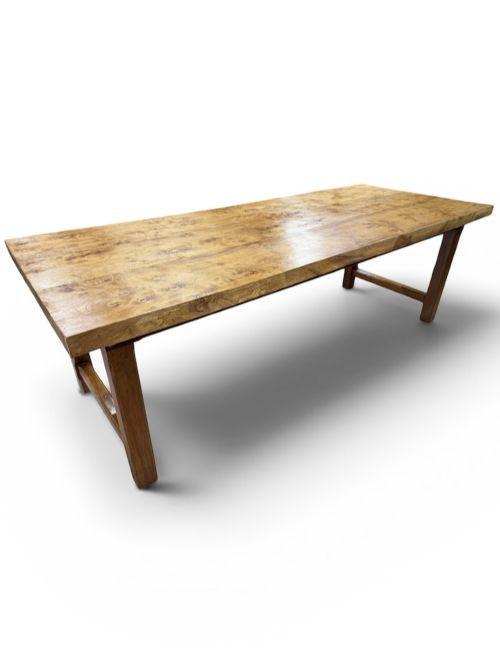
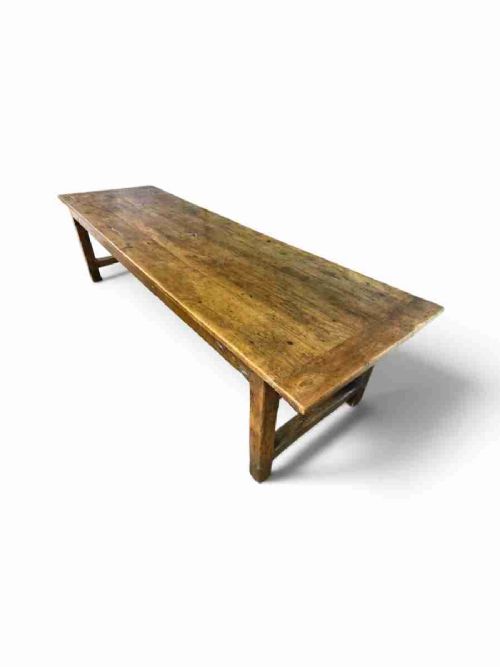
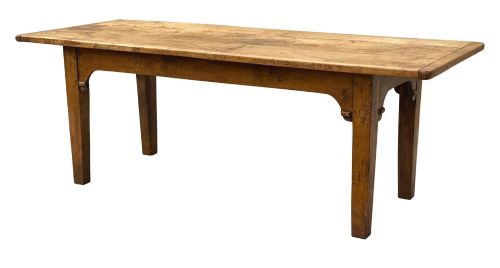
A traditional refectory kitchen table is primarily defined by its long rectangular surface and sturdy underframe, designed originally for communal dining. Buyers searching this phrase encounter dining tables, serving tables, and dining sets spanning multiple periods.
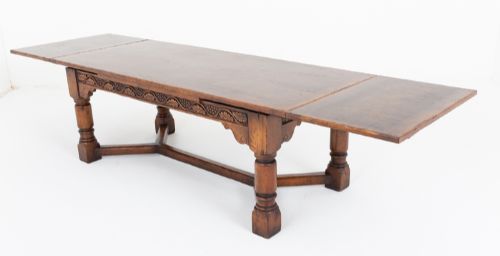
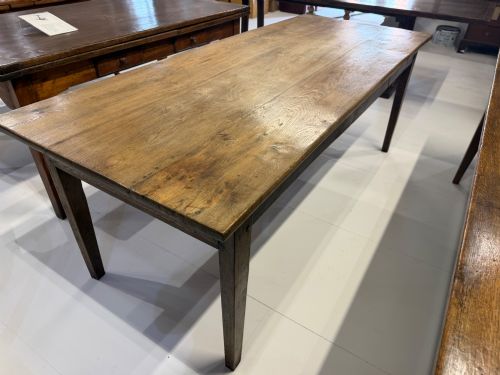
The selections here range from eighteenth-century single plank tops to nineteenth-century oak examples and early twentieth-century draw leaf versions. Styles stretch from rustic farmhouse and Jacobean revival to French provincial and arts and crafts.
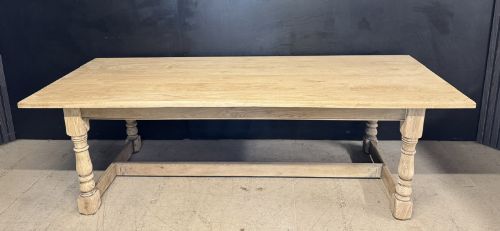
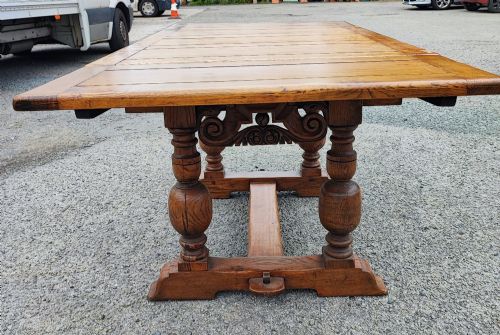
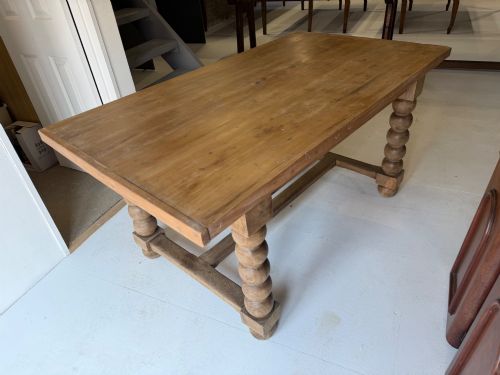
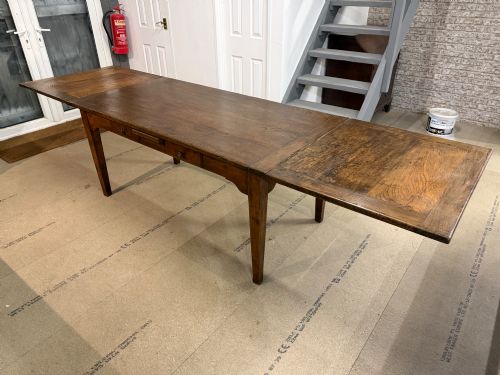
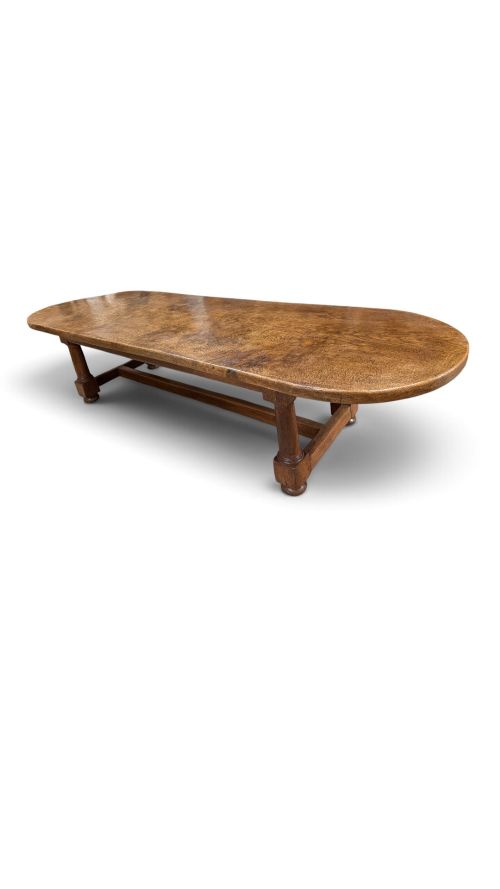
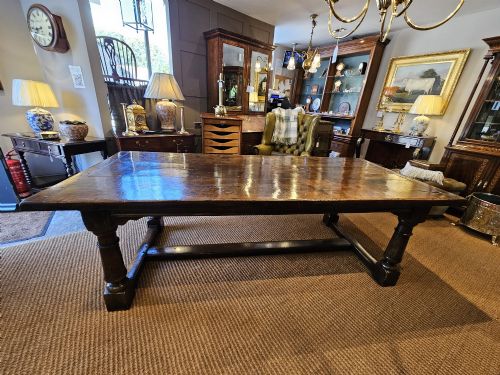
Oak dominates the offerings, supplemented by pine, beech, fruitwood, elm, and sycamore. Formats include heavy trestle ends, tapered legs, and bobbin turned supports alongside extending mechanisms.
What varies in quality
The grade of timber dictates much of the quality, with dense solid oak and single plank tops sitting at the upper end compared to lighter secondary woods. The integrity of the underframe and the smoothness of extension mechanisms such as draw leaves also separate standard examples from finer pieces.
Execution of decorative elements like carved oak details, shaped trestle ends, and bobbin legs shows the maker's skill. Surface patination, timber figure, and proportional balance define the visual standing of each piece.
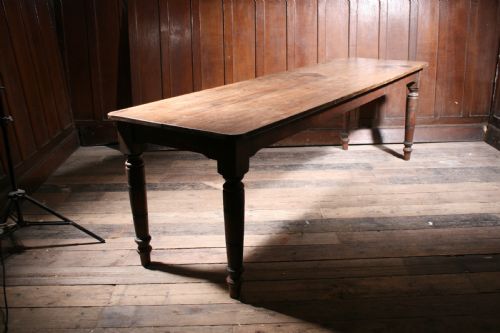
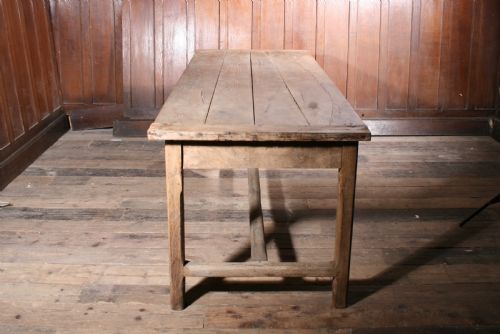
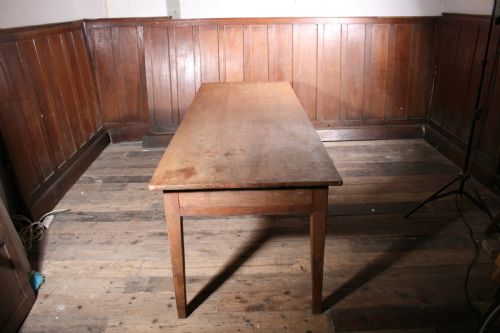
A solitary school dining table sits among the grand oak refectories, ready for ink stains and strict geometry.
The Traditional Refectory Kitchen Table Glossary
- Refectory table
- A long, narrow dining table traditionally used in monasteries and large halls, characterised by substantial legs or trestles joined by a central stretcher. This form provides maximum legroom along the length of the table.
- Draw leaf table
- A dining table equipped with sliding leaves stored beneath the main top that pull out to extend the surface length. This mechanism allows the table to accommodate more diners quickly.
- Bobbin leg
- A turned furniture leg shaped with a series of rounded, spool-like swellings carved into the wood. This decorative turning style appears frequently on seventeenth-century inspired pieces.
- Trestle ends
- Support structures at either end of a table consisting of vertical posts connected to feet or a base. They distribute weight evenly and offer stability for heavy timber tops.
Traditional Refectory Kitchen Table: Frequently Asked Questions
How do I seat eight people?
Look for tables measuring over six feet in length, or select a draw leaf design that extends to accommodate extra guests.
Refectory formats with inset trestles or four corner legs without heavy side aprons provide the most flexibility for chair placement.
Are these tables suitable for daily use?
Solid timber construction in oak, pine, and fruitwood makes these tables resilient for everyday kitchen and dining activities.
Regular waxing helps protect the wood grain from moisture and daily wear while maintaining the patina.
How do I identify oak from pine?
Oak is a heavy, dense hardwood with visible grain patterns, medullary rays, and a rich golden brown or dark brown tone.
Pine is a softer, lighter softwood with a paler colouration and more pronounced knots throughout the surface.