


Traditional Racehorse Wall Art
Traditional racehorse wall art captures the thunder of the turf and the legendary runners of the past through fine oil paintings and painted prints.
Traditional Racehorse Wall Art
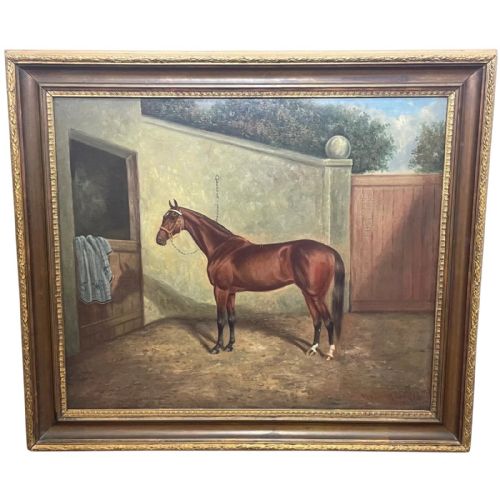
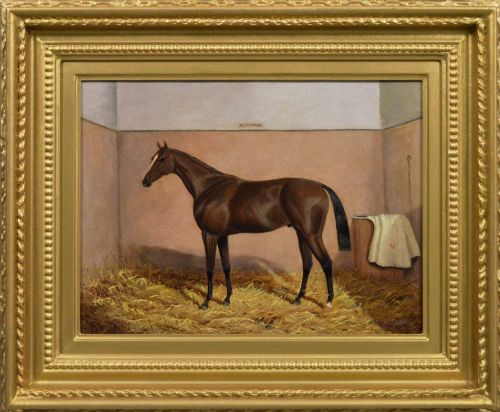
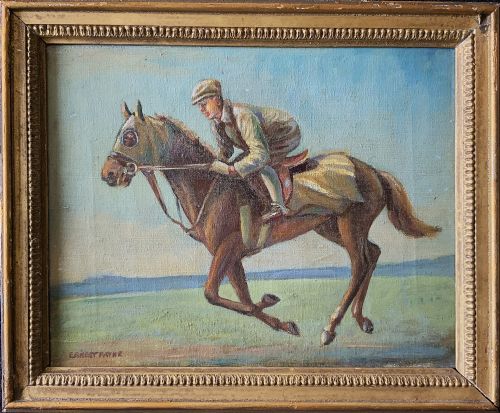
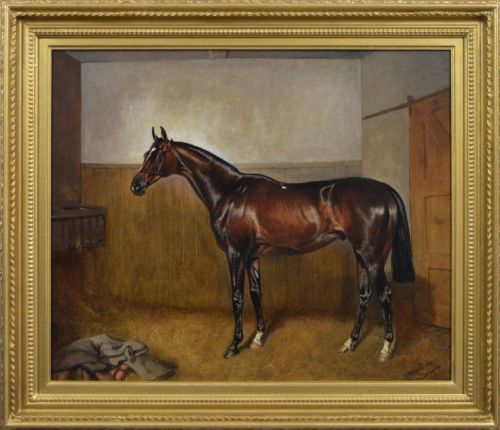
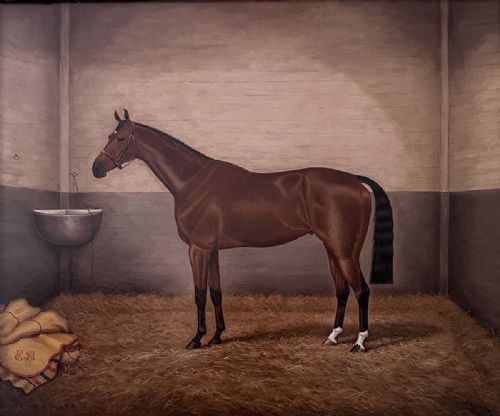
Traditional racehorse wall art encompasses oil paintings and framed prints depicting famous equine athletes and jockeys from past eras. These works range from Georgian prints to 20th century canvases celebrating legendary derby winners.
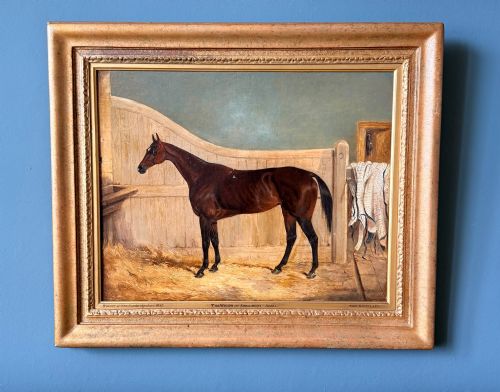
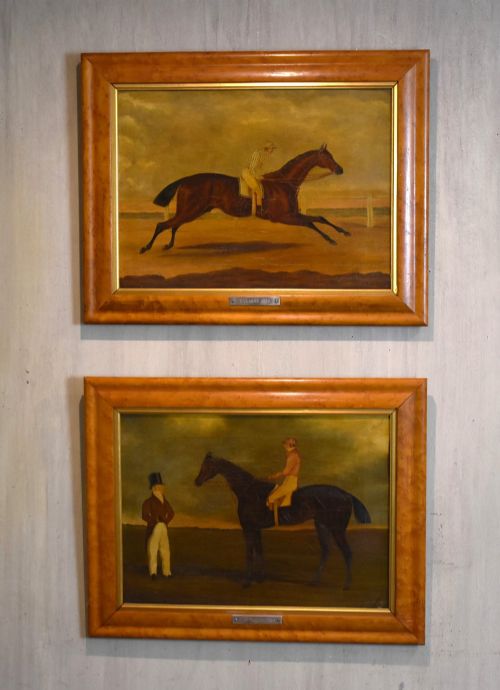
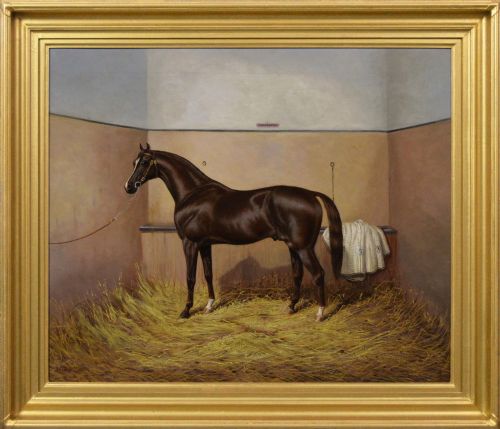
Buyers will most frequently encounter nineteenth century oil paintings on canvas depicting specific named horses, often accompanied by their jockeys. These pieces frequently document celebrated runners such as Spion Kop, Flying Fox, and Persimmon.
The category also embraces broader scenes of the turf, including depictions of race meetings and studies of horses before the start. Such works connect directly to the rich history of British sporting art.
How they were made
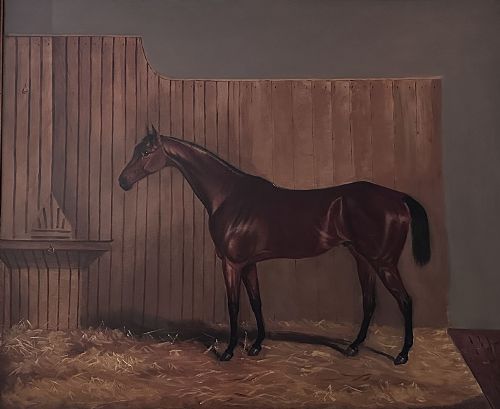
Artists utilised oil paint on canvas or wood panels to build up rich depictions of equine musculature and polished coats. Many of these works employ traditional glazing techniques to create depth in the horse portraits.
Framed prints in the selection utilise paper substrates, sometimes complemented by glass and giltwood framing. Certain pieces employ specific historical techniques such as eglomise reproduction to recreate earlier portraits.
Listings feature canvases, wood panels, paper prints, and glass elements framed in giltwood, spanning the Georgian period to 1930.
What varies in quality
Quality in these works rests upon the precision of anatomical rendering and the artist's ability to convey the character and conformation of the thoroughbred. Superior canvases demonstrate a deep understanding of equine movement and proportion.
The prominence of the subject matter and the documentation of the specific racehorse or jockey elevate certain pieces within the tradition. Works depicting known winners by named painters represent the pinnacle of the genre.
Albert Clark·Ernest Payne·John Alfred Wheeler·Thomas Walker Bretland·John Frederick Herring Snr·Abraham Cooper·Alfred Wheeler·John Atkinson·John Parker Davis
The Traditional Racehorse Wall Art Glossary
- Oil paint
- A slow-drying medium composed of pigments suspended in a drying oil, traditionally linseed. This material allows for subtle blending and luminous depiction of horse coats.
- Eglomise
- A technique where cold gilding and painting are applied to the reverse side of glass. This creates a mirrored, reflective finish often seen in decorative reproductions.
- Giltwood
- Wood that has been treated with a thin layer of gold leaf or gold-coloured composition. It frequently forms the ornate framing for nineteenth-century canvases.
- Sporting art
- A genre of painting and printmaking dedicated to rural sports, horse racing, and hunting. It flourished in Britain throughout the eighteenth and nineteenth centuries.
- Canvas
- A heavy woven fabric stretched across a wooden frame to serve as a sturdy surface for oil painting. It remains the primary support for traditional equine portraits.
Traditional Racehorse Wall Art: Frequently Asked Questions
What periods do these artworks cover?
The pieces span from the Georgian era through the nineteenth century and into the early decades of the twentieth century. This timeline reflects the golden age of British sporting art and horse racing.
Most items originate from the Victorian and Edwardian periods, capturing notable racehorses and jockeys of those specific decades on canvas and paper.
How do I identify a named racehorse?
Many works include inscriptions on the canvas or associated documentation naming famous winners such as Spion Kop, Flying Fox, or Persimmon. Artists often recorded the specific historic victory directly onto the composition.
Reference to notable jockeys like Fred Archer or Jack Watts alongside the horse further helps identify the specific historical event depicted.
What is the difference between an oil painting and a print?
Oil paintings are original works created by an artist applying pigmented oils directly onto canvas or wood. They exhibit textured brushwork and depth unique to the medium.
Prints are reproductions on paper, sometimes hand-painted or produced after works by established painters like John Frederick Herring Snr.
How should I hang and care for these pieces?
Traditional artworks require placement away from direct sunlight and excessive moisture to protect oil paints, giltwood frames, and paper prints. Stable indoor humidity helps preserve both canvas and wood supports.
Ensure that wall fixings are suitable for the weight of framed oils and heavy giltwood surrounds to support the pieces securely.