




Georgian Sporting Art Print
A georgian sporting art print brings the vigorous pursuit of the chase and the field directly onto the wall.
Georgian Sporting Art Print
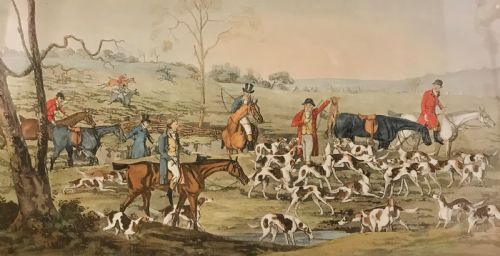
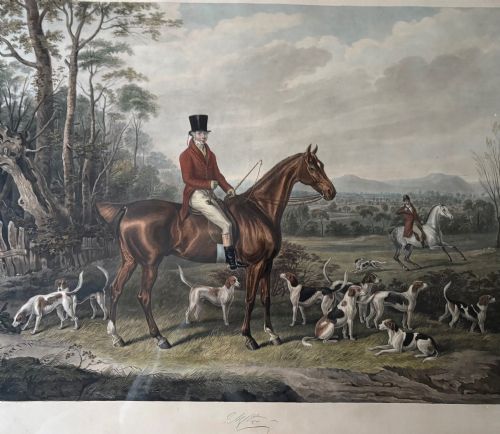
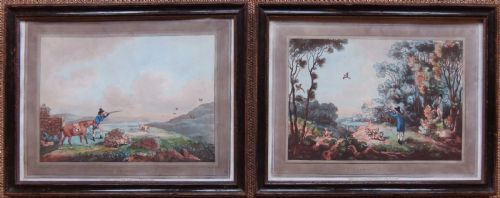
A georgian sporting art print captures the energetic pursuits of the era, from fox hunting and shooting to racing and traditional pastimes. These works document the social history and leisure of the period through graphic illustration.
The selections available here include hand-coloured engravings, lithographs, and copperplate prints framed under glass. Many are encountered as sets or pairs depicting sequences of sport or social satire.
Origins trace across the eighteenth and nineteenth centuries, spanning Georgian and Regency eras, alongside later reproductions and interpretations. The subjects range from renowned racehorses and hunters to anglers and sportsmen in the field.
How they were made
Production relied on paper supports receiving inked impressions from engraved copper plates or lithographic stones. Artisans frequently applied hand-colouring in watercolour or paint directly onto the printed surface.
Framing utilised wood often highlighted with gilt or gold leaf, complemented by protective glass. Specialised techniques such as reverse glass painting and eglomise also appear within the selection.
Listings feature paper works employing ink, watercolour, and paint alongside wooden framing with gilt and glass.
What varies in quality
Quality rests upon the clarity of the original impression and the precision of the plate work. Crisp lines in the engraving separate superior examples from softer, worn impressions.
The vibrancy and skill of the hand-colouring define the visual impact of the piece. Contemporary application of pigment by hand enhances the fidelity and character of the work.
Abraham Cooper·H. Alken·Sam. Howitt·William Bunbury·Hogarth·Riepenhausen
The Georgian Sporting Art Print Glossary
- Engraving
- A printmaking technique where an artist cuts lines directly into a metal plate to hold ink. This method produces sharp, precise details on paper.
- Aquatint
- A variant of etching that creates areas of tone resembling watercolour washes. It was frequently combined with line engraving for sporting prints.
- Lithography
- A planographic printing process based on the repulsion of oil and water on a flat stone or metal plate. It enabled rapid reproduction of illustrative works in the nineteenth century.
- Eglomise
- A technique involving the application of gold or silver leaf and painting to the rear face of glass. It provides a reflective, decorative border to framed works.
Georgian Sporting Art Print: Frequently Asked Questions
How should I hang these prints?
Keep works out of direct sunlight to prevent the paper and hand-applied watercolours from fading over time.
Hang them at eye level in rooms with stable humidity to protect both the paper and the wooden framing.
Are these prints originals from the period?
The selection includes genuine eighteenth and nineteenth-century impressions alongside later period reproductions and commemorative editions.
Check the listed date and medium to determine whether a piece is a contemporary print or a later issue.
Why are some prints hand-coloured?
Publishers routinely employed colourists to paint monochrome engravings by hand to increase their visual appeal and market value.
This traditional workshop practice ensures that even identical impressions often display unique variations in palette.
What framing styles do these prints use?
Many examples feature traditional wooden frames, sometimes enhanced with gilt or reverse glass decoration.
These surrounds often reflect the aesthetic of the period in which the print was issued or later re-framed.