


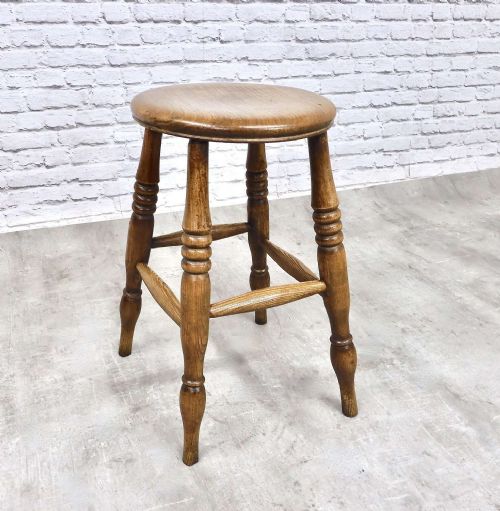
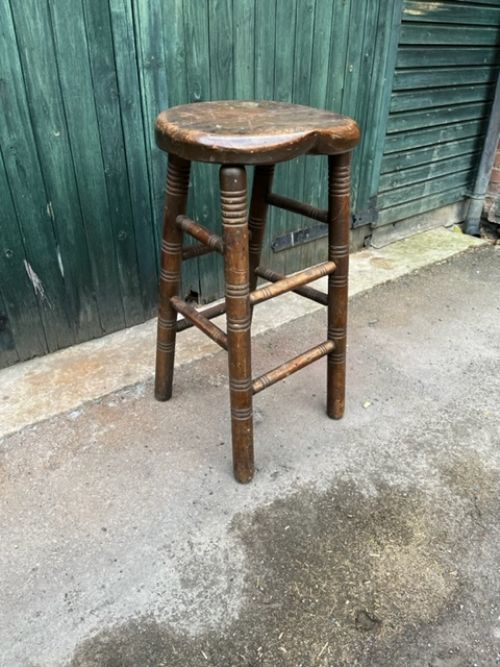
Traditional Pub High Stool
A traditional pub high stool brings honest utility and robust timber framing straight from tavern, mill, and taproom into the modern home.
Traditional Pub High Stool
When you search for a traditional pub high stool, you encounter tall seating designed for commercial and domestic counters, ranging from nineteenth century tavern examples to early twentieth century workspace seating. These pieces serve practical perch functions with elevated platforms and sturdy foot rails, built to endure heavy daily use in public houses and work environments.
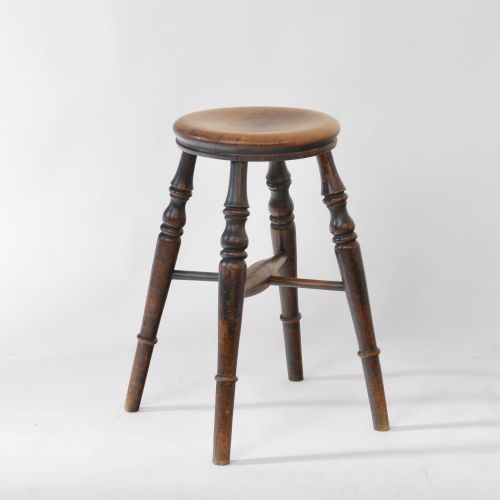
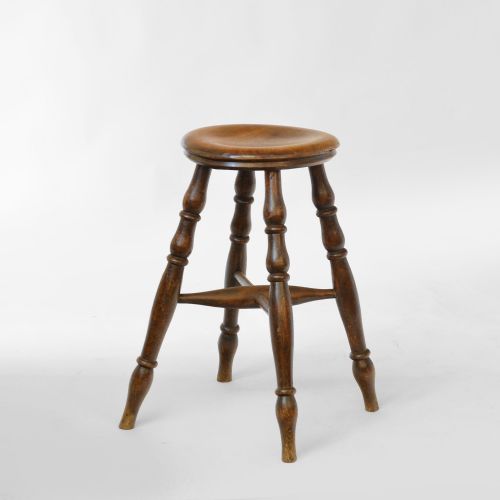
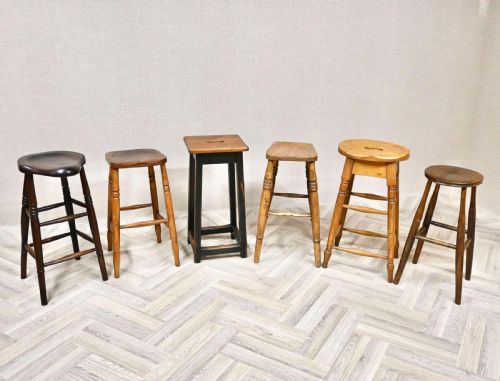
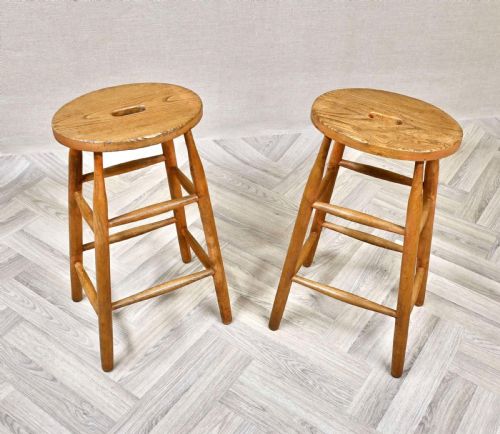
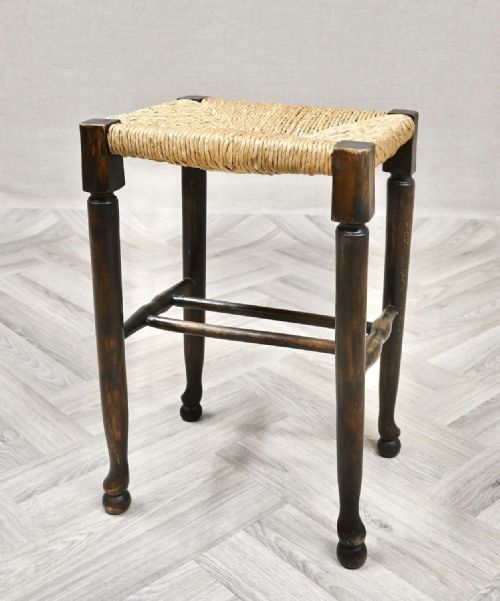
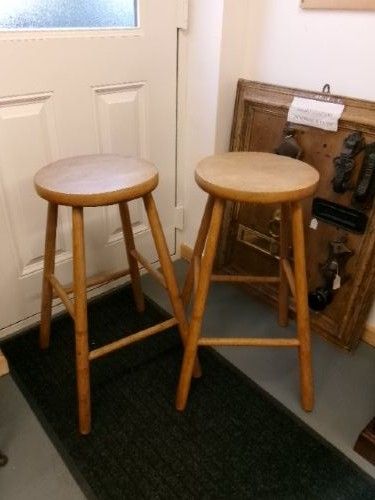
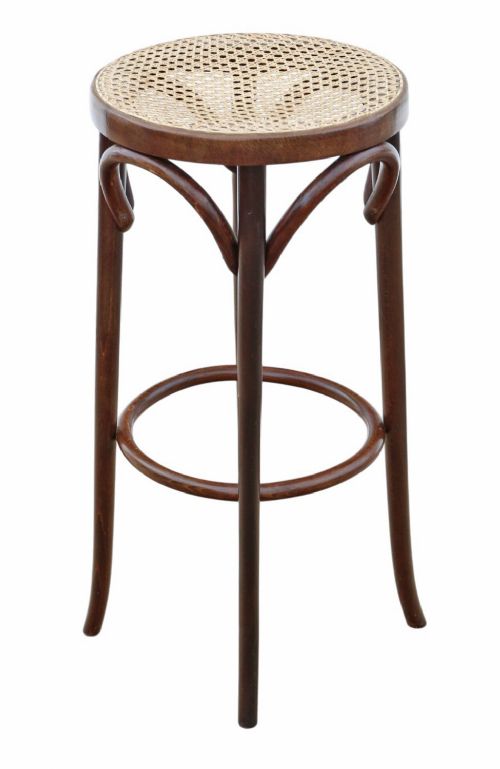
The most common versions met on this page include nineteenth century sycamore pub or tavern stools and turned beech clerk's stools, alongside pairs of tall elm-topped stools and bentwood high stools. These items display simple utilitarian forms shaped by their original roles in taverns, mills, and taprooms.
Originating across periods spanning the nineteenth century through the 1940s, these stools utilise solid timbers like elm, sycamore, beech, oak, and pine. Styles lean towards the rustic farmhouse, Victorian vernacular, and industrial, reflecting a heritage of straightforward functional carpentry.
How traditional pub high stools were made
Construction relies heavily on robust native timbers, with solid pine, oak, elm, sycamore, and beech selected for their structural strength and capacity to withstand constant wear. Makers utilised dense hardwoods for tops and turned supports to ensure stability at elevated heights.
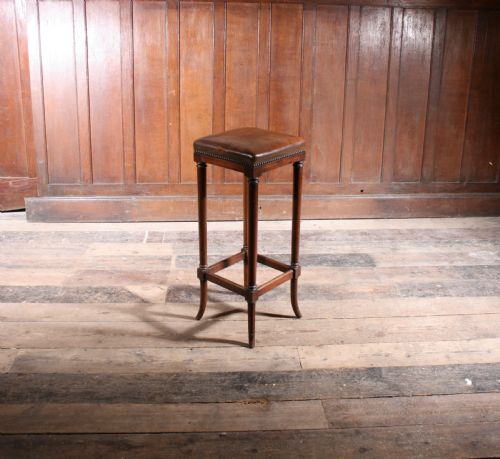
Techniques combine traditional woodturning for legs and stretchers with solid timber top construction, sometimes incorporating rush seating or leather upholstery. Joinery is straightforward and utilitarian, prioritising enduring stability over decorative flourish.
Listings feature solid timbers including elm, sycamore, beech, oak, and pine across periods from the nineteenth century to the 1940s.
What varies in quality
Quality rests upon the selection and integration of materials, where dense timbers like sycamore, elm, and beech provide superior weight and structural integrity compared to softer woods. The execution of turned stretchers and the tightness of joints determine whether a piece maintains its original rigidity.
Wear patterns and patination separate exceptional pieces from ordinary examples, as decades of authentic tavern or workspace use impart a depth of surface character that artificial ageing cannot replicate. The harmony between the original timber top and the turned base dictates the overall visual balance.
The Traditional Pub High Stool Glossary
- Sycamore
- A dense pale hardwood frequently utilised for table tops and stool seats due to its resistance to splitting and splintering under heavy daily use.
- Turned
- Shaped on a lathe to create cylindrical legs, spindles, or stretchers with decorative profiles. This technique provided both structural support and visual interest in traditional furniture.
- Bentwood
- Wood steamed and bent into curved shapes, commonly utilised in early twentieth century high stools and bistro seating for lightweight strength.
- Rush
- Dried marsh grasses twisted into cords and woven to create a resilient, textured seat pad. This traditional seating material offers flexibility and comfort.
- Vernacular
- Everyday objects designed by craftsmen for practical local use rather than high artistic style, embodying honest regional traditions and straightforward utility.
Traditional Pub High Stool: Frequently Asked Questions
What defines a traditional pub high stool?
These pieces are tall, utilitarian seats originally built for taverns, public houses, mills, and clerks' offices during the nineteenth and early twentieth centuries.
They are characterised by elevated timber frames, sturdy foot rails, and solid wood or rush seats designed for demanding commercial environments.
How were these tall stools used?
They were positioned against bars, high counters, and tall desks to provide functional perches for patrons and workers.
The height and inclusion of stretchers allowed occupants to rest their feet while working or drinking for extended periods.
How do I style a pub high stool at home?
These stools integrate naturally beside kitchen islands, breakfast bars, or raised home workspaces where their industrial and rustic heritage adds character.
Pairing them with bare timber surfaces or vintage industrial decor highlights their authentic tavern origins.
How do I distinguish nineteenth century examples?
Nineteenth century pieces typically display hand-turned beech legs, solid elm or sycamore tops, and deep patination earned through decades of commercial service.
Construction details often reveal traditional joinery methods and simpler, heavier timber scantlings compared to later twentieth century production.