
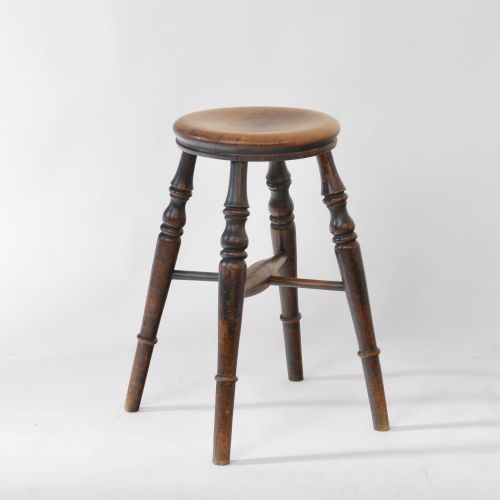
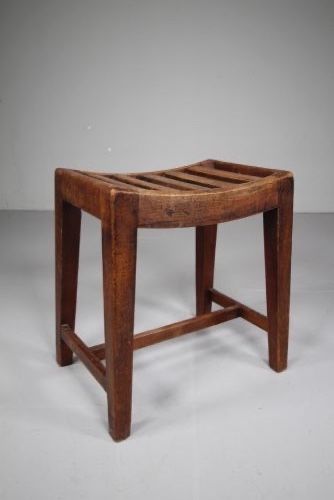
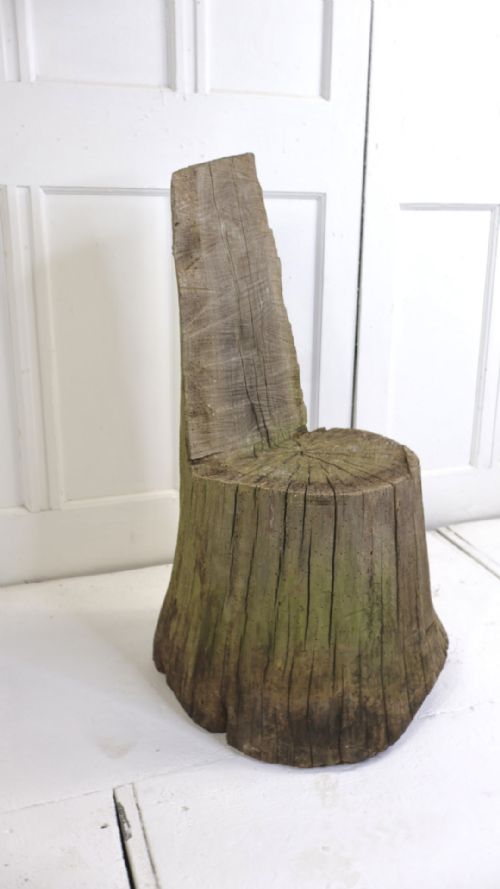
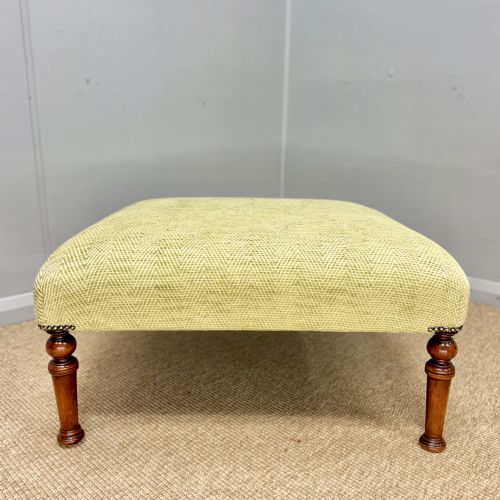

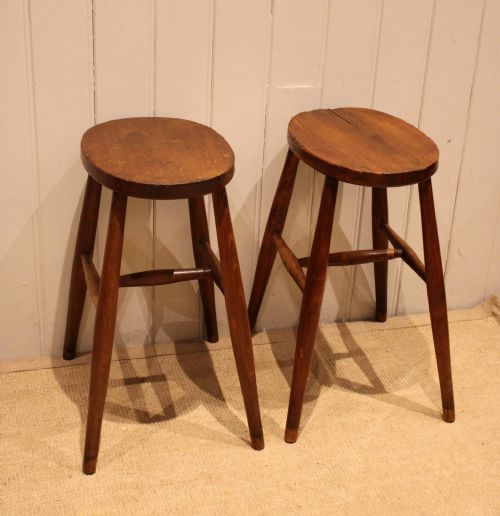


Country House Wooden Stool
A country house wooden stool brings honest vernacular warmth into a room, offering sturdy utility shaped by generations of practical use.
Country House Wooden Stool
When you search for a country house wooden stool, you encounter robust seating created for everyday domestic and tavern life across the eighteenth, nineteenth, and early twentieth centuries. These pieces encompass everything from simple elm and beech kitchen seating to refined mahogany and oak designs suited for more formal rooms.
You are most likely to meet nineteenth-century examples on this page, often built from sturdy native timbers like sycamore, oak, or pine. The selection ranges from low footstools and window seats to tall bar stools and rush-seated variants originating from English country traditions.
How they were made
These stools rely on traditional joinery using solid native hardwoods such as oak, elm, beech, and sycamore. Makers shaped seats from single planks of timber, sometimes incorporating turned legs or sturdy stretcher bases for extra support.
Textiles and natural fibres appear frequently, with traditional rush seating woven tightly around wooden frames and herringbone fabrics applied to upholstered footstools. Every element reflects utilitarian construction designed to withstand daily wear.
Some nineteenth-century tavern stools still carry the honest knocks and deep dents of centuries past, proving they were built for robust social life.
What varies in quality
Quality rests upon the selection of timber and the integrity of the original construction, distinguishing honest vernacular utility from lesser utility work. Heavier native hardwoods like uncompromised oak or figured elm command attention for their durability and grain.
Proportion and surface patination elevate certain pieces above standard workshop output. Refined design details, such as shaped slats or balanced turnings, separate standard seating from exceptional examples of regional craftsmanship.
The Country House Wooden Stool Glossary
- Vernacular
- Everyday objects made by local artisans for practical use rather than high-style academic design. These pieces rely on regional traditions and readily available materials.
- Rush
- Dried marsh grass twisted into cords and woven to create flexible, resilient seat pads. It is a traditional seating material found on many historic country stools.
- Patina
- The surface sheen and softening of colour developed by wood through decades of handling, polishing, and natural ageing. This quality is valued by collectors for evidencing authenticity.
- Stretcher
- A horizontal wooden brace connecting the legs of a stool to provide structural rigidity. Stretchers often double as footrests on taller tavern and bar examples.
- Elm
- A tough, interlocking native hardwood frequently chosen for stool seats because it resists splitting under heavy use. Its characteristic grain adds distinctive character to country furniture.
Country House Wooden Stool: Frequently Asked Questions
What defines a country house wooden stool?
These stools are practical, traditionally built seating pieces originating from rural English domestic and tavern contexts.
They utilise native timbers like oak, elm, and beech, reflecting regional craftsmanship rather than formal court styles.
How were these stools used historically?
They served multiple everyday functions around the home, serving as fireside seating, perches in pubs, or supports for luggage.
Lower variants functioned as footstools beneath upholstered seating, while taller versions accommodated bars and workspaces.
How do I care for antique wooden stools?
Keep wooden surfaces nourished by applying traditional beeswax periodically to protect the dry timber and preserve the historic surface.
Position them away from direct heat sources and sudden temperature shifts to prevent the natural wood from splitting.
How can I tell the period of a stool?
Dating relies on examining the timber species, tool marks, joinery methods, and the natural wear patterns accumulated over time.
Earlier eighteenth-century pieces often feature mahogany or heavier oak construction, while nineteenth-century variants commonly employ beech, elm, and rush.