
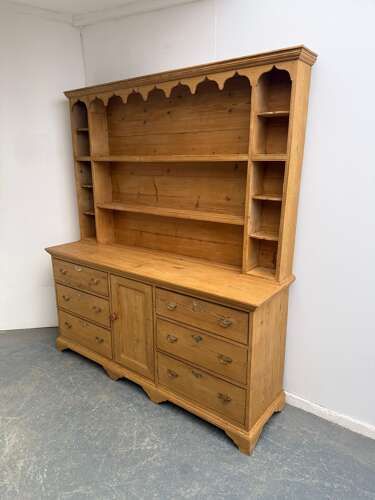

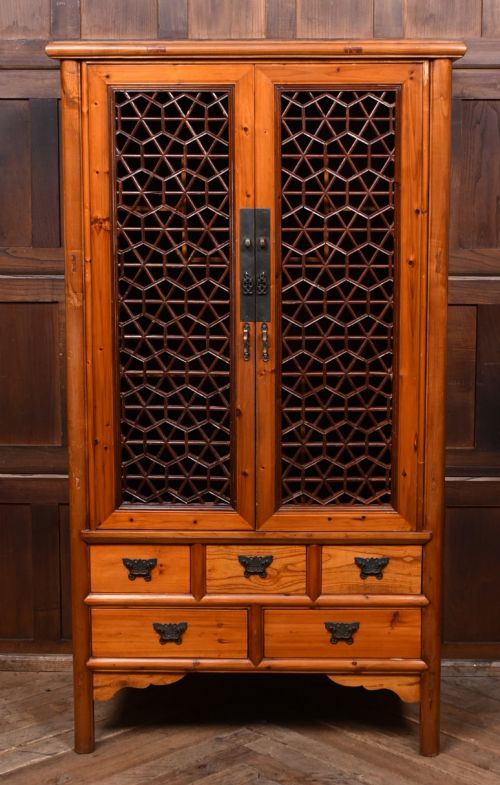
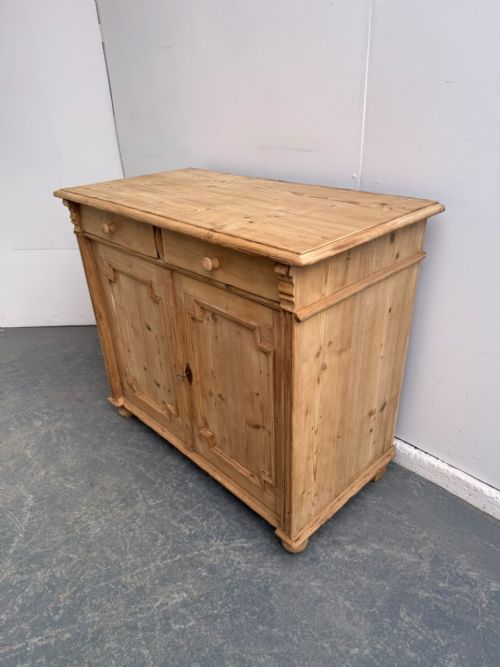
Traditional Pine Kitchen Sideboard
A traditional pine kitchen sideboard brings honest utility and warmth to a room, built from timber designed for daily use rather than display.
Traditional Pine Kitchen Sideboard
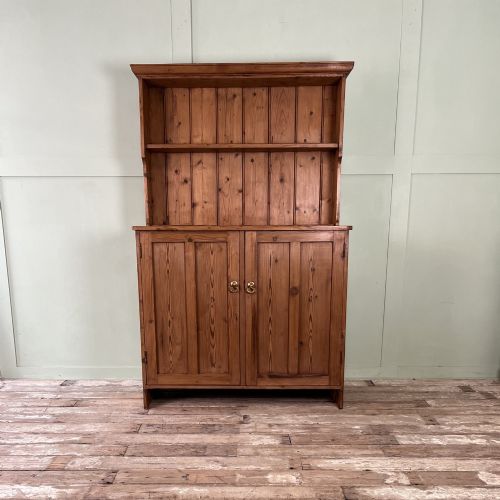
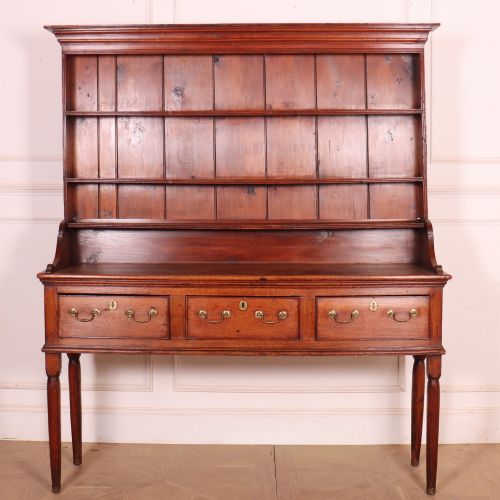
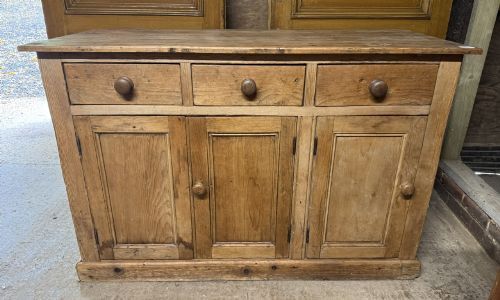
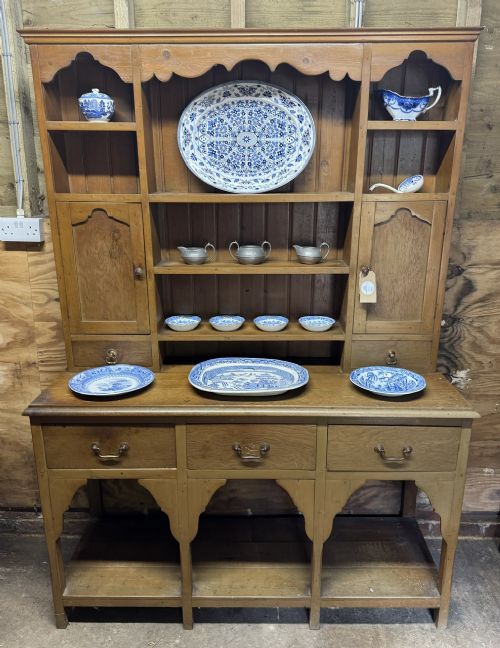
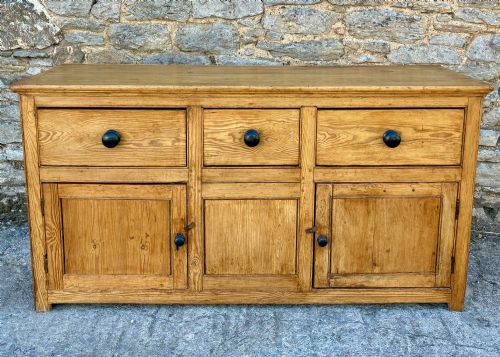
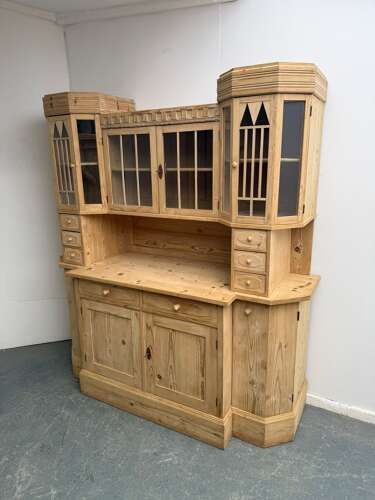
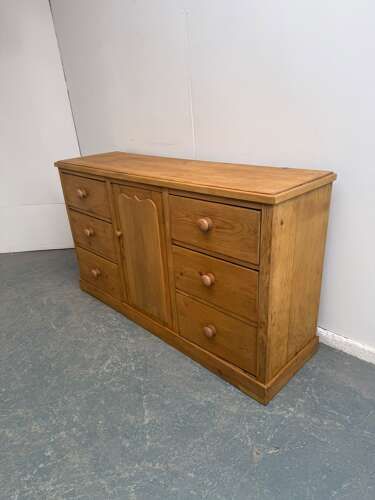
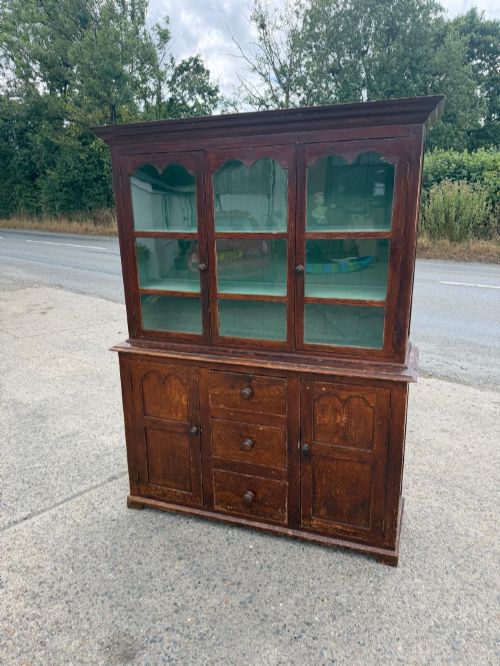
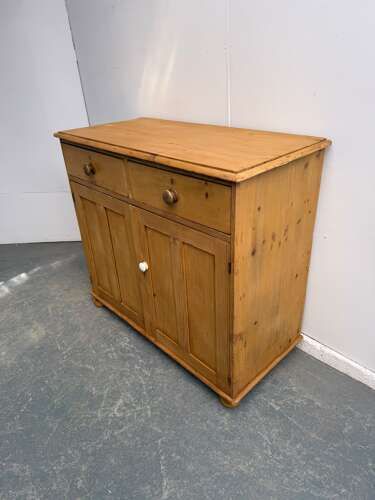
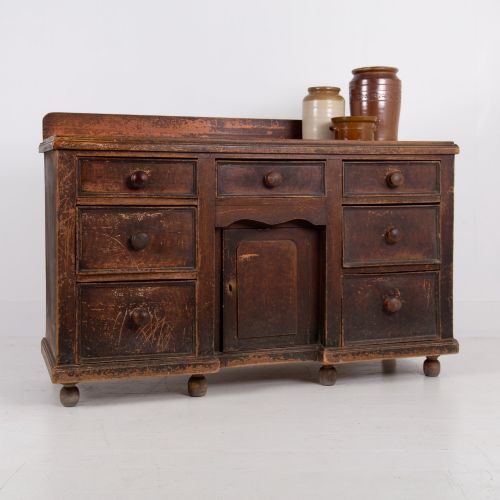
When you search for a traditional pine kitchen sideboard, you encounter sturdy pieces of utilitarian furniture rooted in country houses, farmhouses, and regional vernacular traditions. These items primarily manifest as dresser bases, potboard bases, and sideboards originating from the eighteenth, nineteenth, and early twentieth centuries. English and Welsh rural workshops produced the majority of these pieces, employing softwood construction for domestic storage.
The version you are most likely to meet on this page is a nineteenth century dresser base or two-door cupboard constructed from solid pine. Many examples show the marks of generations of domestic service, appearing either stripped to a warm waxed timber finish or retaining traces of original paint. Proportions vary from compact cottage cupboards to monumental country house bases fitted with drawers and potboards below.
How they were made
Local joiners and cabinetmakers built these pieces using solid pine timber, often supported by secondary woods for internal framing and drawer linings. Construction relied on traditional joinery techniques such as dovetailing for drawer construction and mortise and tenon joints for frames.
Surfaces finished with natural wax developed a deep lustre over decades of handling, while alternative pieces received layers of paint that now show characteristic wear. Iron and brass hardware, including drop handles and key escutcheons, fastened doors and drawers designed to withstand rigorous daily labour.
Listings feature eighteenth and nineteenth century pieces spanning English Country, Victorian, and Arts and Crafts styles, constructed from pine, painted wood, and brass.
What varies in quality
The distinction between ordinary utility items and superior examples rests upon the integrity of the original construction and the preservation of surface character. Pieces retaining their untouched original paint or early waxed patina command greater interest than those subjected to aggressive modern stripping and heavy rebuilding.
Proportion and regional vernacular detail further separate standard regional work from exceptional country house pieces. Well-balanced drawer arrangements, original brass or iron hardware, and sound structural timber define the better examples found in this category.
The Traditional Pine Kitchen Sideboard Glossary
- Potboard base
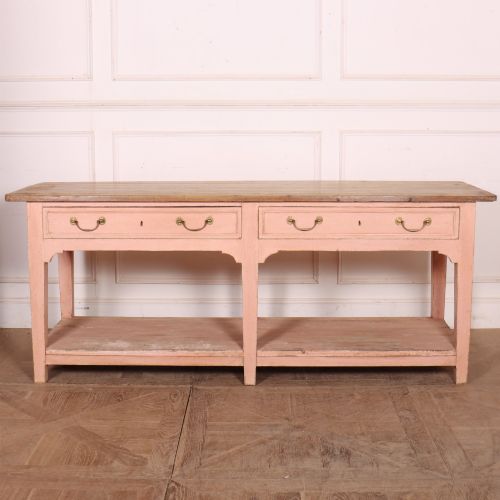
- A low sideboard or dresser base featuring an open lower shelf traditionally used for storing pots and heavy kitchen utensils. This lower board sits just above the floor on sturdy legs.
- Dresser base
- The lower section of a kitchen dresser comprising drawers and cupboards without the upper plate rack. These served as primary work surfaces and storage units in country kitchens.
- Patina
- The surface sheen and coloration developed by wood and paint over decades through handling, light exposure, and wax application. Original patination reveals the true age and history of a piece.
- Vernacular furniture
- Domestic items built by local craftsmen using regional styles and available materials rather than following formal London pattern books. Welsh and West Country pieces offer clear examples of this tradition.
- Dog kennel dresser
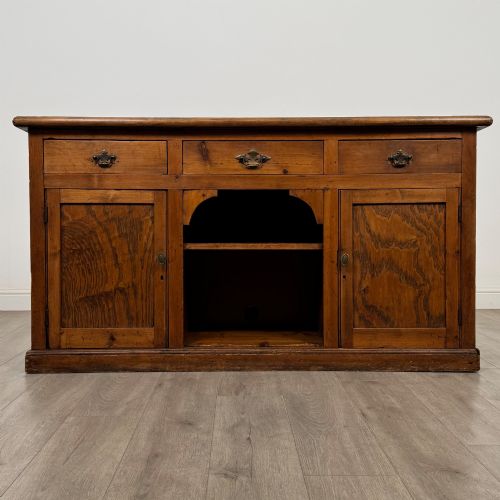
- A specific regional dresser format featuring a central recessed open space flanked by cupboards or drawers. The low central opening resembles a kennel, hence the traditional descriptive name.
Traditional Pine Kitchen Sideboard: Frequently Asked Questions
How do I care for a waxed pine sideboard?
Maintain the finish by applying a traditional beeswax polish sparingly and buffing it with a soft cloth when the timber begins to look dry. Avoid placing the wood near direct heat sources or in damp areas to prevent the pine from splitting or warping.
Keep hot dishes and wet items off the surface by using boards and coasters to protect the historic wax or paint finish from moisture rings and burns.
Were these sideboards used only in kitchens?
While primarily built for farmhouses and country houses to hold culinary goods, these versatile pieces served throughout the domestic quarters. They found places in sculleries, pantries, and dining rooms for storing linens, dry goods, and serving dishes.
Today, their generous proportions and practical storage make them equally suited for modern living spaces as dining room servers or hallway credenzas.
How can I tell if the paint is original?
Examine the surface under natural light for signs of micro-crazing, wear around the handles, and layers that build up gradually into the grain rather than sitting as a flat modern film. Original paint often shows subtle variations in tone where sunlight and hands touched the wood over generations.
Look inside drawers and on unexposed backsides to check that the underlying paint matches the exterior before assuming the finish dates to the nineteenth century.
What is the difference between a sideboard and a dresser base?
A dresser base was originally designed as part of a two-piece kitchen dresser intended to hold crockery and assist with food preparation. These pieces generally feature deep drawers and occasionally potboards designed for heavy domestic utility.
Sideboards developed primarily as dining room furniture meant for serving food and storing silverware, often featuring more formal decorative styling than their rustic kitchen counterparts.