
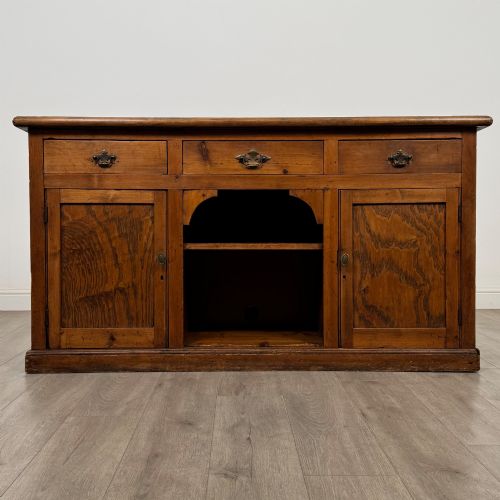
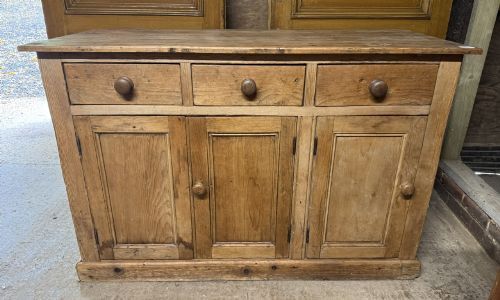
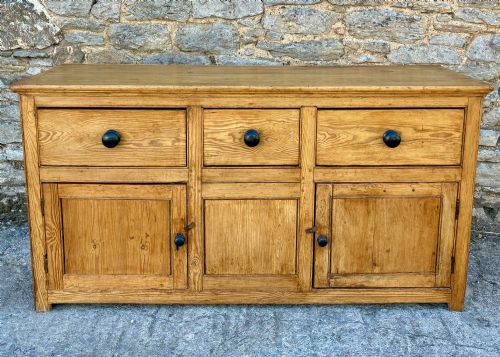
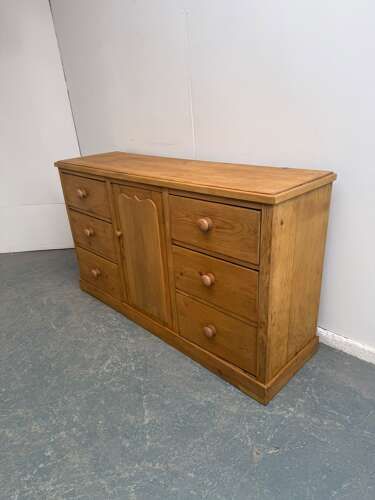
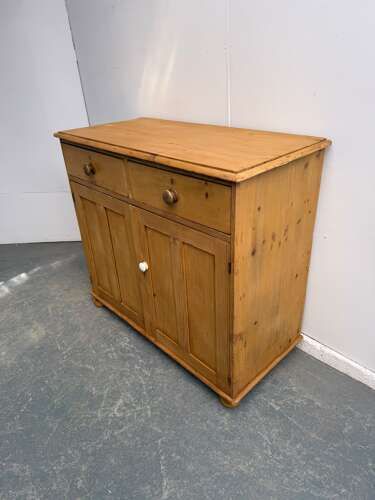
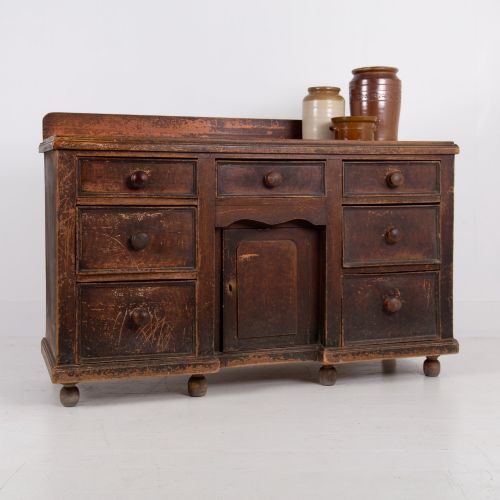

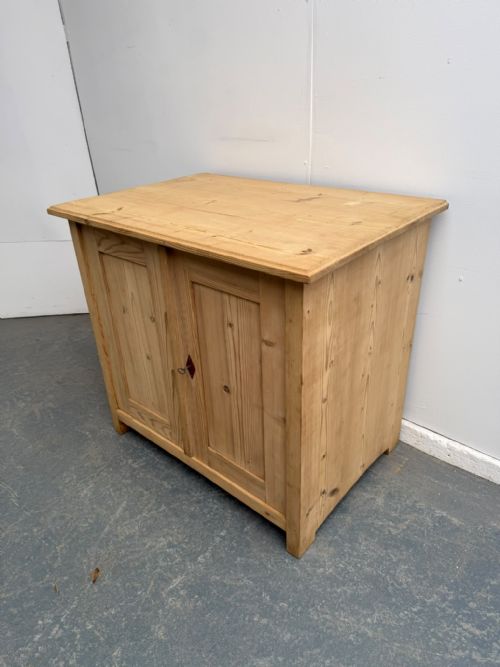
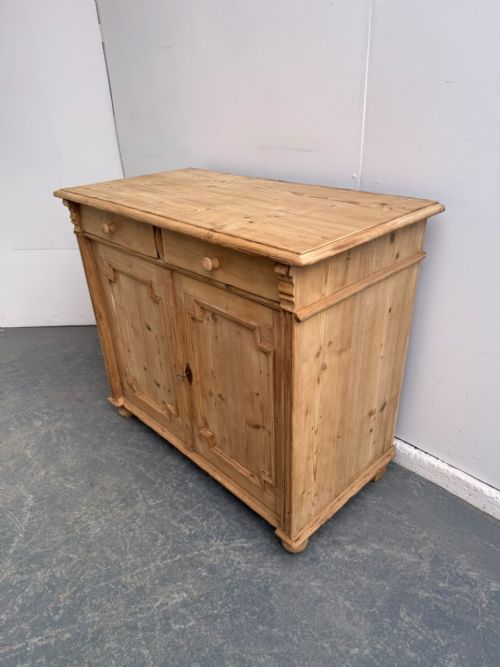
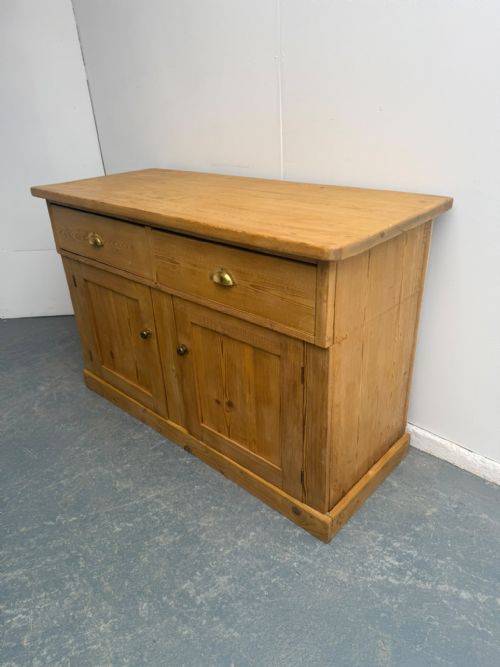
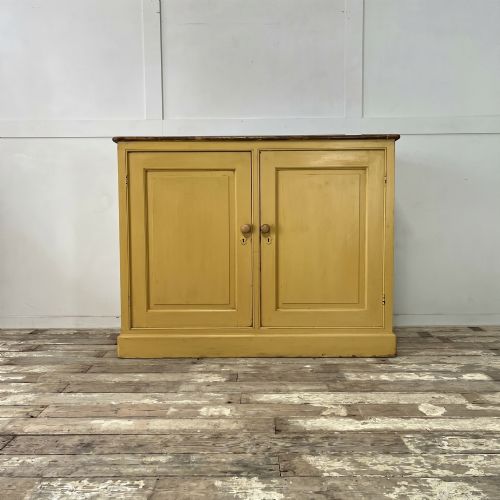


Traditional Pine Buffet Cupboard
These traditional pine buffet cupboard pieces offer sturdy storage and vernacular charm, drawing buyers who want practical furniture grounded in country house utility.
Traditional Pine Buffet Cupboard
When you search for a traditional pine buffet cupboard, you encounter a variety of utilitarian forms including dresser bases, kitchen dressers, and storage cupboards. These pieces primarily date from the Georgian, Victorian, and early twentieth-century periods, originating from English, Welsh, and continental workshops.
The version you are most likely to meet on this page is the Victorian or nineteenth-century pine dresser base or two-door cupboard. These items served hardworking domestic roles in country houses, kitchens, and schoolrooms before finding a place in modern homes.
How they were made
Makers constructed these pieces predominantly from solid pine, often incorporating oak for secondary elements or structural stability. Iron and brass hardware, such as hinges and drawer pulls, provide the mechanical fixings.
Surfaces exhibit either a waxed finish to highlight the natural grain or original paint layers, including hand-painted decoration. Joinery techniques reflect traditional country craftsmanship designed for daily endurance.
Regional forms on this page include Welsh Talwrn dressers, West Country pot board dressers, and Hungarian cupboards.
What varies in quality
The standard of timber selection and the integrity of the original construction distinguish different examples. Pieces retain greater interest when they preserve their original surface treatments, whether aged paint or historic wax.
Proportion and scale also define the hierarchy, ranging from compact cottage cupboards to massive regional dressers with breakfront drawers. Finer pieces demonstrate thoughtful regional joinery rather than hasty utility construction.
Melissa White
The Traditional Pine Buffet Cupboard Glossary
- Dresser base
- A low sideboard or cabinet featuring drawers above cupboards, historically used for food preparation and storage in the kitchen.
- Pot board
- An open lower shelf beneath a dresser base designed for storing heavy pots and culinary vessels.
- Breakfront
- A cabinet or dresser front where the central section projects forward from the flanking cupboards or drawers.
- Chiffonier
- A low sideboard or small cupboard developed during the nineteenth century for practical living room storage.
- Welsh dresser
- A traditional regional form combining a lower buffet base with upper shelving for displaying ceramics.
Traditional Pine Buffet Cupboard: Frequently Asked Questions
What is a traditional pine buffet cupboard?
A traditional pine buffet cupboard is a utilitarian storage item, typically featuring doors and drawers, originating from nineteenth-century or earlier country houses.
These pieces were built from solid wood to serve hardworking domestic functions in kitchens and pantries.
How do I date a pine cupboard?
Dating relies on construction methods, timber characteristics, and surface finishes recorded across the Georgian and Victorian periods.
Hardware styles and regional design traits also help narrow down the decade of manufacture.
Are these cupboards painted or waxed?
Examples appear in both historic original paint and traditional waxed pine finishes.
Many pieces show layers of aged paint applied during their working lives in country cottages.
Where were these cupboards used?
They originated in kitchens, schoolrooms, and dining spaces across English and Welsh country houses.
Today, they adapt easily to modern living rooms and kitchens for functional storage.