
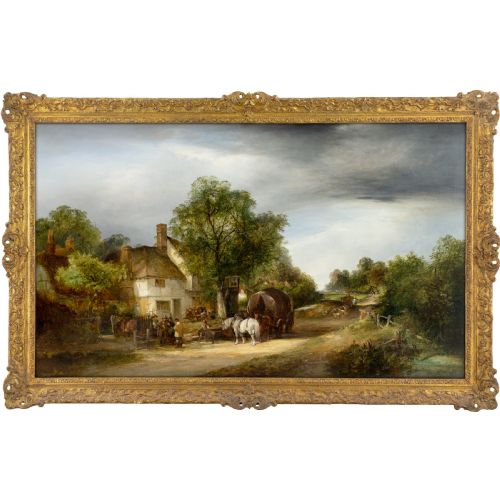


Traditional Pastoral Painting
Traditional pastoral painting captures rural life, livestock and quiet countryside scenes through the skilled hand of Victorian and Edwardian artists.
Traditional Pastoral Painting
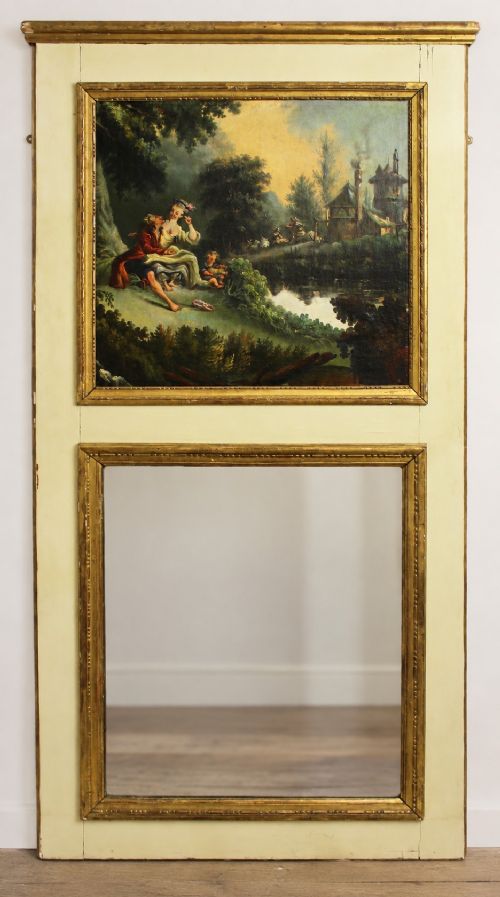
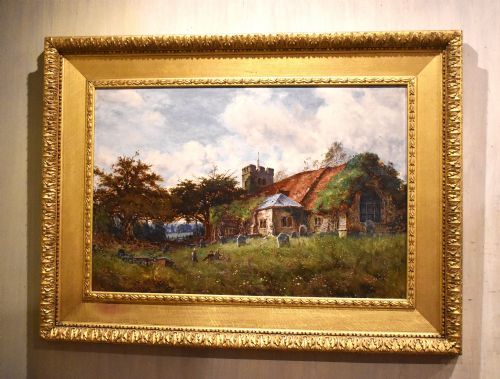
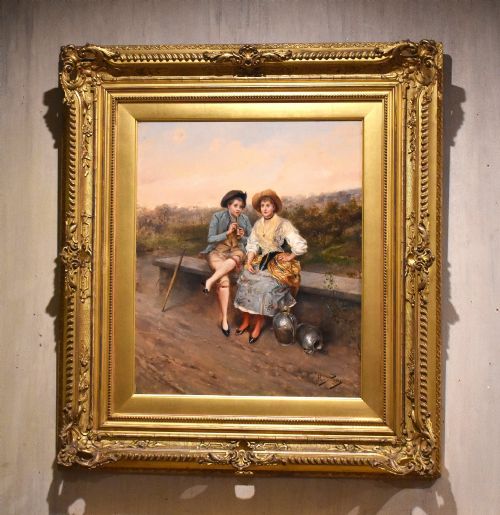
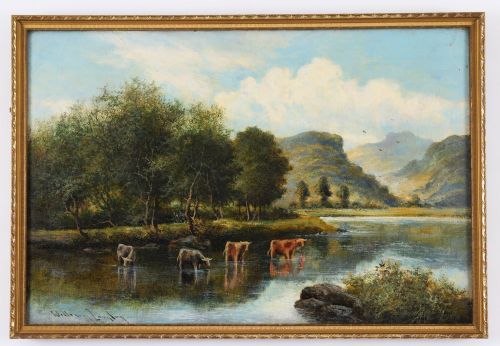
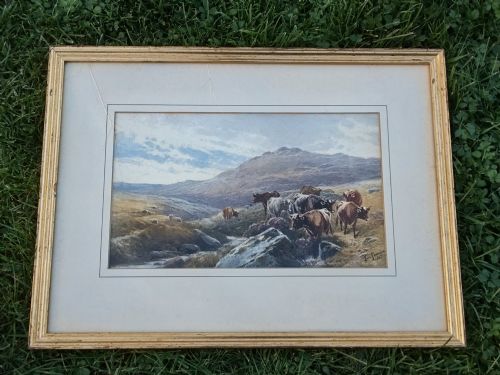
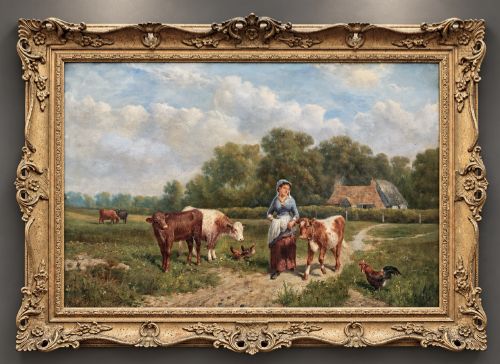
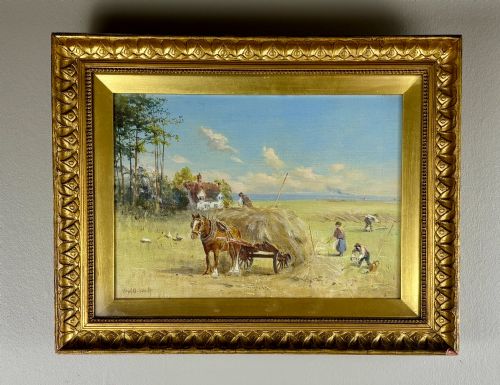
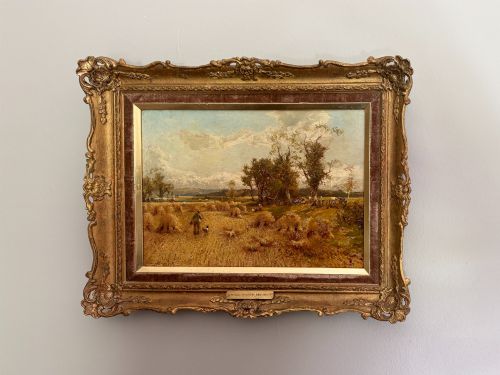
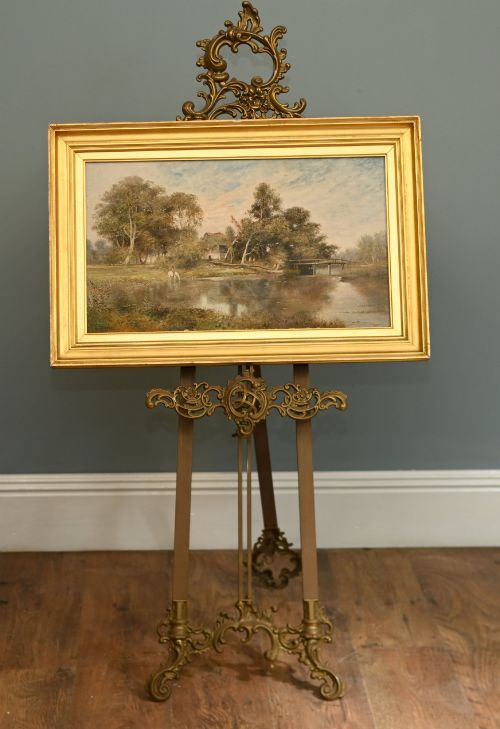
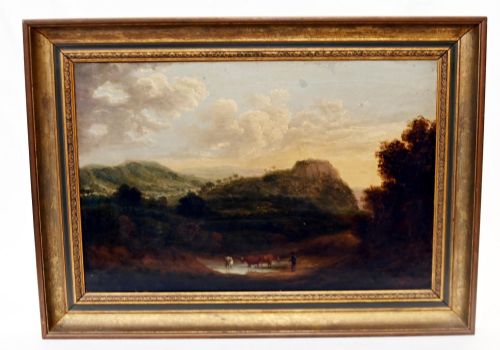
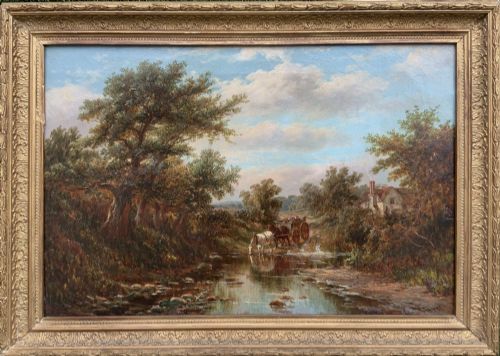
Traditional pastoral painting depicts rural life, agrarian scenes, river banks, and herds of cattle or sheep resting in woodland settings. The works span from the late 18th century through the Victorian and Edwardian periods, reflecting a sustained interest in rustic British and European countryside views.
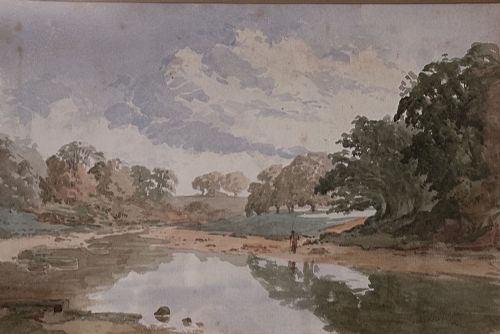
Buyers commonly encounter oil on canvas, oil on wood panel, and watercolour paintings depicting figures near harvest fields, shepherds with flocks, and river landscapes. These pieces range from intimate watercolours on paper to substantial framed canvases produced by regional British schools.
The style draws on 19th-century realism and British impressionism, capturing changing light over pastures, wooded paths, and coastal or river vistas. Scenes often include domestic animals, such as shorthorn bulls, Highland sheep, and horses watering by rivers.
Materials and methods
Artists painted primarily with oil paint on stretched canvas, wood panels, or wooden boards, while others utilised watercolour on paper. Canvases and panels received ground layers before the application of pigments to build up rich textures in foliage, livestock, and skies.
Many surviving works retain their original giltwood and gesso frames, which complement the traditional palette and subject matter. Panel paintings frequently utilise seasoned wood supports that preserve the integrity of the paint surface over centuries.
Listings feature works from the 18th, 19th, and early 20th centuries, executed in oil and watercolour on canvas, wood, and paper.
Factors of quality
Quality rests upon the artist's ability to render light, shadow, and anatomy with conviction, particularly in the depiction of livestock and human figures. Works by named painters with documented exhibition histories demonstrate superior brushwork and compositional balance.
The preservation of the original paint surface and the condition of the support, whether canvas or wood panel, influence the integrity of the piece. Contemporary framing in period-appropriate giltwood enhances the presentation without overshadowing the artwork.
Tom Campbell·John Horace Hooper·William Joseph Shayer Senior·Hendrik Willem Schweickhardt·George Oyston·William Watson Jnr·Henry Schouten·George Morland
The Traditional Pastoral Painting Glossary
- Oil on Canvas
- Pigments bound in a drying oil, typically linseed, applied to a woven fabric stretched across a wooden frame. This medium allowed artists to build rich layers of colour and texture.
- Giltwood
- Wood that has been coated with a thin layer of gold leaf or gilt powder. It is commonly found on traditional picture frames from the Victorian and Edwardian periods.
- Gesso
- A paint mixture consisting of a neutral binder mixed with chalk, gypsum, or pigment. It served as a prepared surface for wood panels and frames before gilding or painting.
- Watercolour Painting
- A method where the paints are made of pigments suspended in a water-based solution. These works on paper capture translucent washes of light in rural landscapes.
- Wood Panel
- A solid wooden board utilised as a rigid support for oil paintings. Artists favoured panels for their smooth surface and durability.
Traditional Pastoral Painting: Frequently Asked Questions
What subjects appear in pastoral paintings?
These works typically depict rural scenes, including shepherds with flocks, cattle by rivers, harvest fields, and wooded country paths. Domestic animals and figures engaged in daily agricultural labour form the primary focus.
Artists drew inspiration from the British countryside, Scottish highlands, and European pastoral settings to create serene, naturalistic compositions.
How do I care for antique paintings?
Protect oil and watercolour paintings from direct sunlight, high humidity, and extreme temperature fluctuations to prevent canvas slackening and pigment degradation. Display pieces away from heat sources and exterior damp walls.
Dust frames gently with a soft, dry cloth and avoid touching the painted surface or paper directly with bare hands.
How are periods identified?
Periods are determined through artist signatures, biographical dates, framing styles, and the specific material supports used. Stylistic markers such as 19th-century realism or Edwardian palette choices also indicate the era of creation.
Documentation on the reverse of the canvas or panel frequently provides additional clues to the date and origin.