

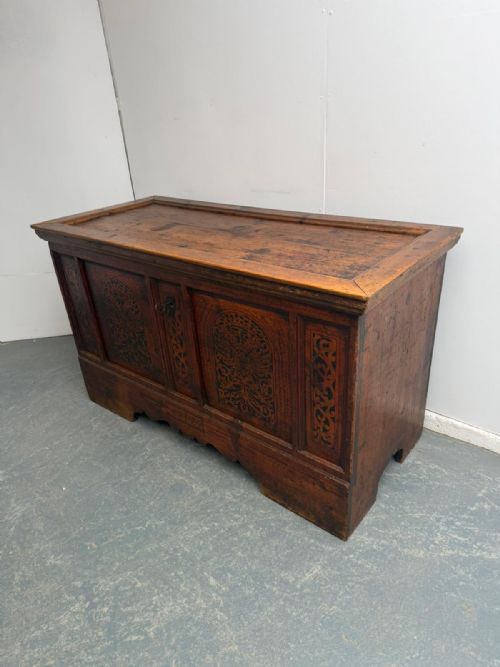


Traditional Painted Trunk
These traditional painted trunk examples span the nineteenth century and bring regional folk art directly into domestic spaces.
Traditional Painted Trunk
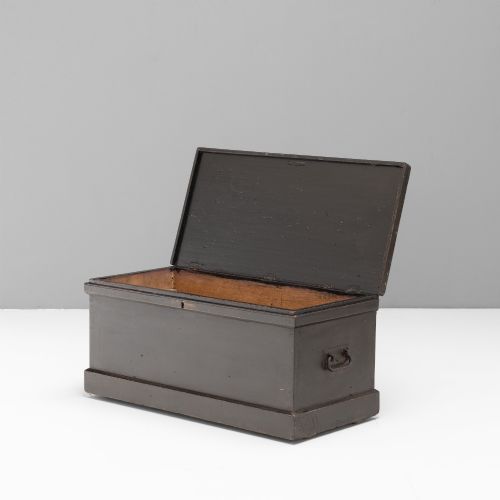
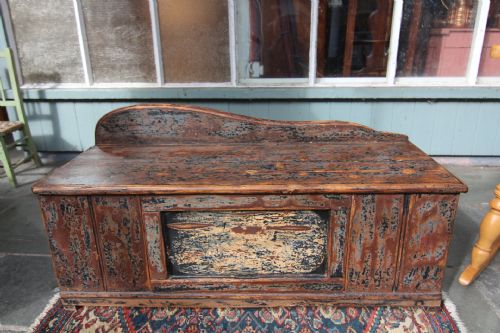
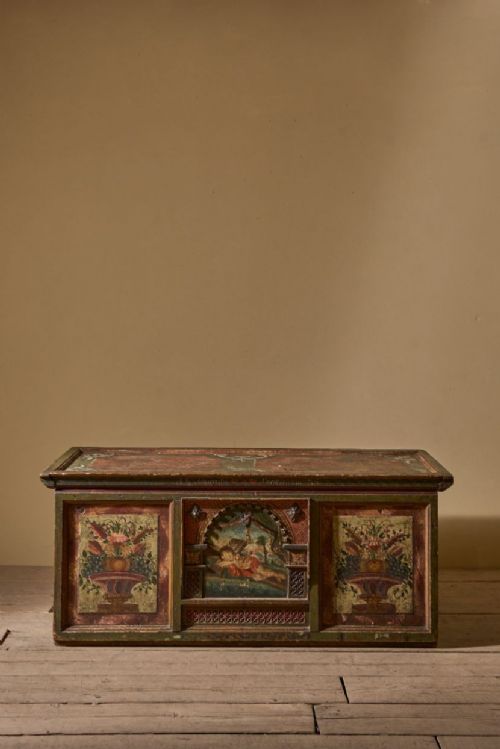
A traditional painted trunk serves as functional storage while displaying distinct regional decoration, frequently taking the form of a blanket box, coffer or marriage chest. These pieces range from large scale pine containers to smaller boxes originating from Hungary, Scandinavia, England, Italy and Spain.
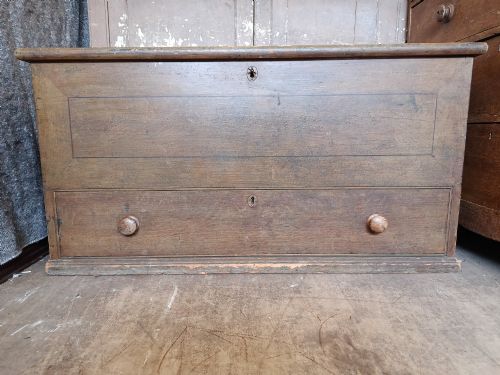
Nineteenth century examples dominate the selection alongside Victorian, Georgian and Regency periods. The forms include mule chests with drawers, shaped boxes on stands and simple wooden chests finished with pigment, lacquer or scumble effects.
How they were made
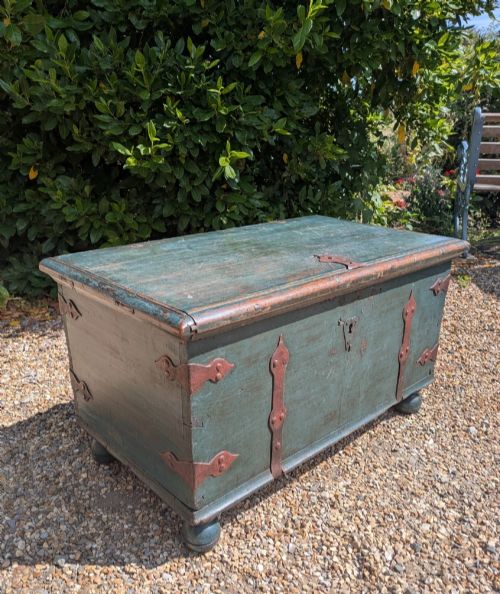
Makers constructed these storage pieces primarily from solid pine, oak or wood, utilising hand forged iron strapwork and brass fittings for structural reinforcement. Surfaces received layers of original paint, pigment or black lacquer to protect the timber while providing a decorative finish.
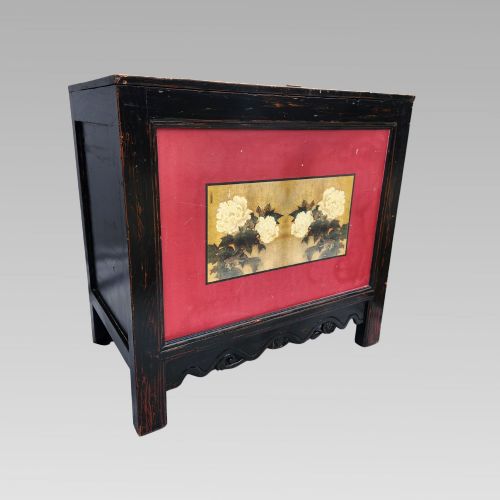
Decoration techniques span floral chinoiserie, Moorish style motifs, Scandinavian folk art and hand painted floral patterns applied directly to the wood. Structural joints often rely on traditional carpentry suited for heavy daily use in domestic settings.
Listings feature pine and oak construction combined with wrought iron, brass, glass and hand applied pigment.
What varies in quality
The survival of original surface decoration determines the distinction between ordinary utility items and exceptional folk art examples. Pieces retaining untouched early pigment, original paint or authentic lacquer display higher artistic merit than heavily restored surfaces.
Construction methods and hardware integrity also differentiate the items. Hand forged iron strapwork and well preserved dovetail or pegged joinery indicate superior regional craftsmanship compared to later repairs or replaced components.
The Traditional Painted Trunk Glossary
- Mule chest
- A traditional storage chest featuring one or more drawers built into the base beneath the main compartment. This form bridges the gap between a simple coffer and a chest of drawers.
- Cassone
- A large Italian chest traditionally used for holding bridal trousseau items and decorated with elaborate painted scenes or marriage motifs. These ornate pieces often function as focal furniture items.
- Scumble
- A decorative painting technique where a translucent glaze is dragged over a base coat to imitate the grain of more expensive hardwoods. This method was widely utilised on pine furniture during the Victorian period.
- Coffer
- A sturdy wooden box with a hinged lid designed for secure storage of valuables or household goods. Early examples often feature primitive construction and robust iron hardware.
- Strapwork
- Ornamental bands of metal, typically iron or brass, fastened across the exterior of a trunk to reinforce joints and protect corners. Hand forged versions provide both security and visual contrast against painted wood.
Traditional Painted Trunk: Frequently Asked Questions
What is a traditional painted trunk used for?
These pieces function primarily as practical storage containers for blankets, linens and household items while doubling as decorative furniture.
Their sturdy construction allows them to serve as coffee tables or bench seating within modern living spaces.
How do I identify a nineteenth century piece?
Examination of the timber, hardware and construction methods helps determine the age of a storage chest.
Hand forged iron strapwork, authentic period pigments and traditional joinery point directly to nineteenth century production.
Are these trunks suitable for daily use?
Solid pine and oak construction makes these containers durable enough for storing heavy items and everyday household objects.
Care should be taken to protect the original painted surfaces from excessive moisture and abrasive wear.
What regions produced these painted chests?
Makers across Europe produced decorated storage pieces, with distinct styles originating from Scandinavia, Hungary, Italy, Spain and England.
Each region applied specific folk art motifs, colour palettes and construction details unique to local traditions.