



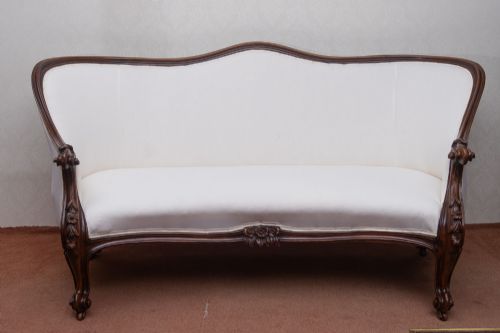


Traditional Padded Settee
These traditional padded settee pieces offer deep-seated comfort paired with period timber frames, bringing classic upholstery and rich mahogany or walnut into the room.
Traditional Padded Settee
When you search for a traditional padded settee, you encounter large upholstered seating designed for the living spaces of English country houses and town residences. These pieces range from substantial scroll-end sofas to two-seater walnut frames produced across the nineteenth and early twentieth centuries.
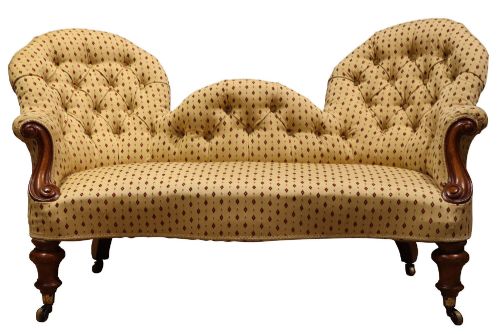
You are most likely to meet Victorian and Edwardian examples on this page, often featuring exposed timber frames in mahogany, walnut, or beech. The forms span from nineteenth-century William IV and Regency designs to later Queen Anne style revivals and country house pieces.
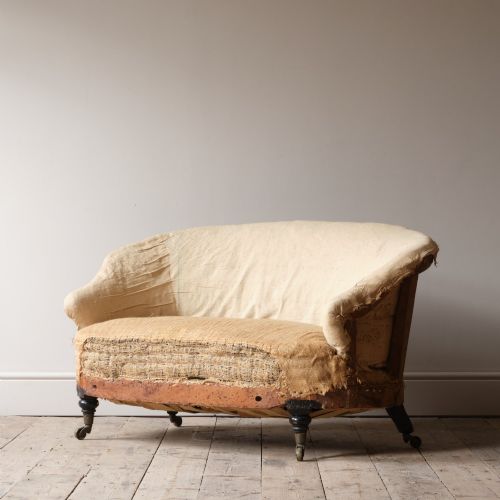
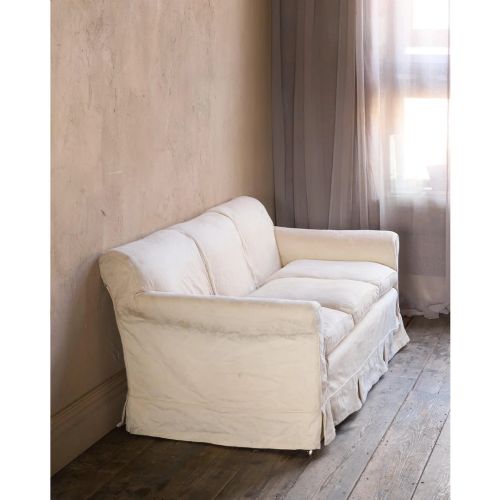
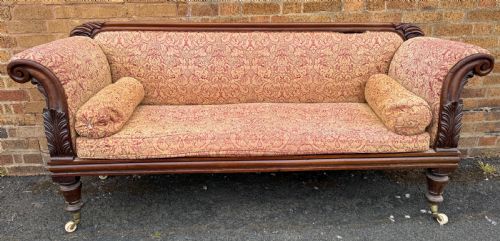
The objects serve as functional seating while displaying the carved woodwork and traditional upholstery foundations of their respective eras. Their forms encompass double-ended settees, scroll-arm sofas, and drop-arm variations upholstered in fabric, hessian, and calico.
How they were made
Makers constructed the structural frames of these settees from solid timbers, predominantly selecting mahogany and walnut for their strength and grain. Beech also appears as a secondary framing material, while brass fittings occasionally provide functional or decorative accents.
Upholstery techniques relied on traditional foundational layers including hessian and calico beneath the outer fabric covering. Carved and turned woodwork details adorned the exposed mahogany and walnut frames, ranging from simple scroll ends to more elaborate period motifs.
Traditional Padded Settee Retail Price Guide 2026
Typical asking prices for traditional padded settee among the pieces listed under this phrase on Sellingantiques today, from the lower quarter to the upper quarter. They describe what is for sale here now, not the wider market.
Listings feature frames in mahogany, walnut, and beech, spanning the Victorian, Edwardian, and Regency periods.
What varies in quality
The standard of a traditional padded settee depends largely on the crispness and depth of the carved woodwork on the mahogany or walnut frame. Finer examples display superior timber selection, robust joinery, and carefully executed scroll arms or turned supports.
Proportion and execution of the frame define the upper tier of these pieces, separating standard utilitarian seating from distinguished country house examples. The integrity of the underlying construction and the quality of the period framing set individual pieces apart.
Howard & Sons
The Traditional Padded Settee Glossary
- Mahogany
- A dense tropical hardwood frequently used for nineteenth-century furniture frames. Its rich reddish-brown tone makes it a primary material for Victorian settees.
- Scroll-end
- A sweeping, curved armrest design found on nineteenth-century sofas and settees. This shape characterises William IV and Regency seating forms.
- Hessian
- A coarse woven fabric traditionally utilised as a foundational lining material in upholstery. It provides a sturdy base beneath the outer calico and top covers.
- Calico
- A plain-woven cotton fabric employed as an interim layer in traditional upholstery. It secures the internal stuffing before the final decorative fabric is applied.
Traditional Padded Settee: Frequently Asked Questions
What is a traditional padded settee?
A traditional padded settee is an upholstered seat built on a wood frame, originating from the nineteenth and early twentieth centuries. These pieces combine exposed timber structures with soft seating for domestic interiors.
They reflect the shifting design periods from Regency and William IV eras through to Edwardian country house styles.
Which woods were used for frames?
Makers predominantly utilised mahogany and walnut for the exposed structural frames of these settees. Beech also appears as a solid timber component in various pieces.
These hardwoods provided the structural rigidity needed to support heavy traditional upholstery while offering a polished decorative surface.
How do I identify the period?
Period identification relies on observing the framing style, carved woodwork motifs, and overall silhouette of the settee. Regency and William IV pieces often display distinct scroll ends and heavy mahogany construction.
Later Edwardian and Queen Anne style examples introduce walnut frames and specific proportions associated with those revival eras.
How do I live with one?
Living with a traditional padded settee involves placing the piece in a principal reception room where its timber frame and upholstery can be appreciated. Regular gentle maintenance keeps the wood and fabric in stable condition.
Positioning the settee away from direct heat sources helps preserve the nineteenth-century and early twentieth-century timbers.