





Traditional Padded Footstool
A traditional padded footstool brings low, practical seating and period character to a room through solid timber frames and soft upholstery.
Traditional Padded Footstool
A traditional padded footstool serves as low, movable seating or a rest for the feet, shaped by decades of domestic use. When you search for a traditional padded footstool, you encounter forms that range from compact Victorian footstools to large country house ottomans and piano stools.
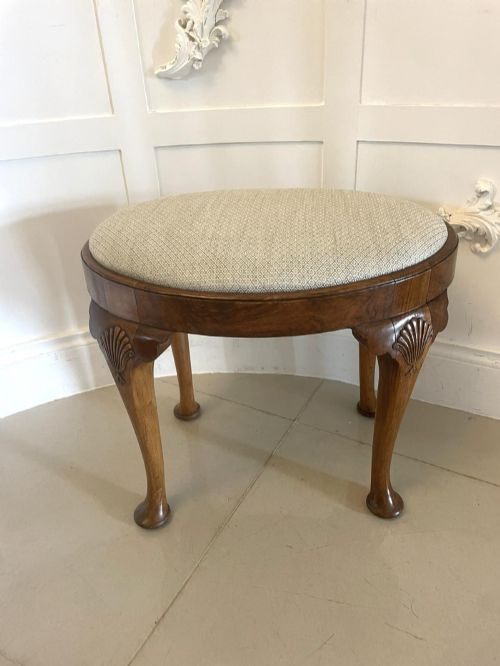
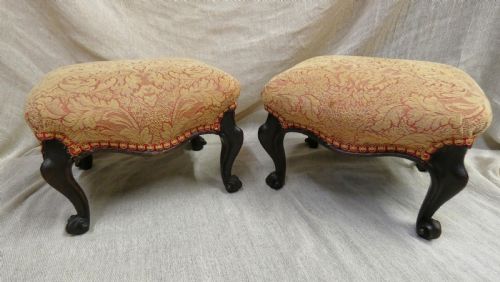
Most examples found here date from the nineteenth and early twentieth centuries, constructed in walnut, mahogany, oak, and rosewood. These pieces often feature classic revival designs, including Queen Anne style and Chippendale style frames alongside plain Victorian upholstered stools.
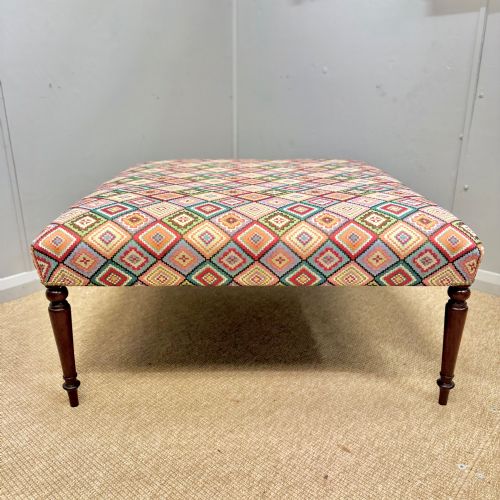
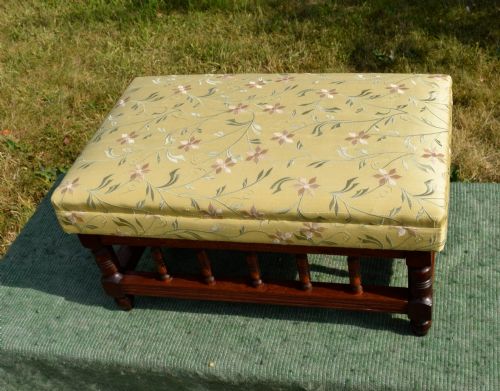
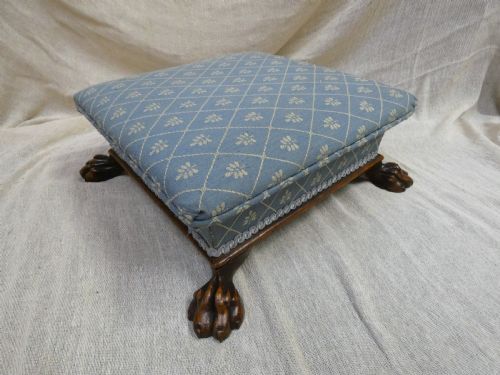
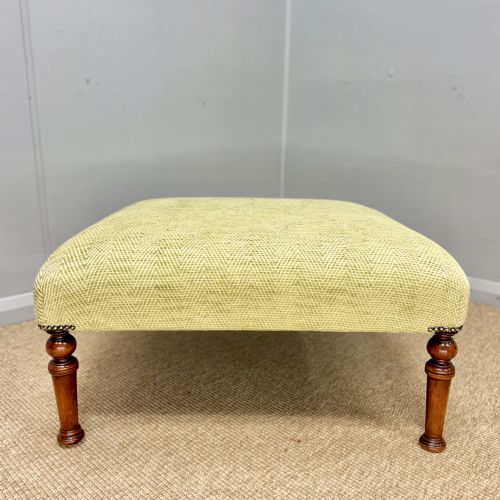
The upholstery varies from newly recovered textiles and geometric weaves to hand dyed leather and original fabric seats. Such stools function naturally beside armchairs and library desks, providing both utility and period warmth.
What varies in quality
Quality rests in the timber selection and the integrity of the frame construction, where tightly fitted joints and substantial hardwood give lasting stability. Finer pieces display careful hand carving on cabriole legs or show well-proportioned revival styling.
The execution of the upholstery and the choice of surface material also set pieces apart, from simple replacement fabric to deep buttoned hand dyed leather. Original materials and well-preserved internal stuffing elevate a piece's historical integrity.
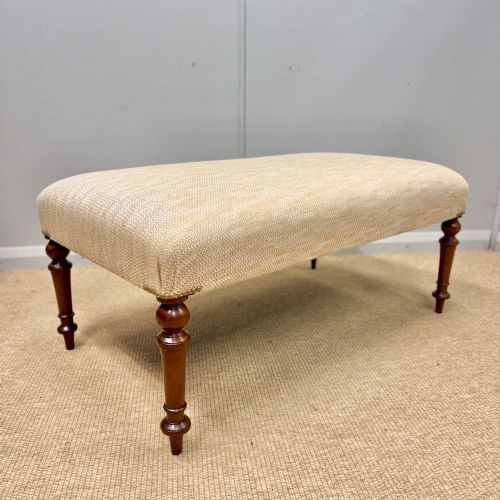
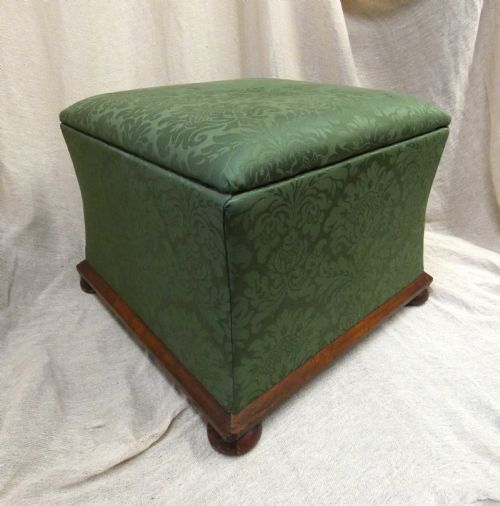
Common forms include piano duet stools with hinged seats, oblong footstools, and large buttoned leather ottomans.
Howard and Sons
The Traditional Padded Footstool Glossary
- Cabriole leg
- A furniture leg that curves outward at the knee and tapers inward to an ankle, common on eighteenth-century and revival stools. This shape draws inspiration from animal legs and adds refined elegance to the frame.
- Ottoman
- A low, upholstered seat or footstool without a back or arms, often built on a larger scale for country house interiors. These versatile pieces frequently double as centre tables or storage seats.
- Joint stool
- An early form of wooden stool constructed with mortise and tenon joints rather than turned parts. These sturdy pieces provide a glimpse into pre-Georgian domestic seating.
- Castor
- A small wheel attached to the base of furniture legs to permit easy rolling across floors. Brass mounts are typical on nineteenth-century examples.
- Buttoning
- An upholstery technique where indentations are formed in the padding by pulling twine tightly through to the frame. This method secures the filling and creates a distinctive geometric pattern.
Traditional Padded Footstool: Frequently Asked Questions
What is a traditional padded footstool?
A traditional padded footstool is a low wooden piece of furniture topped with a cushioned or upholstered surface designed for resting feet or sitting.
These pieces reflect the domestic styles of the nineteenth and early twentieth centuries, utilising hardwoods like mahogany and walnut alongside leather and textile coverings.
Where were these footstools used?
They were placed beside armchairs in drawing rooms, studies, and bedrooms to provide added comfort during long periods of sitting.
Larger versions often stood in country house libraries or served as centre stools in spacious hallways.
How do I identify the period?
Period identification relies on wood types, leg shapes, and upholstery styles, such as Victorian cabriole legs or George II revival carved details.
Examining the construction methods underneath the stool also reveals whether a piece originates from the nineteenth century or a later revival era.
Can I use an antique footstool daily?
Most traditional padded footstools are constructed from solid hardwoods like oak and mahogany, making them sturdy enough for everyday use.
Proper care for the timber frame and occasional maintenance of the upholstery ensure these pieces endure regular household activity.