
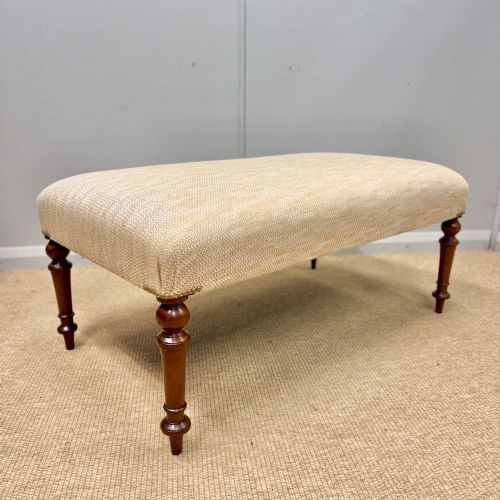
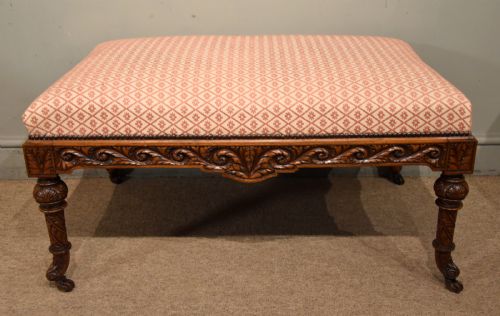
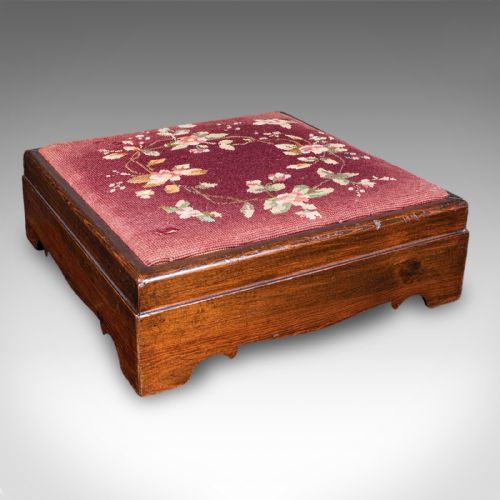


Rectangular Wooden Stool
These rectangular wooden stool examples combine period timber frames with practical seating, offering both period character and everyday utility.
Rectangular Wooden Stool
When you search for a rectangular wooden stool, you encounter a varied group of seating forms spanning the seventeenth century through to the early twentieth century. These pieces encompass utilitarian joint stools alongside polished mahogany dressing seats and cane-seated varieties.
The selections available here range from solid oak frames of earlier centuries to later Victorian and Edwardian examples featuring fabric, wool, and rattan upholstery. You meet both low fireside footstools and taller seat benches designed for specific domestic roles.
Originating from diverse stylistic traditions including Baroque Revival, Jacobean, and George II style, these items demonstrate how simple timber forms adapted across different eras. Each rectangular wooden stool reflects the joinery and aesthetic preferences of its specific period of manufacture.
How they were made
The construction of a rectangular wooden stool relies on durable hardwoods such as oak, mahogany, teak, pitch pine, and burr yew. Artisans joined these timbers using traditional joinery methods suited to the demands of daily domestic use.
Surface treatments and upholstery techniques varied widely according to the period and intended function. Makers applied carved details, giltwood finishes, and woven cane or rattan seats alongside padded textiles covered in wool and fabric upholstery.
Listings feature oak, mahogany, teak, and pitch pine materials across the nineteenth and early twentieth centuries.
What varies in quality
Distinctions in a rectangular wooden stool lie in the selection of timber and the execution of carved ornament. Dense hardwoods and carefully matched grains indicate superior craftsmanship.
The integrity of the frame construction and the preservation of original or sympathetic upholstery materials further differentiate individual pieces. Refined proportion and clean joinery elevate the standing of a stool within its period style.
The Rectangular Wooden Stool Glossary
- Joint stool
- A solid timber stool constructed with mortise and tenon joints, common in the seventeenth century. These sturdy pieces served multiple household functions before specialised seating became widespread.
- Cane seat
- A seating surface woven from rattan or split cane, providing a light and flexible platform. This technique appears on various nineteenth-century and early twentieth-century stool frames.
- Giltwood
- Timber that has been coated with a thin layer of gold leaf or gilt paint. This decorative finish frequently characterises Baroque Revival and other ornate stylistic interpretations.
- Footstool
- A low stool designed to support the feet while sitting, often upholstered in fabric, wool, or textile. These domestic accessories match the prevailing stylistic trends of their respective eras.
Rectangular Wooden Stool: Frequently Asked Questions
What periods do these stools cover?
The pieces span from the seventeenth century through the Victorian and Edwardian eras up to the early twentieth century.
This broad timeline incorporates diverse regional designs and changing domestic habits across multiple centuries.
How were these stools used historically?
They served varied roles including fireside seating, foot support, and dressing table assistance.
Heavier oak examples provided durable seating, while lighter cane and upholstered variants supported personal comfort in reception rooms.
What woods are commonly found?
Makers utilised regional and imported hardwoods including oak, mahogany, teak, pitch pine, and burr yew.
Choice of timber typically aligned with the prevailing style and the functional demands placed on the stool.