




Colonial Teak Seating
Colonial teak seating brings solid, sturdy tropical timber into British interiors through armchairs, benches and folding chairs carved overseas during the nineteenth and early twentieth centuries.
Colonial Teak Seating
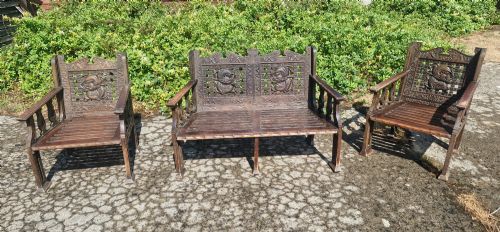
Colonial teak seating covers heavy armchairs, reclining plantation chairs, folding chairs, benches and settles originating from periods spanning the mid nineteenth century up to the nineteen thirties. Anglo-Indian and Burmese examples dominate the selection, bringing substantial timber forms and intricate hand carving into domestic spaces.
Buyers will most frequently encounter armchairs, veranda chairs and benches constructed primarily from teak and hardwood, often featuring woven cane or rush seats. These pieces range from simple campaign items to deeply carved throne chairs and conservatory suites designed for colonial verandas and country houses.
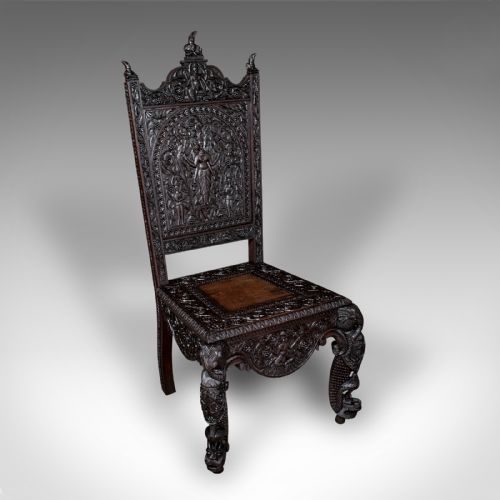
The selection also includes unusual specialist forms such as window seats, hall benches with carved elephants, box settles with brass decoration, and side chairs displaying Batavian baroque or Art Deco influences. Such seating combines utilitarian colonial durability with decorative local craftsmanship.
Materials and construction
Makers built these pieces using dense tropical teak and allied hardwoods capable of withstanding humid climates and heavy daily use. This durable timber forms the structural framework for armchairs, benches and folding frames alike.
Surfaces frequently display elaborate hand carving depicting foliage, figures and animals such as elephants, paired with structural additions of brass hardware or bone inlay. Seats are commonly laced with woven cane, rattan or rush to provide flexible support.
Current listings span from eighteen fifty to nineteen thirty, uniting Victorian and Edwardian periods with materials including teak, bone inlay, brass and woven cane.
Judging quality
Quality rests upon the crispness and depth of the hand carving across the teak frame, alongside the structural integrity of the joints and overall proportion. Pieces displaying finely detailed figural work or unusual regional styles stand apart from simpler utilitarian items.
The original condition of woven cane, rattan or rush seating surfaces influences the desirability of a piece, as does the survival of intact brass decoration, bone inlay and original hardware.
The Colonial Teak Seating Glossary
- Teak
- A durable, oil-rich tropical hardwood native to Asia, prized for resisting moisture and insect damage. It forms the primary structural material for nineteenth-century colonial furniture.
- Anglo-Indian
- A stylistic term describing furniture made in India during the British colonial period, often fusing traditional local carving techniques with European furniture forms.
- Batavian Baroque
- A regional style originating in Dutch colonial Batavia, characterised by robust forms and exuberant carved ornamentation on hardwood furniture.
- Plantation chair
- A wide-armed reclining armchair designed for tropical verandas, frequently featuring extended footrests for relaxation during hot weather.
- Cane
- Woven material split from rattan palms, used extensively to create breathable, flexible seat panels and backrests on colonial chairs and benches.
Colonial Teak Seating: Frequently Asked Questions
How do I care for teak furniture?
Keep colonial teak seating away from direct heat sources and sudden temperature shifts to prevent timber splitting. Dust the carved surfaces regularly with a dry cloth and avoid harsh chemical polishes.
Condition cane or rush seating gently by maintaining moderate indoor humidity. Treat the hardwood frames occasionally with a suitable natural wax to preserve the timber grain.
Where were these chairs used?
These pieces were originally commissioned for British colonial homes, verandas, administrative offices and hill station bungalows across India, Burma and Ceylon. They provided durable, comfortable seating adapted to warm tropical climates.
Later, many items were shipped back to Britain to furnish country houses, conservatories and studies. Today they function successfully as statement seating in modern or traditional domestic interiors.
How do I date colonial seating?
Dating relies upon stylistic markers, construction methods and recorded periods ranging from the mid nineteenth century through to the Art Deco era of the nineteen thirties. Victorian examples often display heavier, ornate carving while later pieces incorporate streamlined influences.
Examine the joinery and timber patination for signs of age. Comparing the specific regional style, such as Batavian baroque or Anglo-Burmese, helps narrow down the probable decade of manufacture.
Are these chairs comfortable?
Colonial seating was designed specifically for tropical comfort, featuring wide seats, supportive armrests and reclining angles found on plantation chairs. Woven cane and rush panels provide a resilient, breathable surface that yields slightly to the body.
Some upright dining or side chairs offer a firmer sit intended for formal use. Adding loose cushions can adapt these historic chairs for modern lounging without altering the frame.