


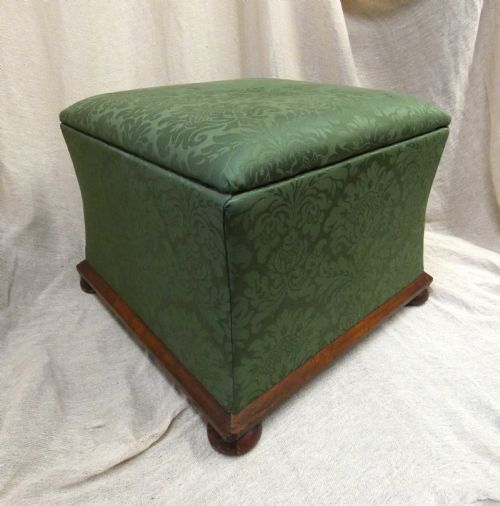


Traditional Padded Footrest
These traditional padded footrest pieces offer solid timber frames and upholstered surfaces designed to elevate feet or seat an extra guest.
Traditional Padded Footrest
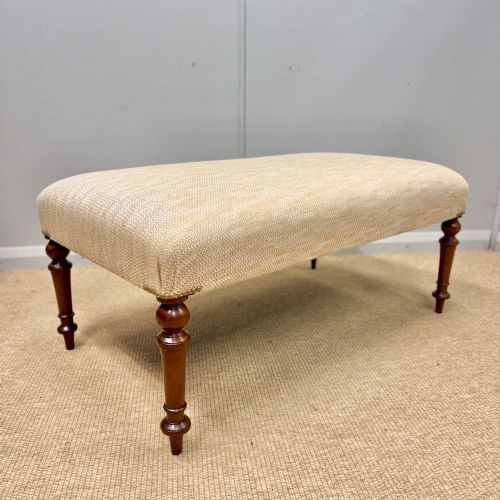
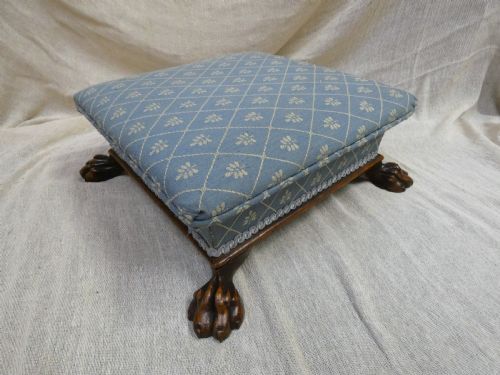
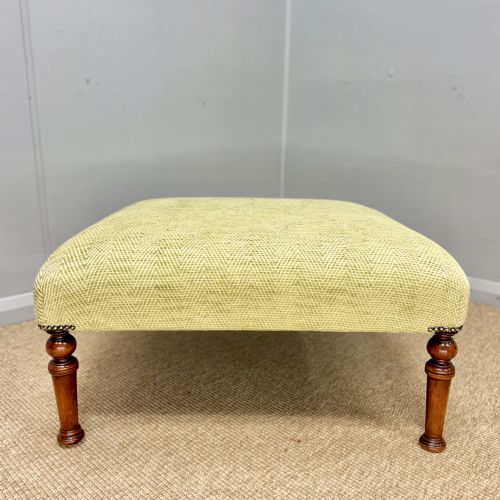
A traditional padded footrest generally takes the form of an oblong, square, or long stool designed for domestic comfort. These pieces appear across various historical periods, frequently manifesting as Victorian or early twentieth-century examples.
Buyers encounter numerous variations ranging from simple low footstools on brass castors to larger upholstered ottomans and dressing table stools. The selection spans straightforward timber frames to revival styles echoing earlier cabinetmaking traditions.
Origins stretch from eighteenth-century Georgian designs through nineteenth-century Victorian creations up to pieces from nineteen twenty. Mahogany and walnut dominate the timber structures, paired with diverse fabric, leather, wool, and textile upholstery.
Materials and construction methods
Makers constructed the structural frames primarily from hardwoods such as mahogany, walnut, oak, and general timber. Joinery methods included traditional techniques appropriate to the period, supporting padded surfaces above four legs or a low base.
Upholstery involved fabrics, textiles, wool, leather, and woven rattan secured over padding to create the characteristic cushioned top. Brass castors frequently appeared on nineteenth-century versions to assist movement across floor surfaces.
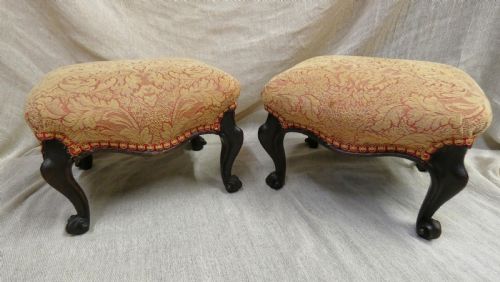
Carving details and revival styles drew upon historical motifs, yielding cabriole legs, carved mahogany rails, and deep buttoned upholstery finishes. Woodwork was shaped by hand or standard workshop tools before finishing with polish or wax.
Several footstools arrive equipped with brass castors, ready to roll across the carpet at the slightest nudge.
Distinctions in quality and finish
Quality separates through the crispness of timber carving, the selection of solid hardwoods like mahogany or walnut, and the structural integrity of the frame joints. Superior examples exhibit balanced proportions, refined cabriole legs, and careful hand-carved detailing.
The execution of the upholstery work and the selection of covering materials also mark differences across pieces. Deep buttoning, quality leather, or tightly woven herringbone fabric indicate higher execution standards than basic utilitarian coverings.
Age and historical adherence influence the standing of each piece, with eighteenth-century and Georgian examples showing distinct construction characteristics compared to later revival items. Original brass castors and untouched timber surfaces contribute to a stronger overall presence.
Howard and Sons
The Traditional Padded Footrest Glossary
- Cabriole leg
- A furniture leg featuring a double curve, typically arching outward at the knee and tapering inward toward the foot. This form originates from ancient motifs and became prominent in eighteenth-century and revival furniture designs.
- Joint stool
- A low wooden stool constructed with mortise and tenon joints using wooden pegs. These sturdy pieces date back to earlier centuries and serve as both seats and small stands.
- Ottoman
- A low upholstered seat or footstool without a back or arms, often built on a larger scale. Victorian and early twentieth-century versions frequently incorporated internal storage or deep buttoned upholstery.
- Castor
- A small wheel fitted to the base of a furniture leg to allow smooth rolling across floors. Brass examples are common on nineteenth-century footstools and large ottomans.
- Deep buttoning
- An upholstery technique where twine is pulled through padding and secured with buttons to create a diamond pattern. This method provides firm tension across the cushioned surface.
Traditional Padded Footrest: Frequently Asked Questions
What is a traditional padded footrest?
A traditional padded footrest is a low timber-framed seat or foot support covered in fabric, leather, or wool. These items provide a comfortable surface for resting feet or sitting.
They appear in various shapes including square, oblong, and long formats. Many feature upholstered tops mounted on wood frames with or without castors.
How do I date a footstool?
Dating relies on examining the timber species, joinery methods, and stylistic cues present in the frame. Nineteenth-century pieces often display mahogany or walnut construction alongside brass castors.
Revival pieces copy earlier eras like Queen Anne or Chippendale styles while retaining the manufacturing traits of their actual production period. Inspecting the underside and hardware helps determine the likely age.
Were these stools used for seating?
Many of these pieces served dual purposes as both footrests and low seats for dressing tables or firesides. Dressing table stools and centre stools were built specifically for sitting.
Larger ottoman variations accommodated multiple functions within the Victorian domestic interior. The sturdy timber frames supported regular daily use in various rooms.
How should I clean the wood frame?
Cleaning the timber frame requires dusting with a soft, dry cloth to remove surface particles. Avoid harsh chemical cleaners that might strip the original polish or wax.
Applying a traditional beeswax polish helps nourish older mahogany and walnut surfaces. Testing any cleaning product on a hidden area first protects the finish.
What upholstery materials are common?
Upholstery materials include woven textiles, herringbone fabrics, wool, and leather surfaces. Deep buttoning appears on several Victorian examples to secure the internal padding.
Many listings feature recent or antique upholstery depending on restoration history. Fabric choices range from plain leather to patterned decorative coverings.