
Traditional Open Library Bookcase
A traditional open library bookcase brings architectural presence and accessible storage into a room, holding centuries of collected volumes.
Traditional Open Library Bookcase
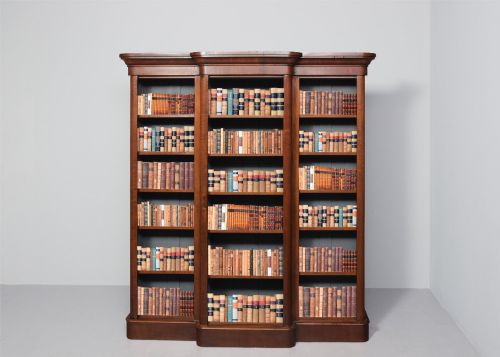
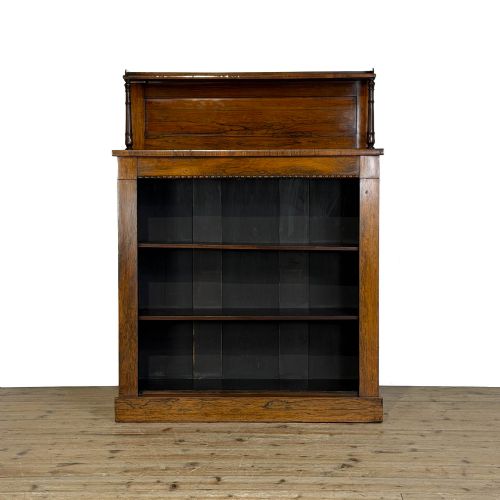
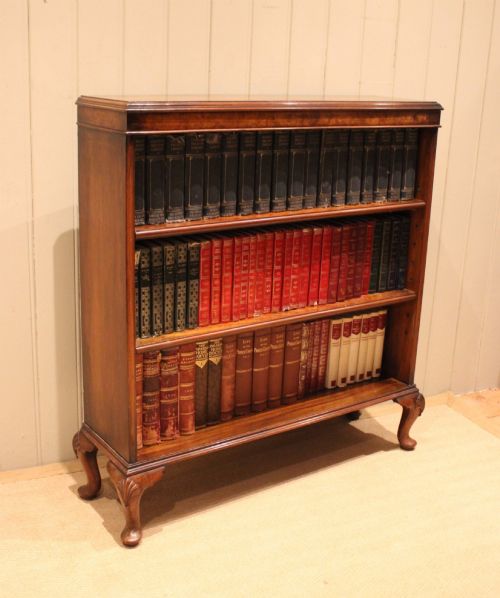
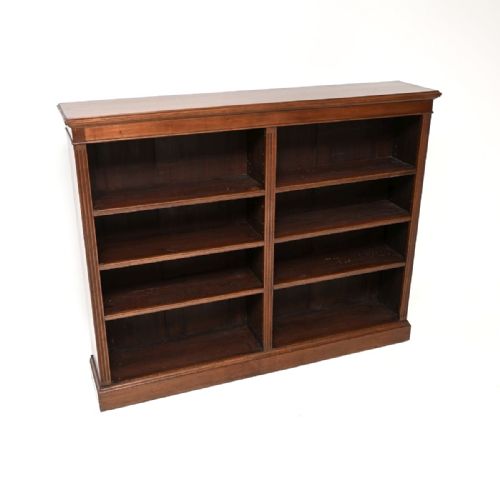
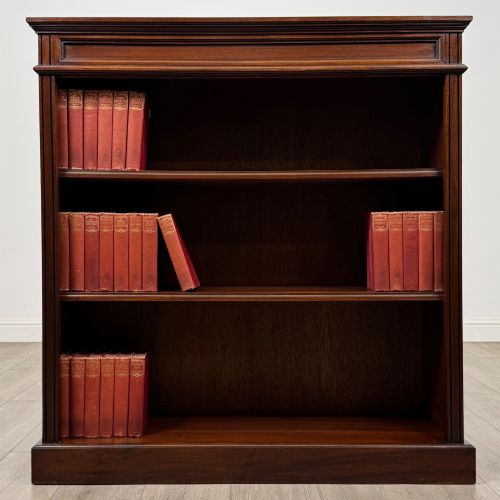
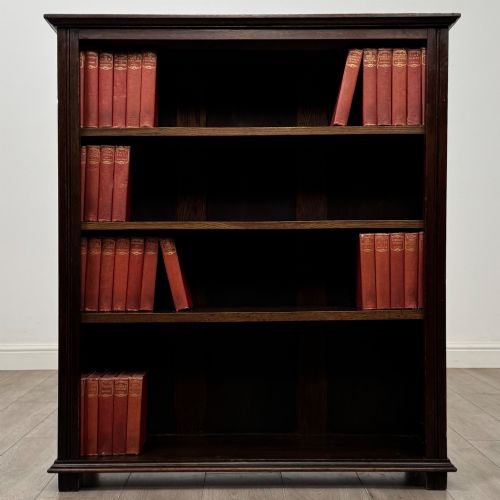
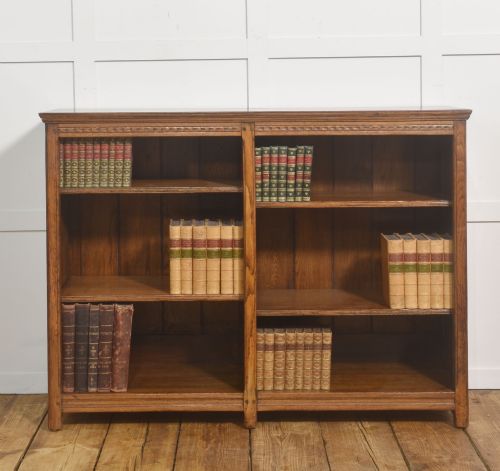
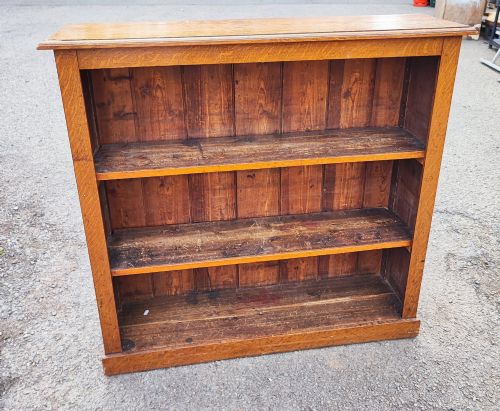
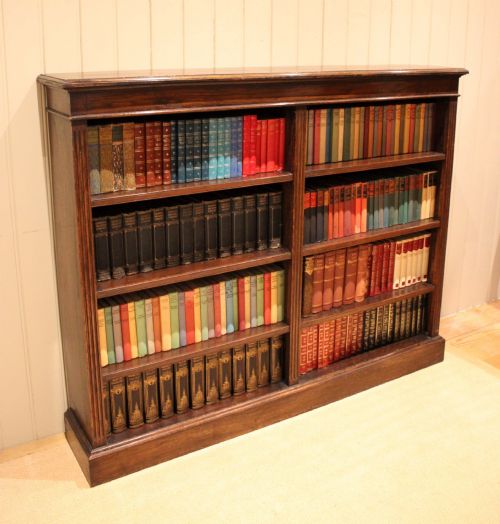
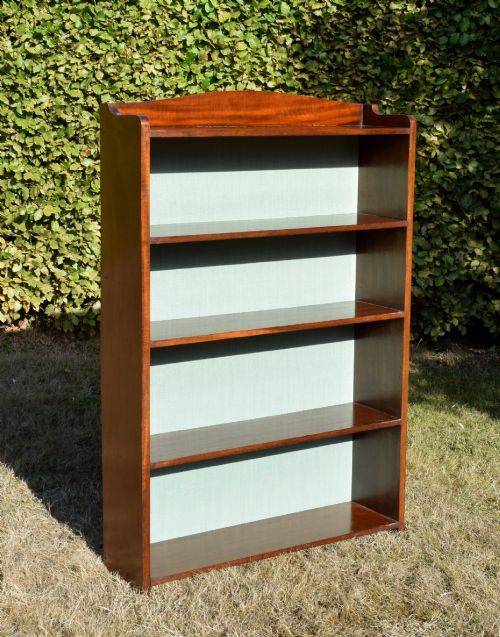
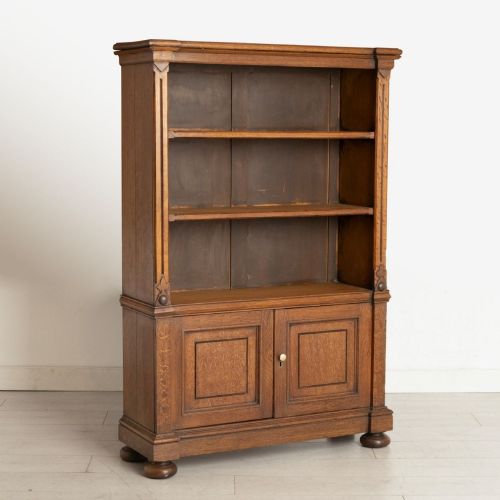
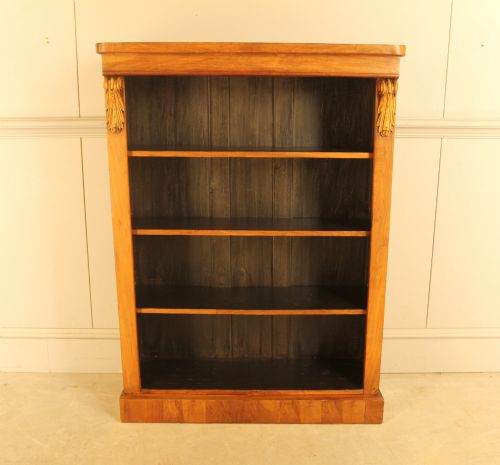
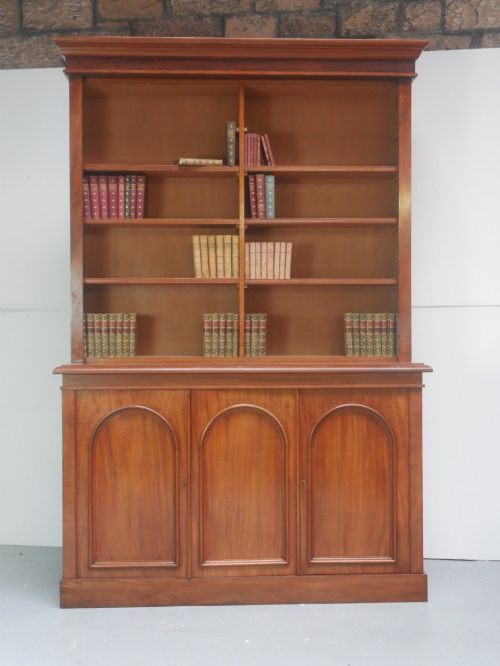
A traditional open library bookcase provides unobstructed access to rows of books, forming a central architectural element within a study, parlour or reception room. When searching for a traditional open library bookcase, buyers encounter substantial pieces designed to anchor large walls or fit neatly into alcoves without doors obstructing the view of the bindings.
The selections span the nineteenth century through the early twentieth century, taking stylistic cues from Victorian, Edwardian and Regency periods alongside Queen Anne Revival and French Provincial influences. Forms range from compact, neat proportions to large breakfront configurations with multiple sections designed to accommodate extensive private libraries.
How they were made
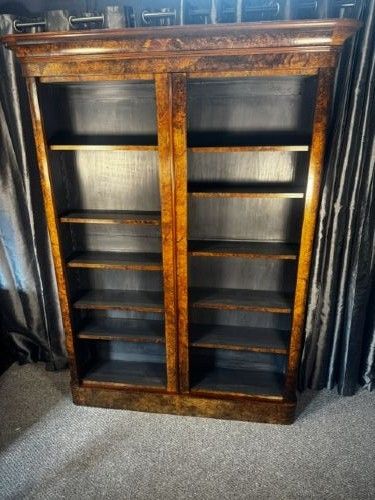
Cabinet makers utilised dense hardwoods such as mahogany, oak, walnut, burr walnut and rosewood, alongside occasional pine for secondary carcases. Surfaces frequently highlight the natural grain of the timber, sometimes accented with brass fittings or ebonised details depending on the period and prevailing style.
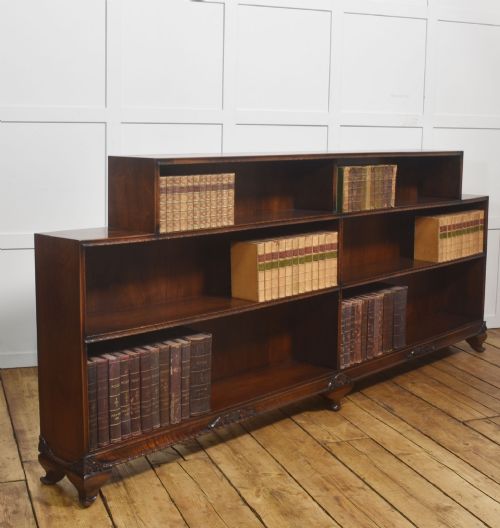
Construction techniques prioritise structural stability to support heavy rows of books, incorporating adjustable shelving systems that allow owners to customise shelf heights. Breakfront designs utilise tiered construction methods, creating distinct central projections that add depth and visual complexity to larger library walls.
The listings feature timbers spanning mahogany, oak, walnut, burr walnut, rosewood, pine and brass across the nineteenth and early twentieth centuries.
What varies in quality
The hierarchy of quality rests upon timber selection and cabinet-making ambition, where figured veneers like burr walnut or rich mahogany distinguish finer commissions from utilitarian pine pieces. Proportion and scale dictate the visual success of the piece, with well-balanced cornices and harmonious stepped or breakfront massing separating standard joinery from superior workshop output.
Internal engineering also marks the distinction, particularly the precision of adjustable shelf mechanisms and the integration of brass hardware. Pieces originating from notable workshops demonstrate a higher standard of timber seasoning and joint construction, ensuring the carcase remains stable under heavy weight over centuries of use.
Waring and Gillows
The Traditional Open Library Bookcase Glossary
- Breakfront
- A cabinet design where the central section projects forward from the flanking wings, creating a layered architectural silhouette.
- Adjustable shelves
- Movable interior platforms supported by vertical ratchets, pegs or track systems that allow the height between tiers to change.
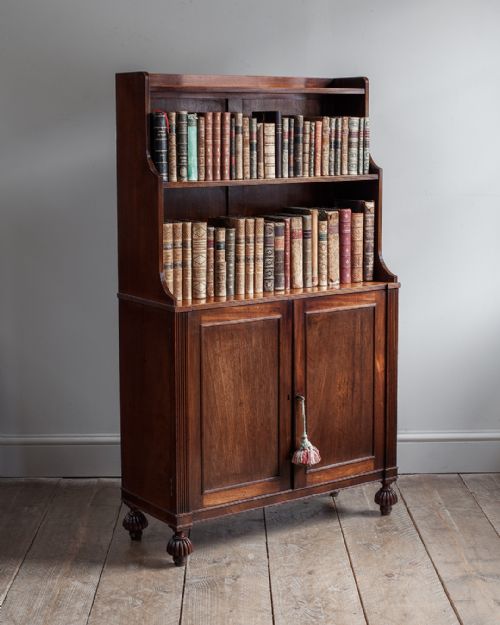
- Waterfall bookcase
- A stepped shelving form where each tier recedes from the one below it, creating a cascading profile.
- Ebonised
- Timber treated with a dark stain or finish to imitate the appearance of expensive ebony wood.
- Burr walnut
- Wood taken from the gnarled growth of a walnut tree, prized for its swirling, highly figured grain patterns.
Traditional Open Library Bookcase: Frequently Asked Questions
What is an open library bookcase?
An open library bookcase is a tall shelving unit without doors, designed specifically to hold large collections of books while keeping the spines fully visible and accessible in a room.
These pieces range from modest single-bay units to grand breakfront library fixtures built to line the walls of historic studies.
How do I adjust the shelves?
Most traditional library bookcases utilise wooden ratchets, brass pegs or slotted vertical metal strips set into the interior sides of the carcase. You simply lift the shelf and reposition the supports into the desired slots.
This adaptability allows the cabinet to accommodate oversized folios alongside standard octavo volumes.
Where should I place a large bookcase?
Large bookcases require solid, flat wall space away from direct sunlight and strong heat sources, which can dry out and warp antique timbers like mahogany and oak.
Placing them in studies, libraries or spacious living rooms provides the structural support and visual balance such monumental pieces demand.
How can I tell Victorian from Edwardian pieces?
Victorian bookcases, dating roughly from the middle to late nineteenth century, often feature heavier moulded cornices, rich dark mahogany or rosewood, and robust proportions. Edwardian pieces from around 1900 frequently showcase lighter golden oak, simpler lines and occasionally inlaid decoration.
Examining the internal timber, backboards and fixing methods provides further clues to the precise era of manufacture.