
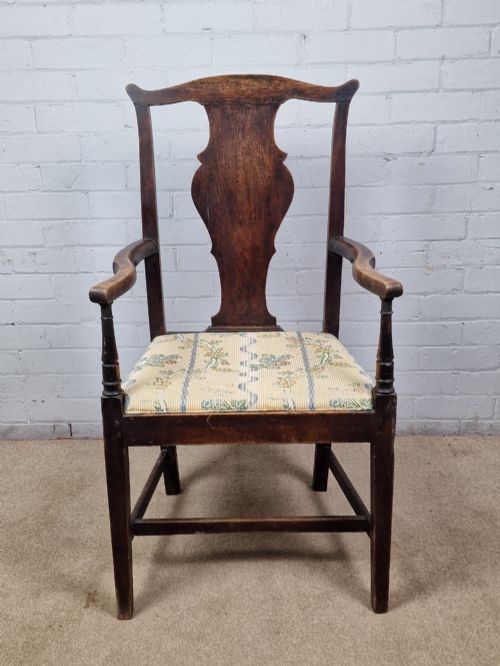
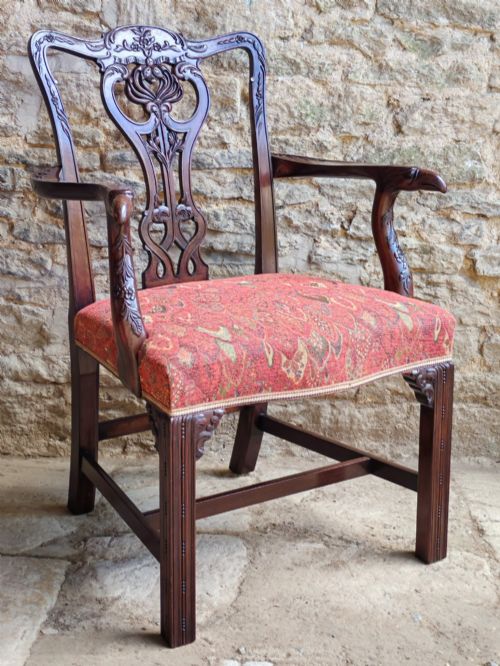
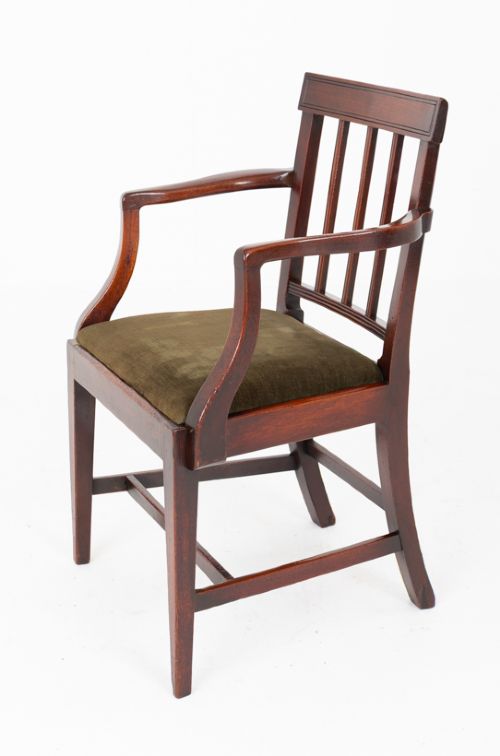
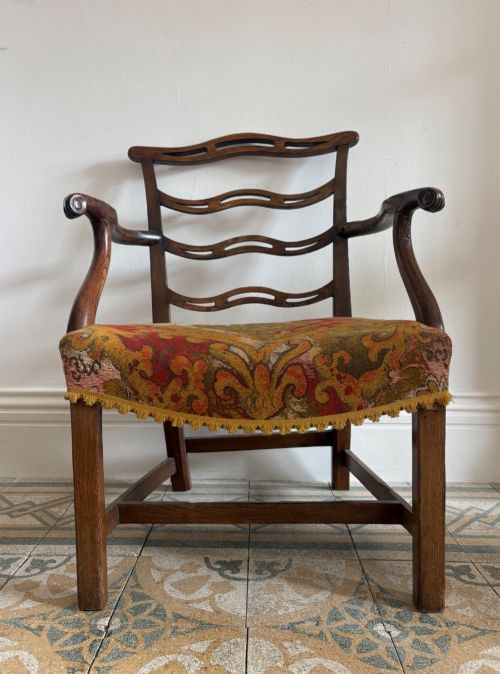

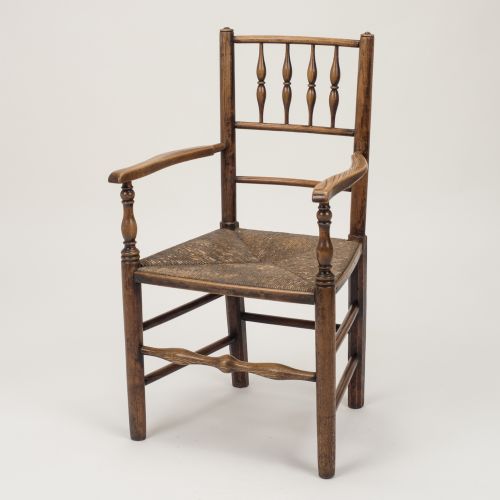
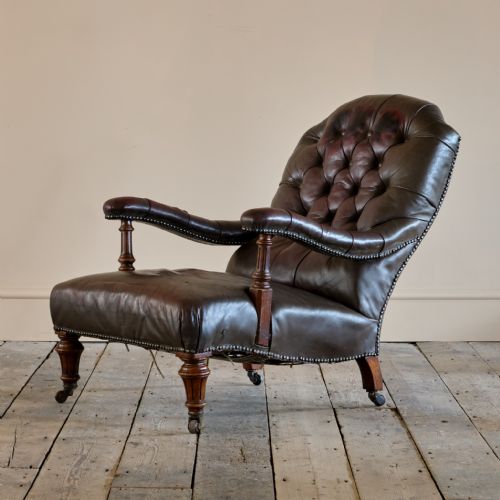
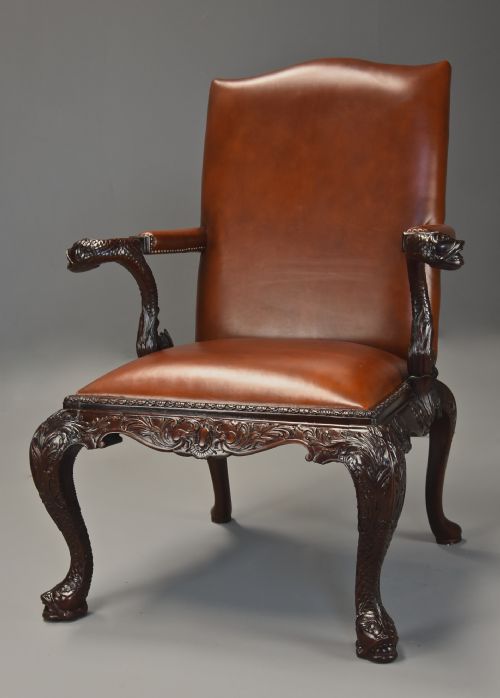
Traditional Open Arm Chair
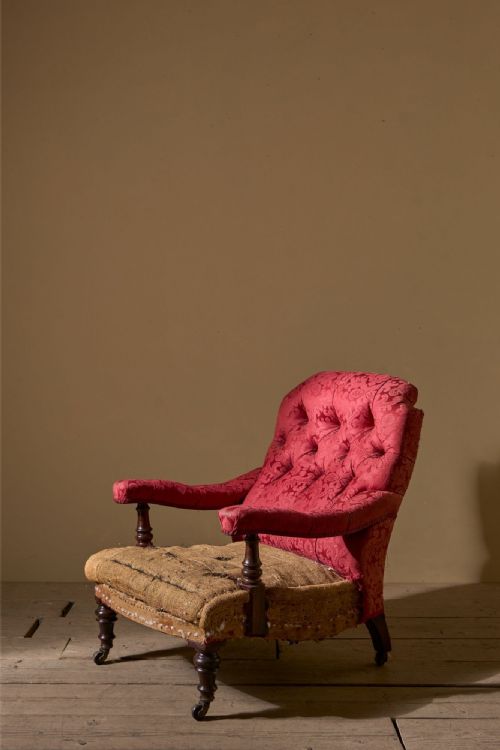
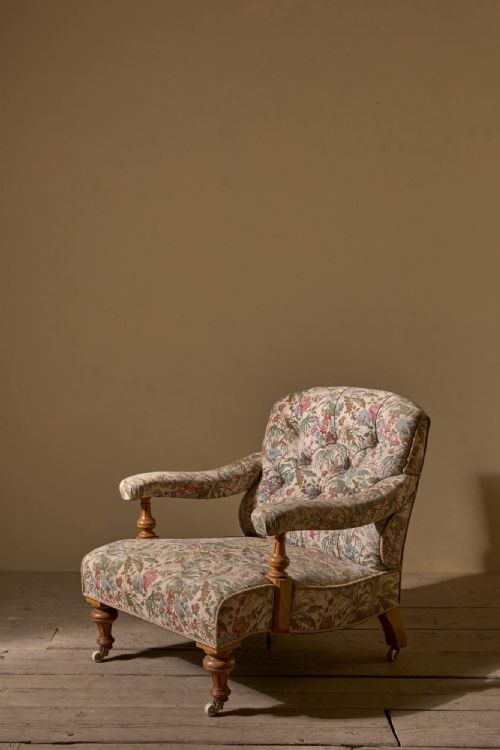
A traditional open arm chair provides a solid seat for a library or study, crafted in wood with upholstered supports.
Traditional Open Arm Chair
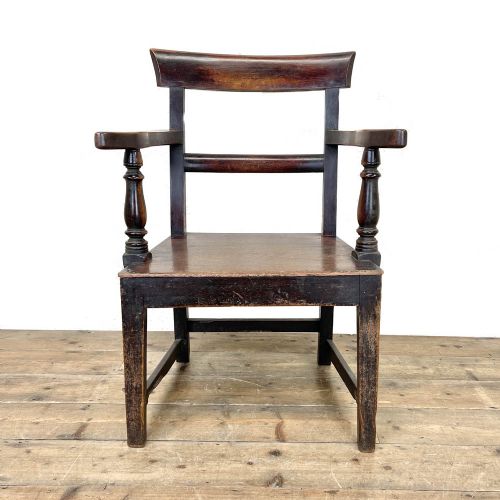
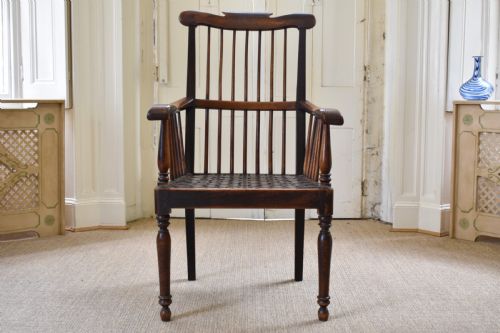
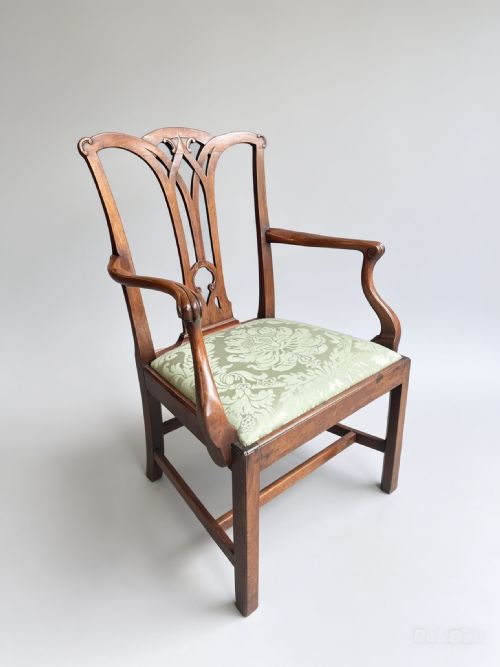
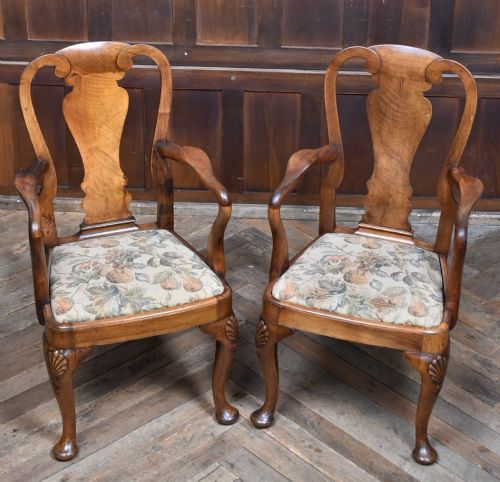
A traditional open arm chair takes several forms across the periods represented in these listings, ranging from Georgian mahogany designs to country elm ladderbacks and later revival pieces. Buyers seeking this type of seating encounter examples spanning from the seventeenth century through to the early twentieth century, with nineteenth-century country house models appearing frequently.
The materials vary from dense hardwoods such as mahogany, walnut, and oak to lighter country timbers like elm, laburnum, and ash. Many retain functional seating surfaces upholstered in leather, velvet, fabric, tapestry, needlework, rush, or hessian over brass details.
Styles stretch from formal George II and Chippendale designs to regional country pieces, including spindleback, wainscot, and library chairs alongside Howard style armchairs. The selection also includes pairs and matched sets suitable for dining or parlour placement.
How they were made
Construction relies on traditional cabinet-making methods utilising timbers such as mahogany, walnut, and elm for structural frames and show woods. Joinery techniques secure arm supports and legs directly to the seat rails, often incorporating carved details or reeded turnings.
Upholstery layers employ materials like horsehair, hessian, and webbing beneath top covers of leather, velvet, tapestry, or needlework, fixed with brass tacks or studs. Rush seating appears on country examples, woven tightly across timber frames for durability.
Traditional Open Arm Chair Retail Price Guide 2026
Typical asking prices for traditional open arm chair among the pieces listed under this phrase on Sellingantiques today, from the lower quarter to the upper quarter. They describe what is for sale here now, not the wider market.
Several chairs arrive with stories written straight into their rush seats and faded velvet.
What varies in quality
The calibre of timber selection and the precision of hand-carved details define the distinction between standard and superior pieces. Finer chairs exhibit crisp mouldings, well-figured grain in the mahogany or walnut, and robust joinery that withstands centuries of use.
Upholstery execution and the preservation of original show frames also dictate the standing of an individual piece. Retained primary surfaces, uncompromised structural frames, and sympathetic re-covering separate master-workshop examples from later provincial interpretations.
Howard and Sons
The Traditional Open Arm Chair Glossary
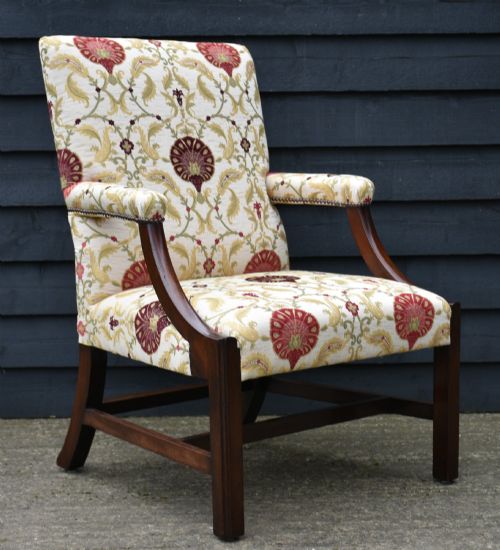
- Gainsborough chair
- A wide, upholstered armchair with open padded arms, designed in the mid-eighteenth century for reading or writing. These typically feature mahogany frames and leather or fabric upholstery.
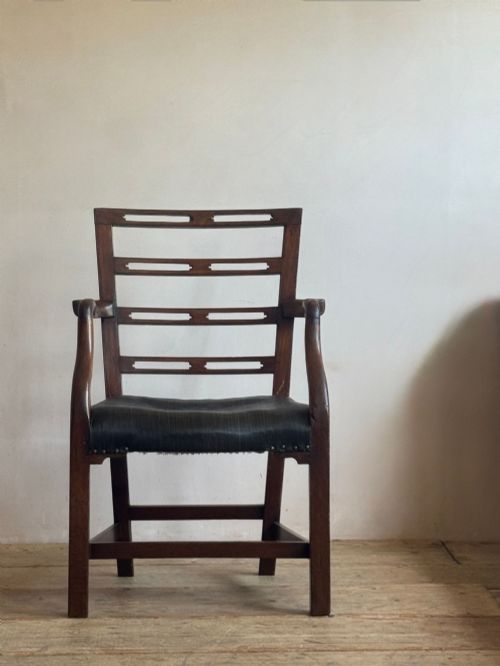
- Ladderback
- A chair back constructed with horizontal slats resembling the rungs of a ladder. This form appears frequently on country elm and ash chairs from the eighteenth and nineteenth centuries.
- Wainscot chair
- An early form of heavy wooden armchair constructed primarily from oak with panelled backs. These sturdy seats date to the seventeenth and early eighteenth centuries.
- Reeded
- A decorative moulding formed of parallel convex strips carved into the timber surface. This technique is common on the legs and arm supports of nineteenth-century library chairs.
- Show frame
- The exposed wooden structural framework of an armchair that surrounds the upholstered sections. These frames display the primary timber and any carved ornamentation.
Traditional Open Arm Chair: Frequently Asked Questions
What is a traditional open arm chair?
A traditional open arm chair is a seated piece of furniture featuring exposed wooden structural frames and open sides without full upholstery enclosing the arms. These chairs date across multiple centuries and serve functions from library seating to dining.
They appear in styles ranging from formal Georgian mahogany to regional country elm and ash. The open design allows for ease of movement while providing structural support for the user.
Where were these chairs used?
These chairs found placement primarily in libraries, studies, country houses, and parlours where formal or semi-formal seating was required. Library chairs accommodated long hours of reading, while lighter carver chairs stood at dining tables.
Country variations suited domestic farmhouse interiors, whereas mahogany Gainsborough models belonged in refined drawing rooms. Their versatility allowed them to move between functional and decorative roles within a home.
How do I care for wooden frames?
Wooden frames require maintenance with appropriate furniture wax to nourish the timber and preserve the polished surface. Keep chairs away from direct heat sources and strong sunlight to prevent the wood from drying out or splitting.
Upholstered sections need gentle cleaning suited to the specific textile, whether that is leather, velvet, tapestry, or rush. Regular dusting prevents particulate accumulation in carved joints and fabric weaves.
How do I identify the period?
Period identification relies on examining the timber species, construction methods, and stylistic cues present in the design. Georgian pieces frequently utilise rich mahogany with detailed carvings, while seventeenth-century examples rely heavily on carved oak.
Country chairs often employ regional woods like elm and ash combined with rush seating. Comparing leg forms, stretcher arrangements, and arm profiles against documented examples helps confirm the era of manufacture.