


Traditional Oil Study Portrait
A traditional oil study portrait captures a living likeness in pigment, offering an immediate window into historical character through the direct touch of the painter's brush.
Traditional Oil Study Portrait
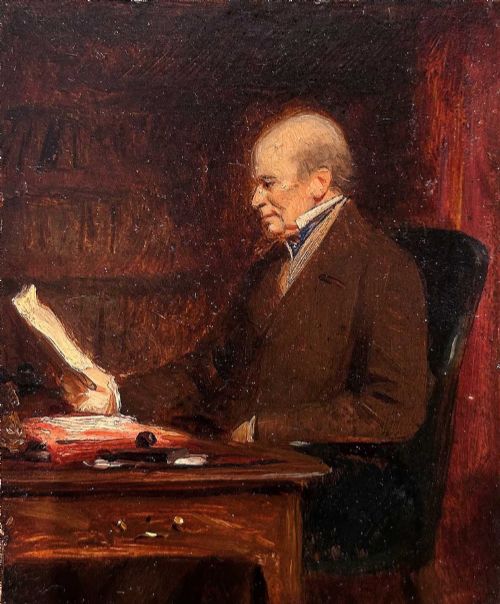
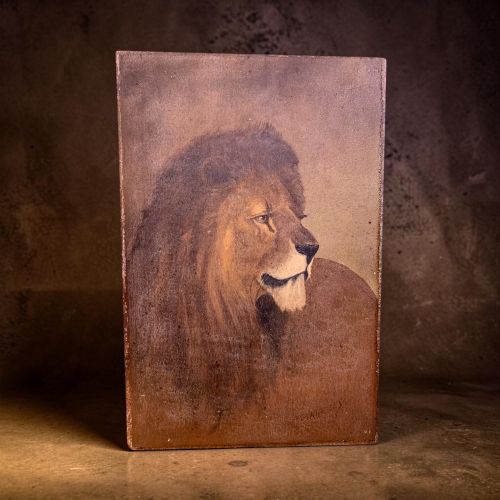
A traditional oil study portrait presents a likeness painted directly on canvas, often acting as a preparatory sketch or a finished intimate study. These works span from the seventeenth century through to the mid-twentieth century, capturing figures ranging from nobility and domestic subjects to domestic animals and allegorical figures.
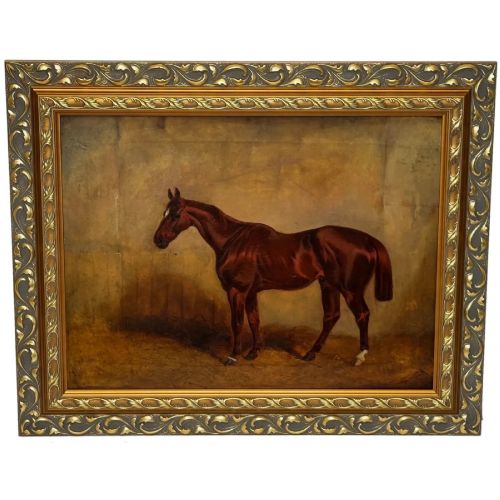
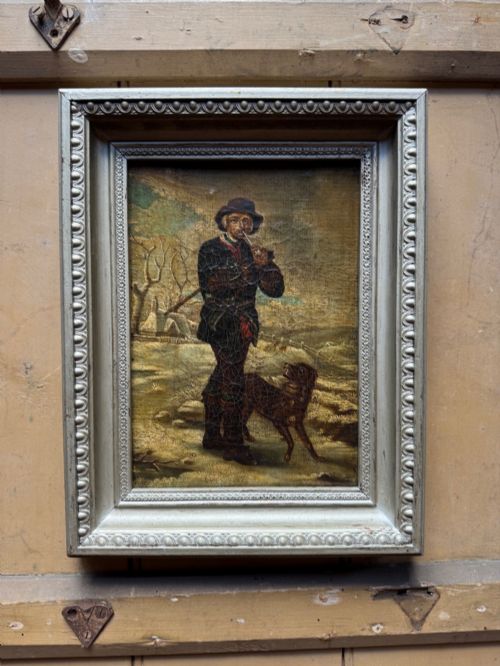
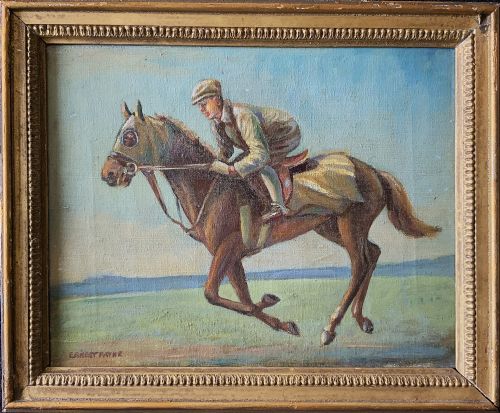
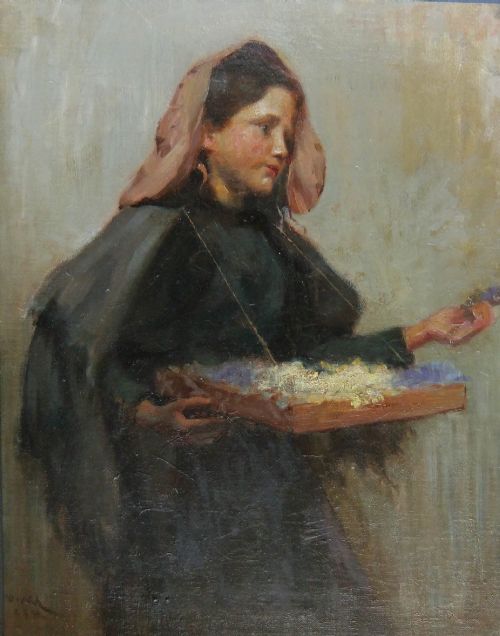
Buyers browsing this selection will most frequently encounter nineteenth-century examples alongside Victorian works and twentieth-century studies. The forms vary from intimate portrait sketches of young ladies and gentlemen to naive folk art and equestrian studies.
Origins stretch across British and European schools, incorporating traditional British art, Flemish baroque influences, and folk traditions. Each piece records the hand of named artists and anonymous school painters alike.
How they were made
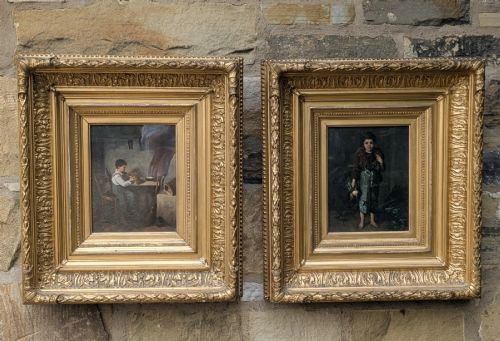
These works rely primarily on oil paint applied to stretched canvas, utilising the slow-drying medium to build rich depth through layered tones. Artisans frequently housed these paintings in decorative gilt wood frames adorned with gesso mouldings.
The technique prioritises visible brushwork and rapid notation of light and shadow, distinguishing a study from a highly polished formal commission. Painters worked wet-in-wet to capture spontaneous expressions and immediate anatomical truths.
Listings feature canvases spanning from the seventeenth century through to the mid-twentieth century, including works on wood and gilt gesso frames.
What varies in quality
Framing also plays a role, as period gilt wood and gesso surrounds that complement the canvas enhance the overall integrity of the piece. The distinction between a stiff provincial painting and a fluid master study lies entirely in the artist's economy of line.
Stephen Pearce·Ernest Payne·William Watt Milne·Frank Moss Bennett·Peter Paul Rubens·John Emms·Ralph Hedley
The Traditional Oil Study Portrait Glossary
- Oil paint
- A slow-drying medium made by pigment particles suspended in a drying oil, typically linseed oil. This medium allows painters to blend tones seamlessly and achieve rich luminosity.
- Canvas
- A heavy woven fabric, usually linen or cotton, stretched tightly across a wooden frame to serve as the primary surface for oil paintings. It provides a durable and textured ground for the brush.
- Gilt wood
- Wood decorated with gold leaf or a gold-coloured metallic application, frequently used for traditional picture frames. It adds warmth and reflection around the perimeter of the artwork.
- Gesso
- A paint mixture consisting of a binder mixed with chalk, gypsum, or pigment, used to prepare wood or canvas surfaces. Artisans apply it to frames before gilding to create smooth, mouldable relief details.
- Study
- A preparatory painting or sketch made to explore elements of a larger composition or to record a subject directly from life. These works often display greater spontaneity than finished salon pieces.
Traditional Oil Study Portrait: Frequently Asked Questions
What is a traditional oil study portrait?
It is an intimate painted likeness on canvas, often created as a preparatory work or a direct observation of a sitter. These pieces emphasise expressive brushwork over formal rigidity.
Such studies record historical figures, domestic subjects, and animals with a immediacy that finished commissions sometimes lack.
How were these portraits used historically?
Artists painted them to test lighting and composition before executing larger canvases, or to capture a rapid likeness of a sitter. They served as working tools in the studio as well as independent cabinet pieces.
Patrons often kept smaller sketches in private rooms rather than public reception spaces.
How should I display an oil study portrait?
Hang the portrait on a wall with stable humidity and away from direct sunlight to protect the canvas and oil pigments. Pairing the work with its period gilt frame maintains its historical context.
Allow adequate breathing space around the canvas so the brushwork can be appreciated from a normal viewing distance.
How do I tell different periods apart?
Twentieth-century and Victorian pieces often show looser impressionistic handling, whereas seventeenth-century works employ darker baroque palettes and rigid formal structures. Canvas preparation and frame styles also offer reliable clues to the era of creation.
Examining the stretcher bars and nails at the back of the canvas helps confirm the age of the support.