

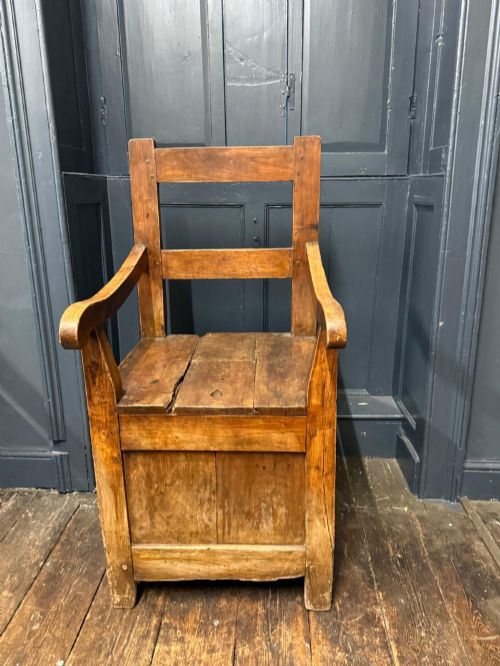
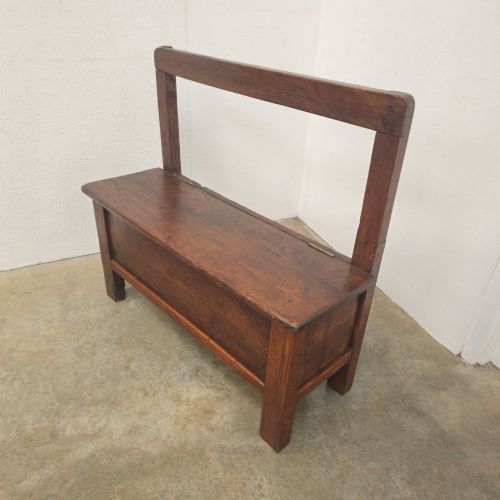
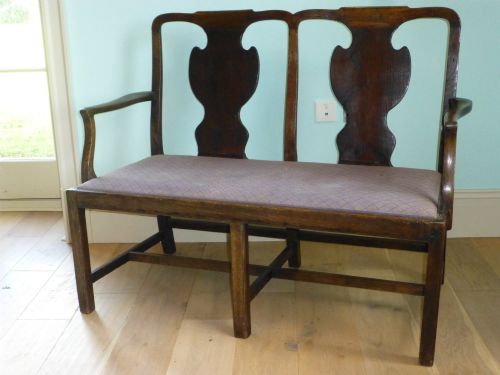
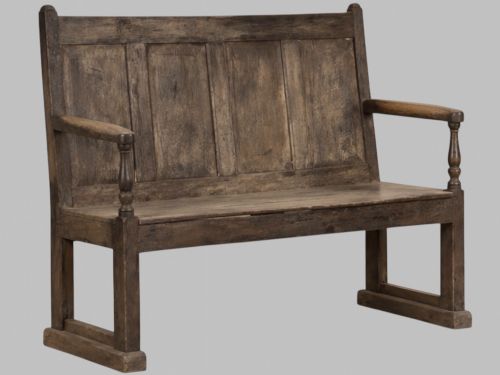

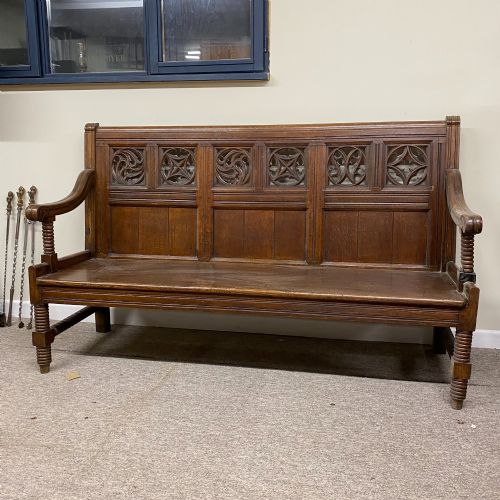
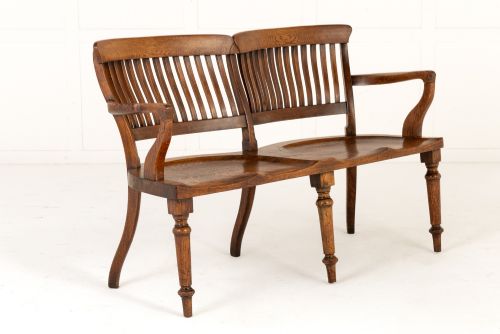


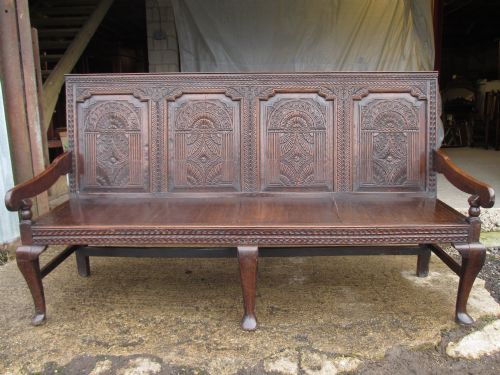
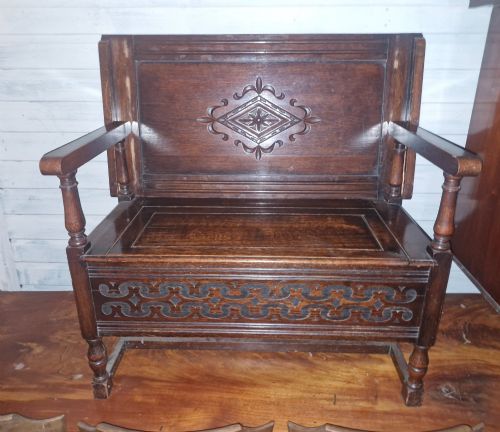
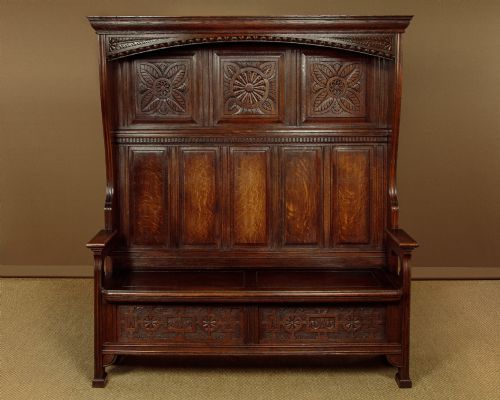
Traditional Oak Wooden Settle
A traditional oak wooden settle brings substantial historic character and practical seating with built-in storage to an entrance hall or living space.
Traditional Oak Wooden Settle
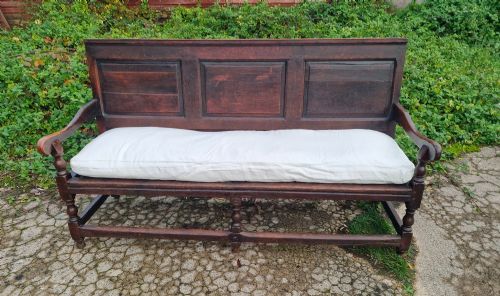
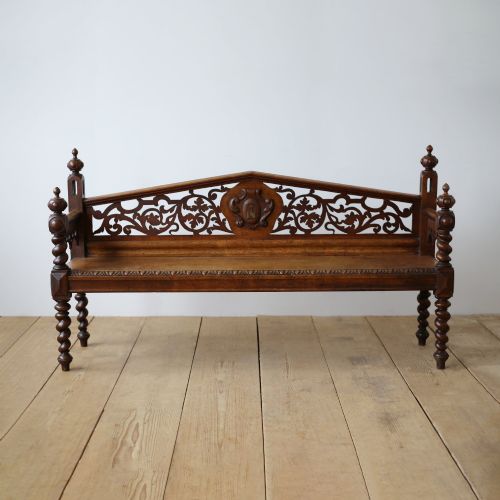
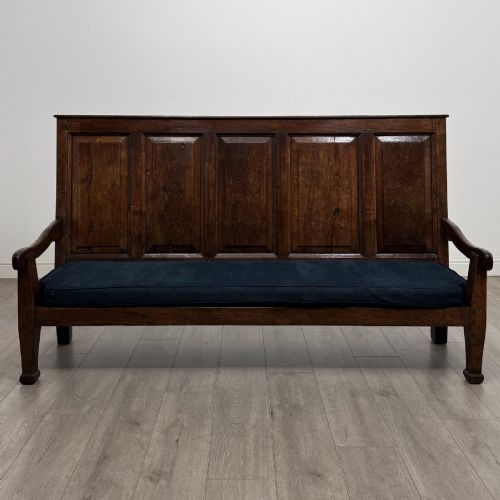
When you search for a traditional oak wooden settle, you are looking at sturdy wooden benches designed to block draughts in older homes, often featuring high backs and enclosed lower storage compartments. The pieces appearing here span centuries of craftsmanship, ranging from simple country workshop creations to elaborately carved examples.
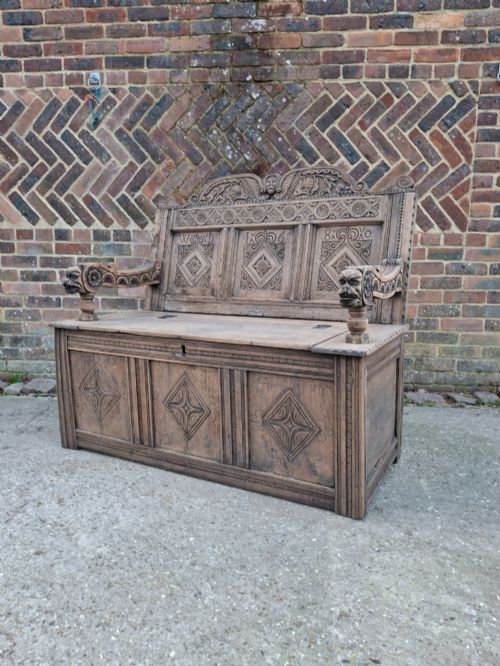
The selection on this page centres predominantly on 18th century and 19th century designs, alongside later revival pieces from the Edwardian era and the 1920s. You will encounter forms such as box settles with lift-up seats, high back settles, and regional variants like Welsh vernacular pieces and Lakeland lambing chairs.
How they were made
Joiners relied primarily on solid oak, frequently paired with secondary timbers like pine or elm, and constructed these benches using traditional framing and panel techniques. Structural integrity depended on sturdy tenon joints and wooden pegs rather than modern metal fixings, ensuring the furniture could withstand generations of daily use.
Surface finishing involved simple waxing, oiling, or leaving the timber bare to age naturally over decades. Many examples incorporate hand-carved panels, decorative crest rails, or turned components that reflect the specific regional styles of English country workshops and Welsh vernacular makers.
Traditional Oak Wooden Settle Retail Price Guide 2026
Typical asking prices for traditional oak wooden settle among the pieces listed under this phrase on Sellingantiques today, from the lower quarter to the upper quarter. They describe what is for sale here now, not the wider market.
The inventory spans the 18th century, the Victorian period, and the 1920s, featuring styles from Jacobean Revival to rustic farmhouse.
What varies in quality
The distinction between ordinary examples and finer pieces rests on the weight of the timber, the depth and crispness of any hand carving, and the proportions of the frame. Superior items retain their original boards without extensive timber replacement, showing a rich, untouched patina built up over centuries.
Construction details also dictate the standing of a settle, particularly the smoothness of the mechanism on box compartments and the integrity of the high back panels. Pieces that maintain their original structural form and uncompromised joinery command greater appreciation among collectors.
The Traditional Oak Wooden Settle Glossary
- Box settle
- A bench featuring a compartment beneath the seat accessed by a lift-up lid, historically utilised for storage near a hearth.
- Vernacular furniture
- Items made by local country joiners using regional styles and available native timbers, rather than following urban fashionable designs.
- Lambing chair
- A specialised high-sided wooden seat, often with a hooded top and enclosed lower section, designed to keep shepherds warm during cold nights.
- Crossbanding
- A decorative border technique where thin strips of veneer are laid across the grain to frame drawer fronts or panels.
- Patina
- The deep, lustrous surface sheen developed on old wood through decades of handling, polishing, and natural oxidation.
Traditional Oak Wooden Settle: Frequently Asked Questions
Where should I place a settle?
These benches sit naturally in spacious entrance halls, large boot rooms, or against a living room wall where their high backs create a distinct seating zone.
Because original settles were built to block cold draughts in old stone cottages, positioning them away from direct heat sources helps protect the dry timber.
How do I use the storage compartment?
The lift-up seat gives access to a deep box base that works well for storing blankets, boots, or bulky household items out of sight.
Ensure that heavier items placed inside do not strain old hinges or the internal floorboards of the bench.
How do I clean and maintain oak?
Dust the timber regularly with a soft, dry cloth and apply a traditional beeswax polish sparingly to nourish the dry surface.
Avoid placing wooden furniture near radiators or in direct sunlight, which can cause the aged oak panels to split or warp.
How can I tell the age of a settle?
Examine the construction marks, panel assembly, and the wear patterns around the seat and armrests to gauge the antiquity of the piece.
Earlier 18th century examples typically display pegged frame construction and hand-planed boards, whereas later revival pieces often show machine-sawn timber and standardised fixings.