
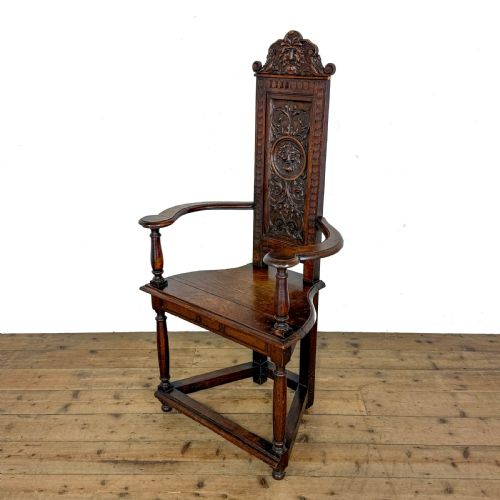


Traditional Oak Throne
A traditional oak throne brings solid timber presence and formal seating gravity into a room, drawing on centuries of panelled design.
Traditional Oak Throne
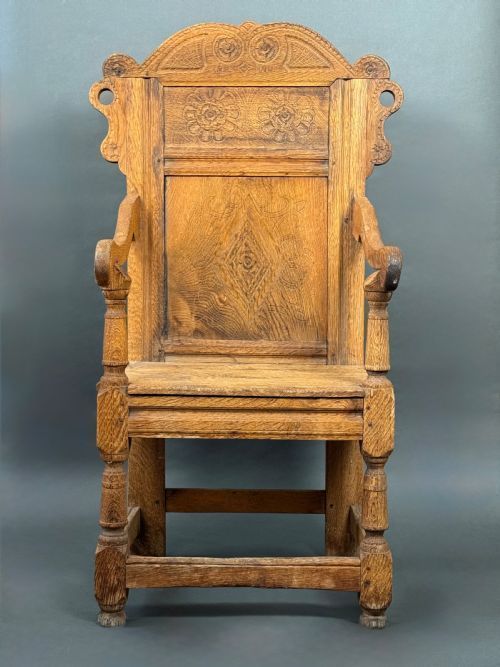
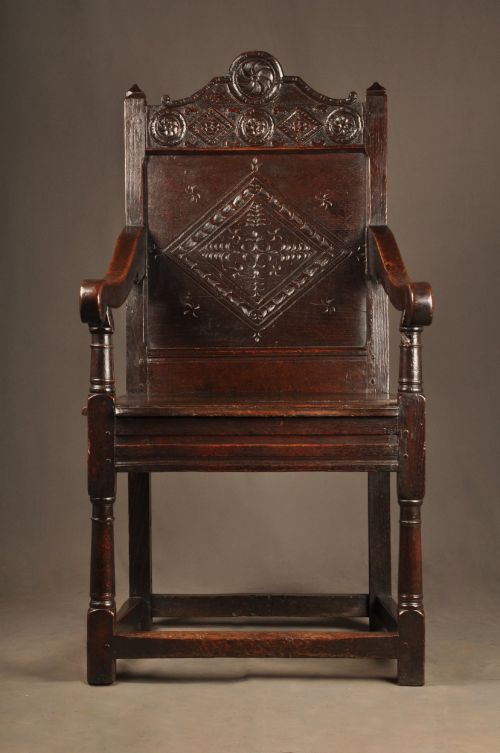
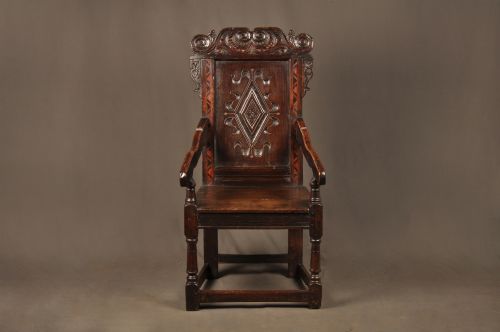
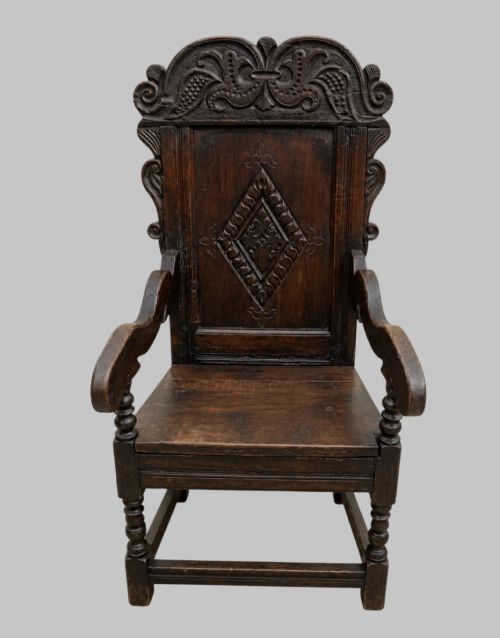
When you search for a traditional oak throne, you encounter heavy wooden armchairs and wainscot forms rooted in historical revival and vernacular English cabinetmaking. These pieces span from the seventeenth century through to later Victorian and Edwardian interpretations, alongside regional variations from Wales, Lancashire, and Yorkshire.
The most common form on this page is the wainscot armchair, constructed with panelled backs, solid wooden seats, and sturdy arm supports. Alongside these, you find lambing chairs, turner's chairs utilising beech and oak, and heavily carved revival pieces that echo Tudor and Jacobean aesthetics.
What varies in quality
The distinction between ordinary and exceptional examples rests on the crispness of the hand carving and the integrity of the original timber frame. Pieces that retain their early structural joinery without extensive timber replacement command greater attention from collectors.
Proportion and regional character also dictate distinction, as smaller scaled children's chairs and distinctively marked local variants demonstrate specific cabinetmaker competence. Surface patination, developed through centuries of handling, completes the evaluation of a piece.
Some antique chair designs included enclosed lower sections originally meant to keep the master's knees warm away from stone floor draughts.
The Traditional Oak Throne Glossary
- Wainscot chair
- A heavy wooden armchair characterised by a panelled wooden back and solid seat, originating from the period when oak panelling lined domestic walls. These chairs were principal seats of authority in a household.
- Turner's chair
- An armchair constructed predominantly from turned wooden spindles and members, often utilising beech and oak. They represent an ancient form of furniture assembly predating flat-panel construction.
- Lambing chair
- A high-backed vernacular seating form designed to shield the occupant from draughts, typically constructed in oak. They often feature hooded tops and enclosed lower sections.
- Jacobean style
- A design aesthetic reflecting the decorative vocabulary of the early seventeenth century, featuring geometric strapwork, heavy turning, and low-relief carving. Revival pieces borrow these motifs explicitly.
- Patina
- The surface sheen and colour acquired by oak timber through decades of use, cleaning, and exposure to light. A desirable skin develops naturally over centuries.
Traditional Oak Throne: Frequently Asked Questions
What is a wainscot chair?
A wainscot chair is a heavy wooden armchair built with a panelled back and a solid timber seat, designed during a time when oak panelling was common in fine interiors. These seats served as important household furniture rather than casual seating.
They rely on sturdy frame construction and often feature carved details along the crest rail and back panel. Their solid proportions give them a distinct architectural presence.
How do I care for antique oak furniture?
Antique oak benefits from stable room environments with minimal humidity fluctuations and protection from direct sunlight. Applying appropriate wax periodically helps maintain the timber's moisture balance and surface sheen.
Avoid using modern silicone polishes that can penetrate the grain and alter the historic patina. Gentle dusting with a soft cloth preserves the carved details and joins.
How do I distinguish an early chair from a revival piece?
Examining the construction methods, tool marks, and timber shrinkage helps clarify the age of a wooden armchair. Seventeenth-century examples show hand-riven and pit-sawn grain patterns distinct from later machine-cut timber.
Revival pieces from the Victorian and Edwardian eras often display standardised joinery and crisper, less worn carving styles. Comparing the patination across different parts of the frame reveals later repairs or alterations.
Where were these chairs originally used?
Historically, substantial oak chairs were placed at the head of a table or in the parlour as seats of status for the head of the household. Their heavy construction kept them positioned in principal rooms rather than moved about.
Vernacular variants like lambing chairs were placed near hearths to protect occupants from cold draughts. Today, their scale makes them suitable as statement seating in studies or hallways.