


Historic Oak Seating
Historic oak seating comprises sturdy timber chairs and armchairs spanning the seventeenth to nineteenth centuries, valued for enduring structural integrity and rich grain.
Historic Oak Seating
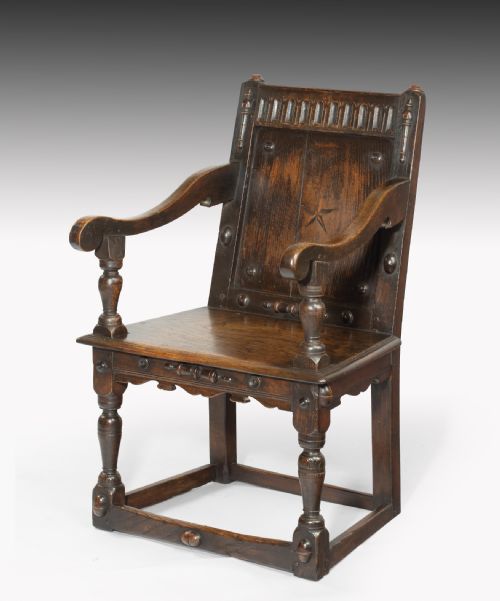
Historic oak seating encompasses robust seventeenth-century wainscot armchairs alongside eighteenth-century commode chairs and nineteenth-century revival pieces. Buyers seeking historic oak seating encounter heavy timber constructions featuring carved details and panelled backs.
The selection frequently includes seventeenth-century English and Scottish wainscot chairs, joined by vernacular Turner's chairs and side chairs with central splats. French Breton armchairs and Austro-Hungarian Renaissance Revival X-frame designs also appear among the listings.
Materials and construction
These items rely primarily on solid oak and wood, occasionally combined with walnut timber for secondary elements or contrasting decorative highlights. Iron components provide structural reinforcement in specific vernacular or revival formats.
Upholstered variations incorporate textile, tapestry, and fabric elements secured to wooden frames. Joinery methods reflect period traditions, utilising pegged mortise and tenon joints alongside turned spindle assemblies.
Materials documented across the inventory include solid oak and walnut timbers, complemented by various historic textiles and iron fittings.
Variations in quality
Quality rests upon the proportion of original timber retained and the integrity of the period joinery. Pieces maintaining their primary patination and untouched surface maturity command greater regard than those altered over centuries of use.
The crispness of hand-carved ornamentation on splats and crest rails distinguishes superior examples. Refined proportions and balanced structural design separate master cabinet work from simpler vernacular output.
The Historic Oak Seating Glossary
- Wainscot chair
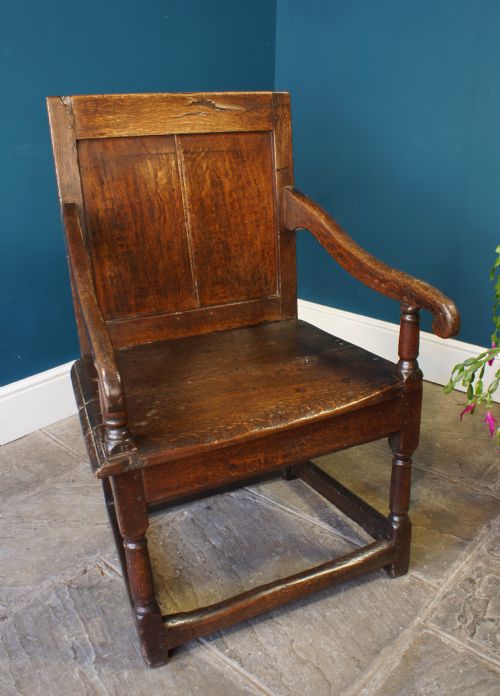
- A heavy wooden armchair of the sixteenth and seventeenth centuries, constructed with panelled backs and solid wooden seats. These items represent the height of joined furniture craftsmanship before upholstered seating predominated.
- Turner's chair
- A type of armchair built entirely from turned wooden spindles and members, creating an intricate geometric framework. This format dates back to the sixteenth and seventeenth centuries.
- Curule X-frame
- A folding chair design featuring intersecting curved legs that form an X-shape when viewed from the side. This classical form experienced revivals during the nineteenth century.
- Commode chair
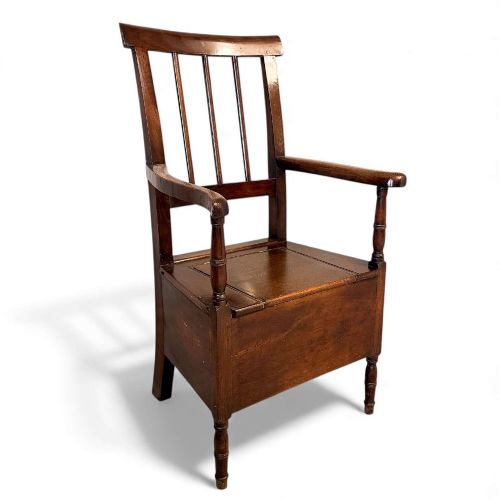
- An enclosed chair fitted with a concealed interior space designed to hold a chamber pot. Eighteenth-century examples often disguise this function beneath hinged wooden seats.
- Splat
- The vertical central strip of wood within the back of a chair, frequently shaped or carved for decoration. This component provides both lumbar support and visual character.
Historic Oak Seating: Frequently Asked Questions
How do I date historic oak seating?
Dating relies on examining construction methods, tool marks, and timber shrinkage patterns alongside stylistic traits. Seventeenth-century pieces typically employ heavy pegged joinery and simpler panel construction.
Later Victorian interpretations of earlier styles often reveal machine-sawn components and different assembly techniques upon closer inspection. Comparing the piece against documented examples from specific centuries confirms its period.
Were these chairs used at dining tables?
Most early oak seating, particularly wainscot armchairs, served as status items for heads of households rather than communal dining furniture. Side chairs became more common for dining as domestic layouts evolved.
Individual armchairs remained positioned against walls or in halls rather than clustered around tables. Their heavy timber frames made them permanent fixtures within the room.
How should I clean historic oak furniture?
Maintenance requires gentle dusting with a dry, soft cloth to prevent particulate buildup on the timber surface. Avoid modern silicone polishes that penetrate the grain and alter the historic finish.
Occasional applications of microcrystalline wax help protect the wood without attracting dust. Keeping the seating away from direct heat sources prevents the oak from splitting.
What is the difference between wainscot and turner's chairs?
Wainscot chairs feature flat wooden panels in their backs and rely on plank and frame construction. They project an architectural presence associated with high-status seventeenth-century interiors.
Turner's chairs consist entirely of interconnected turned spindles, creating an open, lattice-like structure. This alternative construction method draws upon traditional bodging and turning techniques.