



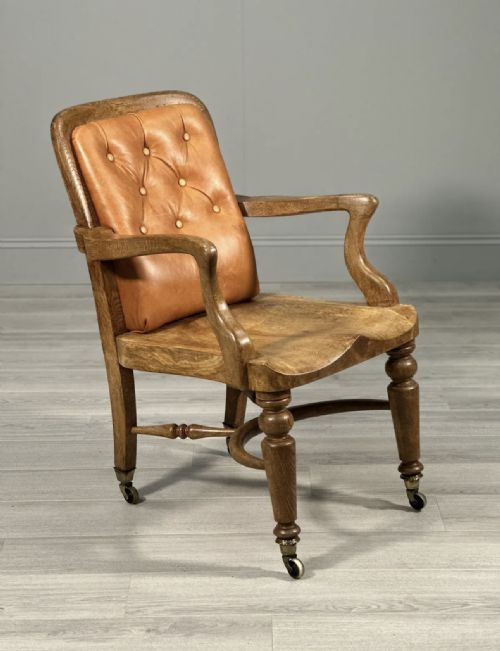


Traditional Oak Swivel Chair
These are traditional oak swivel chair pieces, solid working seats built for long hours at the desk.

Traditional Oak Swivel Chair
A traditional oak swivel chair serves as a robust seating option for studies, offices, and libraries. Buyers searching this phrase will find desk chairs and office chairs designed for mechanical movement and daily utility.
The selections on this page span from the late nineteenth century into the 1930s. You will encounter Edwardian examples alongside pieces from the Aesthetic Movement, Arts and Crafts period, and late Victorian eras.
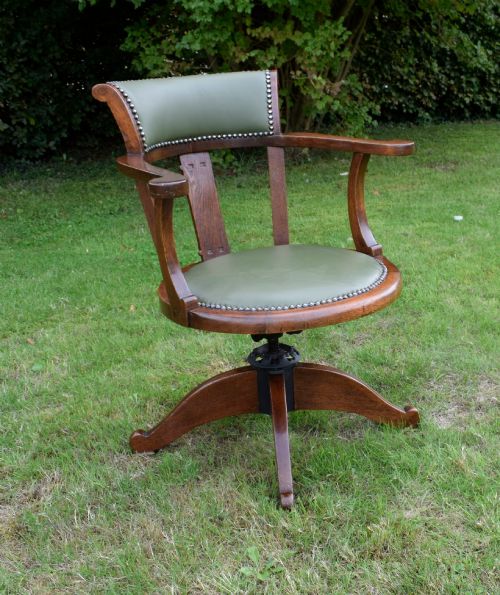
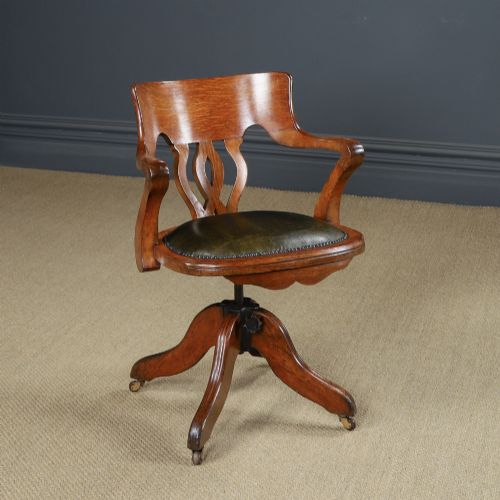
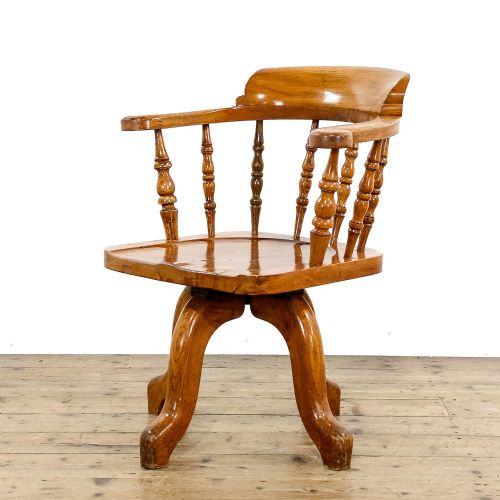
Most examples function as revolving armchairs or captain's chairs with tilting mechanisms. These items combine timber framing with swivel bases intended to make workspace movement efficient.
How they were made
Makers built these seats primarily using solid oak timbers, occasionally incorporating beech for secondary framing components. Timber frames were shaped to form supportive curved backs and sturdy armrests.
Mechanical function relies on heavy combinations of cast iron, brass, and metal swivel and tilt mechanisms. Seat pads feature fitted leather, tan hide, or plain wooden planks secured directly to the revolving frame.
The listings here cover materials including oak, beech, leather, cast iron, brass, and metal across late Victorian, Edwardian, and early twentieth-century periods.
What varies in quality
Quality rests upon the sophistication of the under-seat ironmongery and the smoothness of the revolving action. Superior examples incorporate complex tilt mechanisms and robust brass fittings that operate without lateral wobble.
The joinery of the spindle back and the selection of figured oak timber dictate the visual distinction of the piece. Chairs retaining original hide upholstery or stamped maker details sit securely at the upper end of the range.
Edward William Godwin
The Traditional Oak Swivel Chair Glossary
- Swivel chair
- A seat mounted on a central pivoting axis that allows the user to turn through a full circle without moving the base. This mechanical function proved essential for office clerks and draughtsmen.
- Captain's chair
- A low-backed wooden armchair featuring a continuous curved rail supported by numerous vertical spindles. These seats provide sturdy lateral support during long hours of administrative work.
- Aesthetic Movement
- A late nineteenth-century design current emphasising visual beauty over narrative function, associated with makers such as Edward William Godwin. Objects from this school display refined proportions and clean lines.
- Tan hide
- A natural leather upholstery treatment tanned to a warm brownish yellow tone. It provides a durable, smooth seating surface that develops a rich patina over decades of use.
Traditional Oak Swivel Chair: Frequently Asked Questions
What is a traditional oak swivel chair?
A traditional oak swivel chair is a functional workspace seat featuring a wooden frame and a central pivoting mechanism. These items were designed for offices and studies to allow easy movement around a desk.
Most examples date from the late nineteenth century through the early decades of the twentieth century. They combine solid timber construction with adjustable iron and brass hardware.
How do I date a revolving desk chair?
Dating relies on examining the timber species, the style of the spindle supports, and the engineering of the cast iron mechanism beneath the seat. Aesthetic Movement and late Victorian pieces show different turning details compared to later Edwardian production.
Hardware styles also shift across decades, moving from heavy exposed iron assemblies to more integrated enclosed spring boxes by the nineteen thirties.
Were all these chairs upholstered in leather?
Not all traditional oak swivel chairs feature leather upholstery. Many examples are constructed entirely with shaped wooden seats.
When leather or tan hide is present, it is typically secured with brass tacks over padding. Wooden seat variations rely on carved contours to provide comfort.
How do I maintain the swivel mechanism?
Maintaining the mechanical action involves keeping the central iron spindle clean and lightly lubricated. Regular checks of the screws and fastenings ensure the revolving frame remains stable.
Avoid using harsh chemical cleaners on the metal parts to preserve the original finish of the brass and iron components.