


Traditional Oak Press
Traditional oak press items are sturdy storage pieces and domestic presses built to hold linen, books or provisions for daily use.
Traditional Oak Press
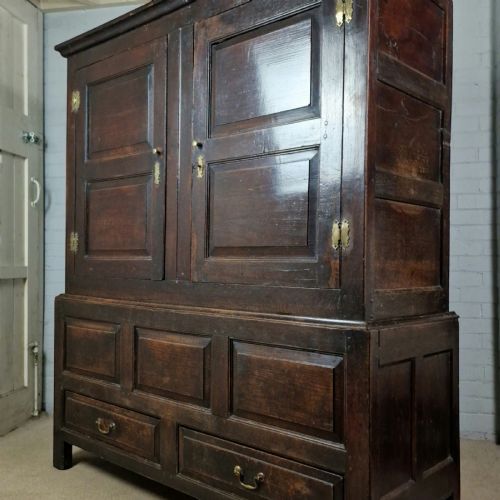
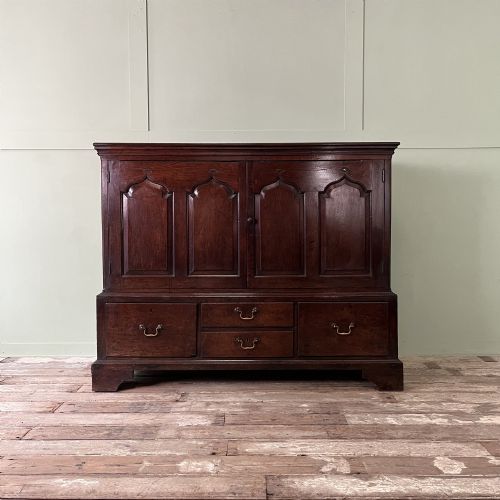
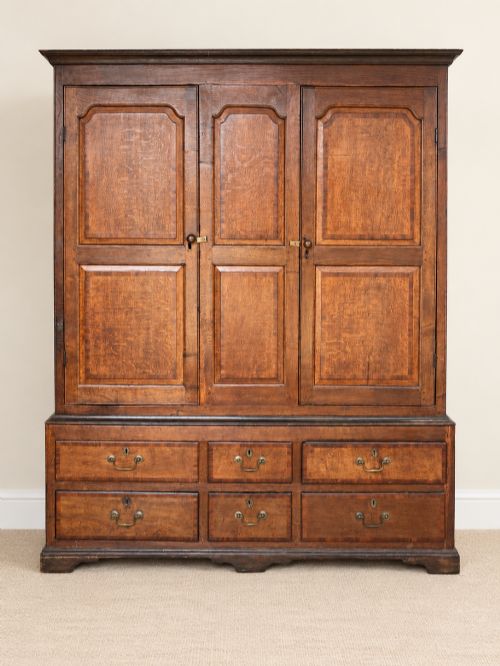
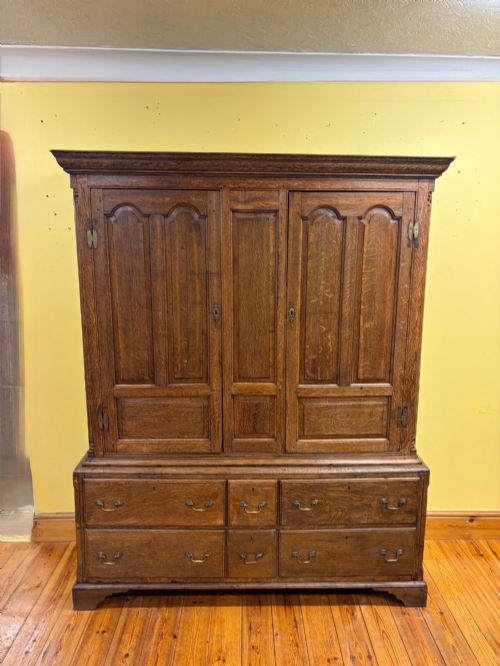
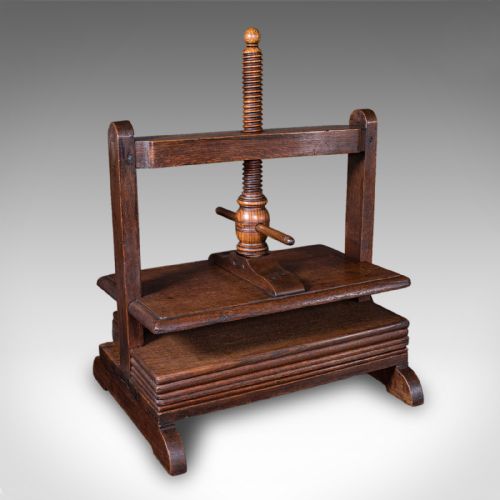
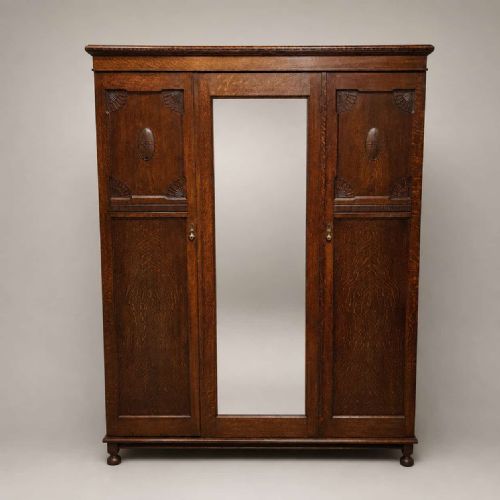
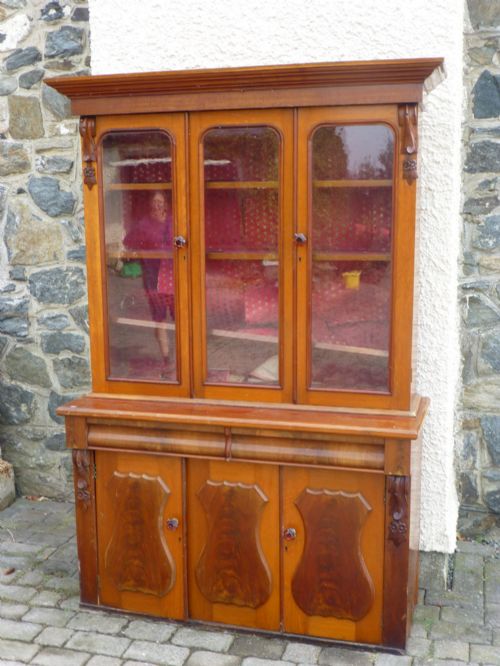
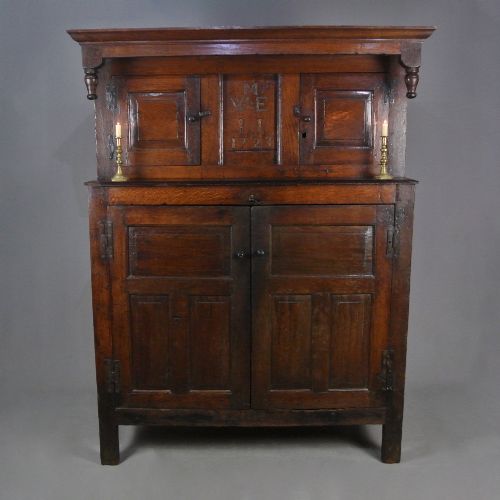
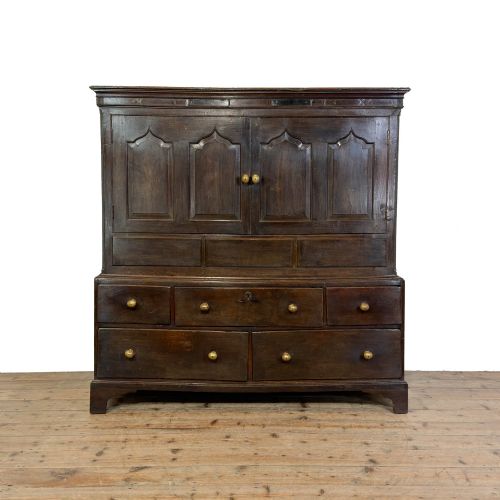
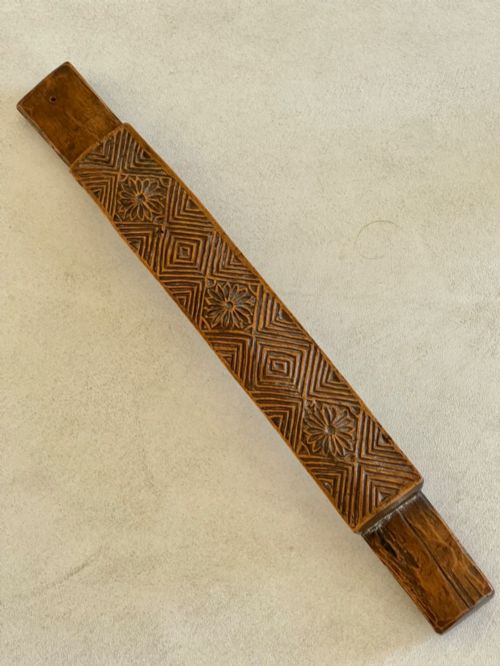
A traditional oak press encompasses large housekeepers' cupboards, linen presses, court cupboards, and tabletop book or cheese presses spanning the seventeenth to the nineteenth centuries. These sturdy storage units emerge primarily from English and Welsh country workshops, reflecting regional vernacular traditions.
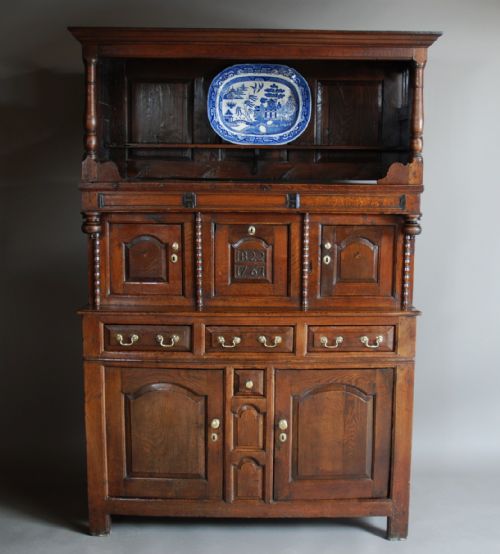
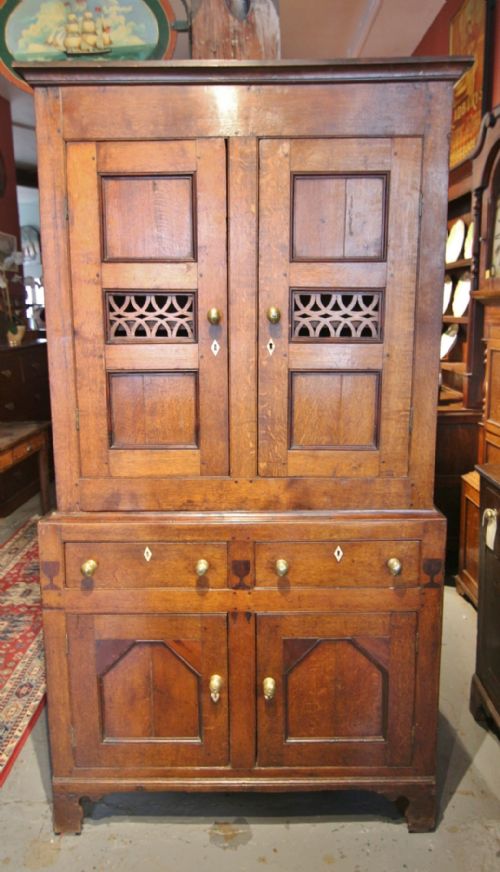
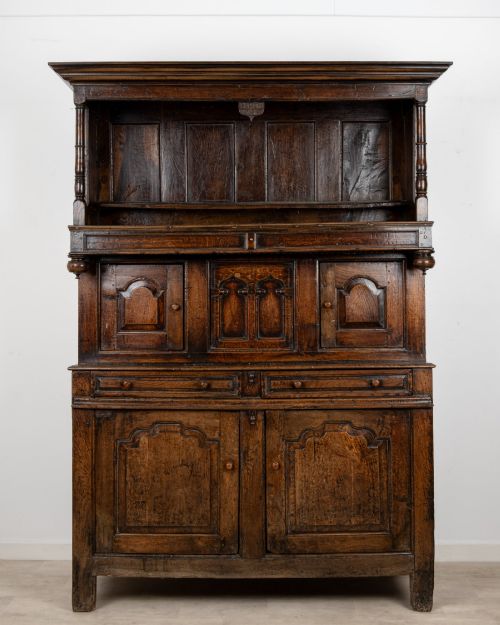
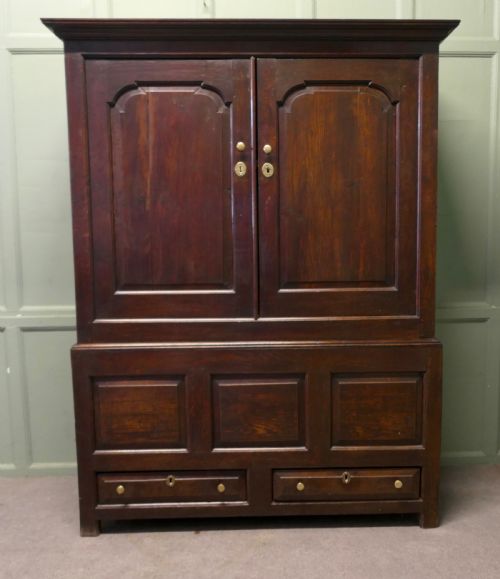
Buyers regularly encounter eighteenth-century linen presses, multi-tiered Welsh tridarns and deuddarns, and utilitarian Victorian book presses constructed from solid timber. Each form served a distinct domestic purpose, from storing household provisions to pressing laundry, cheese, or paper.
The selection ranges from early geometric carved court cupboards dated to the seventeen-hundreds up to later Victorian and twentieth-century interpretations. Regional variations display specific local joinery habits, such as panelled doors and distinct cornices found in Welsh country furniture.
Materials and Construction
Cabinet makers built traditional oak presses using solid oak planks, frequently supplemented with secondary timbers such as elm and mahogany for internal shelving or drawer linings. Workshops employed pegged mortise and tenon joints to secure the heavy frames together without relying on modern fixings.
Metalwork played a functional role, utilising forged iron hinges, blacksmith-made locks, and brass handles to secure heavy doors and operate screw mechanisms on book presses. Surfaces received simple wax or oil finishes that developed deep patinas over centuries of domestic handling.
Listings feature regional Welsh vernacular forms including tridarns and deuddarns alongside English Georgian and Victorian housekeepers' cupboards.
Quality and Construction
The standard of a traditional oak press rests upon the integrity of its timber, the crispness of any hand-carved ornamentation, and the survival of original surface patination. Superior examples retain their initial brass or iron hardware and uncompromised internal shelving layouts.
Regional vernacular pieces demonstrate varying levels of joinery ambition, where finer country workshops produced balanced proportions, precise panel bevelling, and tight corner joints. Later revivals and utilitarian items show simpler construction methods that prioritize plain utility over decorative depth.
The Traditional Oak Press Glossary
- Court cupboard
- A traditional English or Welsh two-stage sideboard or cupboard used for displaying plate and storing food.
- Tridarn
- A large Welsh three-tiered cupboard featuring an open middle section enclosed by turned spindles.
- Deuddarn
- A traditional Welsh two-section wooden cupboard typically fitted with panelled doors and drawers.
- Housekeeper's cupboard
- A large storage cabinet designed to hold household linens, dry goods, and domestic supplies.
- Patina
- The deep surface gloss and mellow colour developed on timber through decades of handling and waxing.
- Vernacular furniture
- Domestic pieces built by local craftsmen using regional styles and native materials rather than metropolitan designs.
Traditional Oak Press: Frequently Asked Questions
What is a traditional oak press?
A traditional oak press is a heavy wooden storage unit or mechanical press used historically for textiles, books, or food storage.
These pieces range from tall linen cupboards and court cupboards to small tabletop book presses built across several centuries.
How were these cupboards used?
Housekeepers utilised large oak cupboards to store household linens, dried provisions, and kitchen utensils in country homes.
Smaller presses operated via wooden or iron screws to flatten paper, bind books, or press cheese and fruit.
How do I date an oak press?
Dating relies on examining construction methods, tool marks, joinery styles, and the evolution of hardware like locks and hinges.
Early pieces display pegged mortise and tenon joints and hand-carved panels, while later Victorian items show mechanical uniformity.
Where were these pieces made?
Many traditional oak presses originated in regional English and Welsh workshops using locally felled native timber.
Welsh pieces frequently exhibit distinct regional forms such as the tridarn and deuddarn with characteristic local moulding.
How do I care for antique oak?
Antique oak benefits from maintaining stable room temperatures away from direct heat sources and harsh sunlight.
Occasional application of traditional beeswax nourishes the wood and preserves the historical patina without sealing the pores.