


Traditional Oak Monks Seat
Traditional oak monks seat pieces are versatile convertible hall furniture items offering clever dual-purpose seating and surface utility.
Traditional Oak Monks Seat
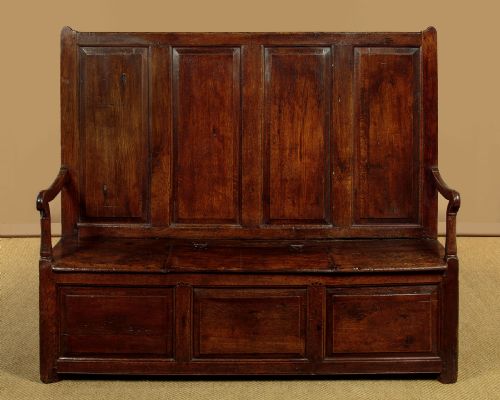
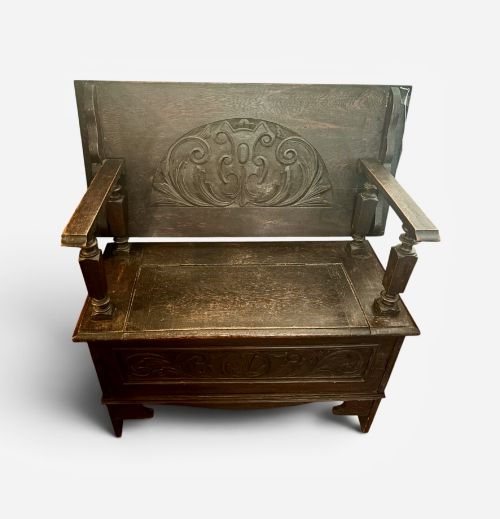
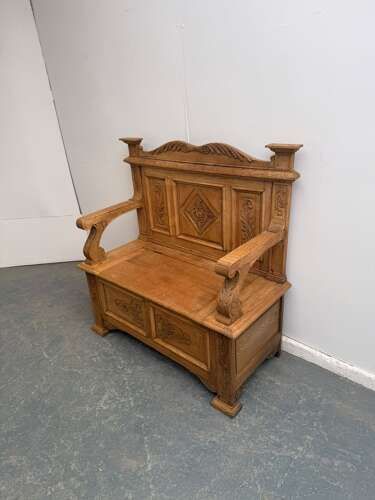
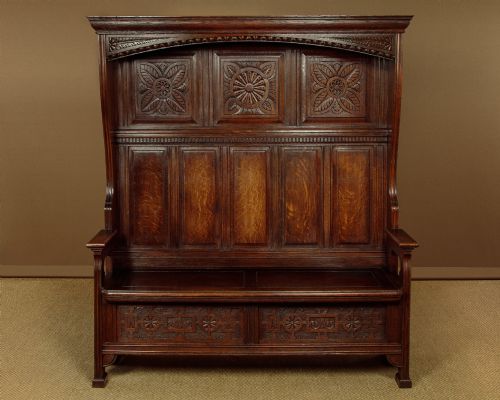
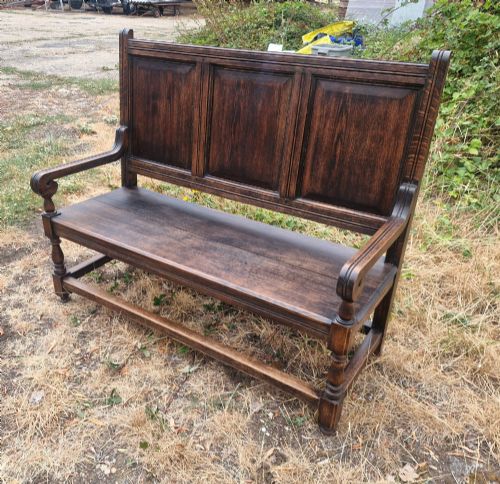
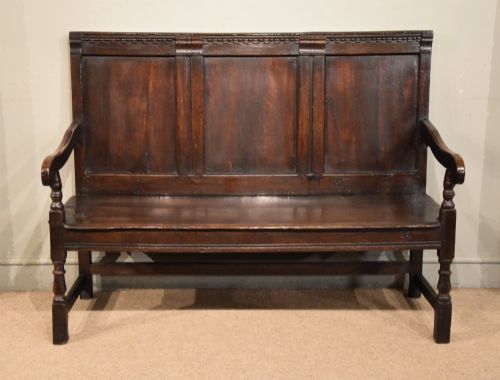
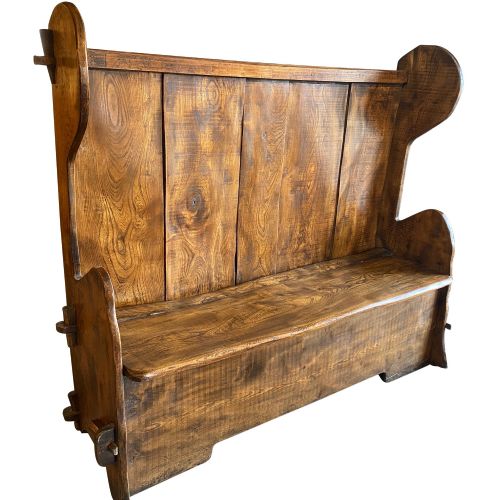
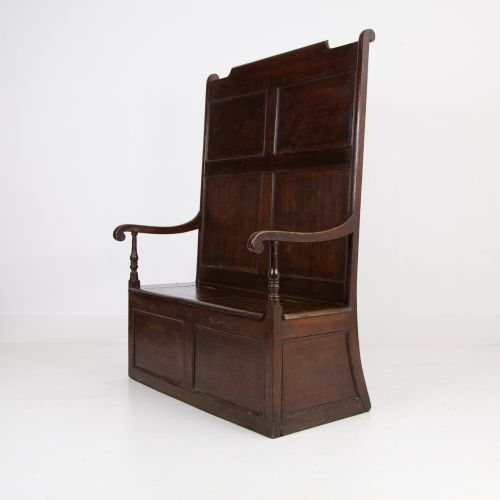
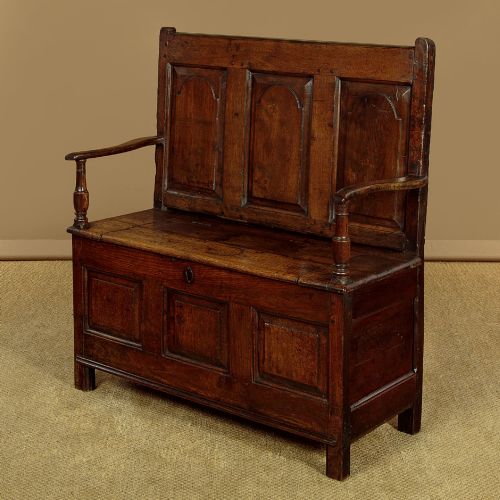
Traditional oak monks seat items encompass multi-functional furniture including box settles, hall benches and folding-top seats. These pieces are designed to serve multiple domestic purposes within entrance halls and living spaces.
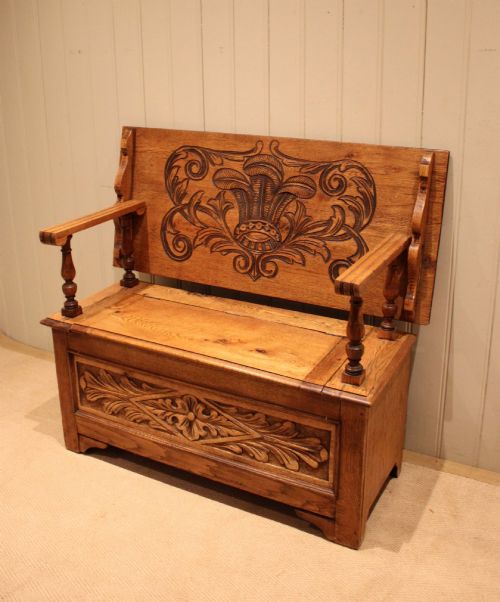
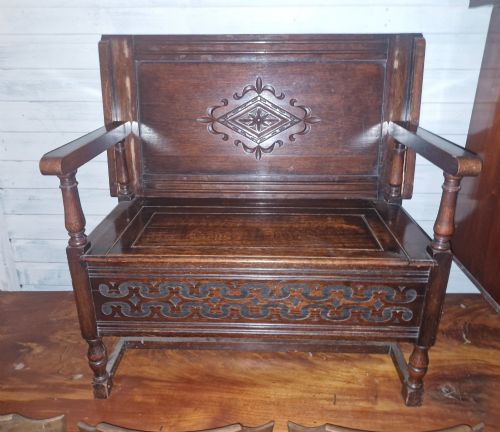
You will frequently encounter 18th century examples alongside Victorian, Edwardian and early 20th century revival pieces. Common forms feature lift-up storage compartments beneath the seat and backs that convert into tables.
Regional variations span Welsh vernacular styles, English country pieces and Jacobean revival designs. The selection ranges from high-back panelled settles to compact hall armchairs with fold-over tops.
How they were made
Construction relies heavily on solid oak timbers, occasionally incorporating elm, pine, iron and brass for structural support and hardware. Carpenters utilised traditional framing methods to build robust panelled backs and storage boxes.
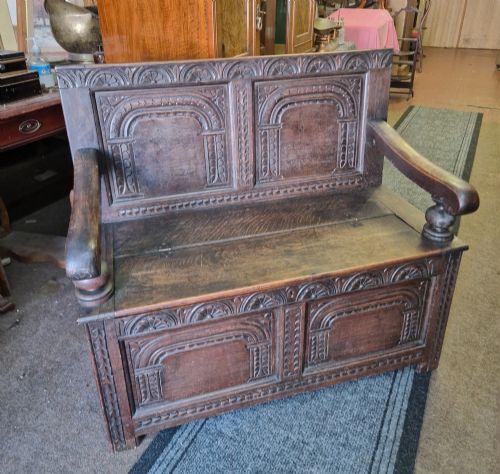
Surfaces often display hand-carved ornamentation, waxed finishes and pegged joints typical of vernacular woodworking traditions. Folding mechanisms on convertible models utilise pivoting wooden pivots or simple metal hinges.
Catalan shepherd benches occasionally join the oak lineup, proving that hardworking seating traditions crossed borders with ease.
What varies in quality
The degree of hand-carving and the choice of primary timber create distinctions across the range. Pieces fashioned from solid oak or elm with early panel construction command greater attention than later revival variants.
Proportion and structural integrity define the better examples, particularly where the pivoting top mechanism aligns flush with the arms. The depth of the patina and the retention of original boards further separate standard production from superior craftsmanship.
The Traditional Oak Monks Seat Glossary
- Box settle
- A high-backed wooden bench featuring a concealed storage compartment beneath the hinged seat. This form provided practical protection from draughts in historical hallways.
- Jacobean Revival
- A 19th and 20th century stylistic movement copying 17th century decorative motifs. Furniture from this period frequently displays heavy geometric moulding and elaborate relief carving.
- Welsh Vernacular
- Regional furniture building traditions characterised by practical local construction methods. These pieces utilise native timbers such as oak and elm without following metropolitan fashion.
- Panelling
- A method of joining wooden boards within a framed structure to accommodate seasonal wood movement. This technique prevents splitting while forming sturdy backs and sides on seating.
Traditional Oak Monks Seat: Frequently Asked Questions
How do you convert a monks seat?
The upper back section pivots forward on wooden or iron hinges to rest across the armrests, creating a flat table surface.
Lifting the top back into the vertical position restores the piece to a high-backed chair or hall bench.
Where were settles used historically?
These items stood primarily in entrance halls, farmhouses and tavern interiors where space efficiency mattered.
The high back shielded occupants from cold draughts while the enclosed box base kept household goods secure.
How do I identify an 18th century piece?
Look for hand-planed surfaces, pegged mortise and tenon joints, and board thickness that varies naturally across the construction.
Earlier examples display deep patination on the oak timber and simpler, more functional proportions than later revival pieces.
Can I use a monks bench as a coffee table?
Many early 20th century and Art Deco examples function well in modern reception rooms when converted into table mode.
The fold-over top provides a convenient surface while retaining hidden storage within the seat base.