
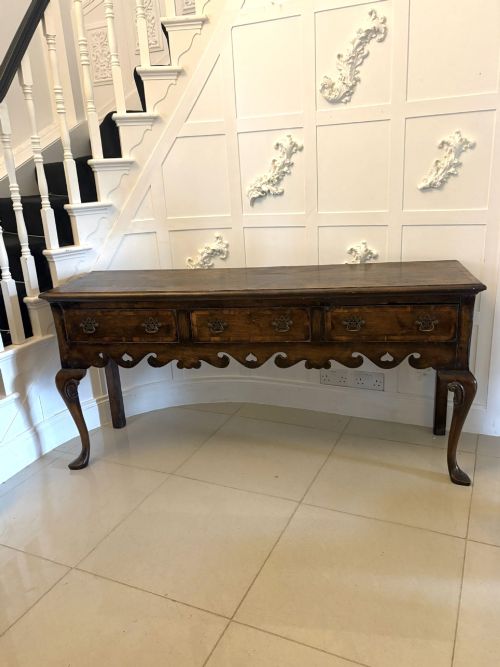
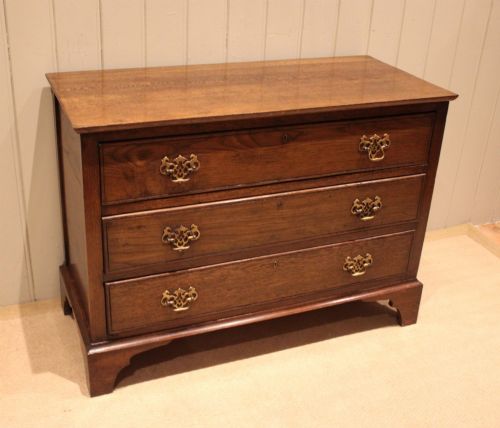

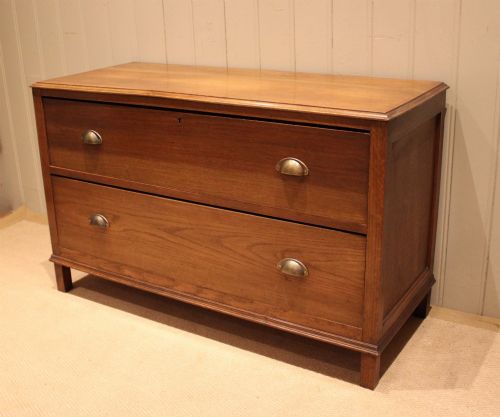
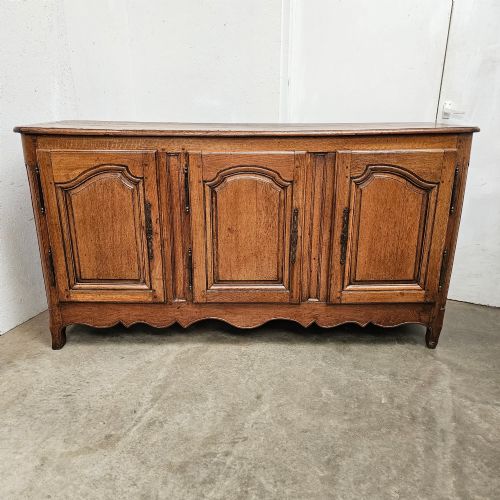
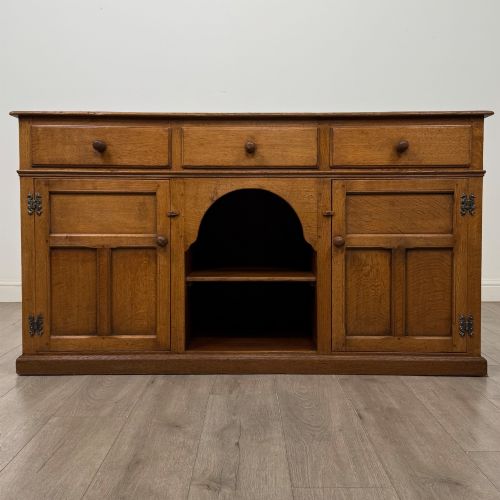
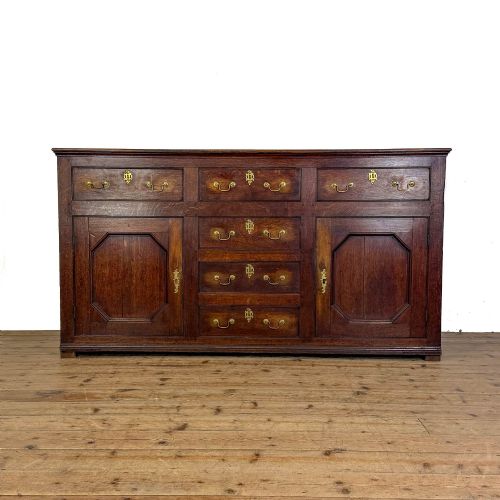


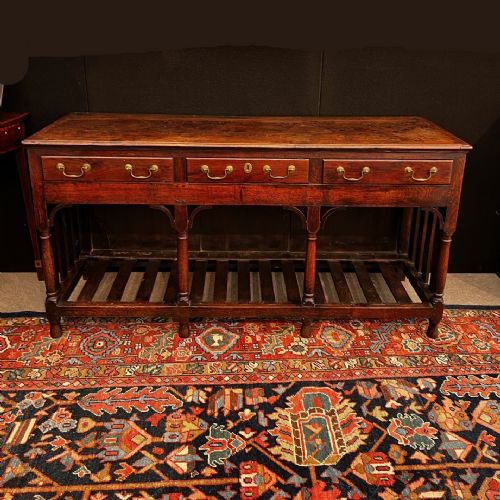

Traditional Oak Low Dresser
A traditional oak low dresser brings sturdy practicality and rich timber grain to a room, offering generous surface space and deep drawers for everyday storage.
Traditional Oak Low Dresser
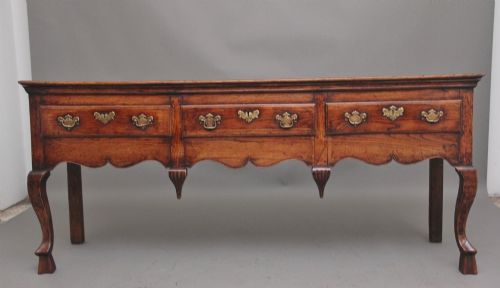
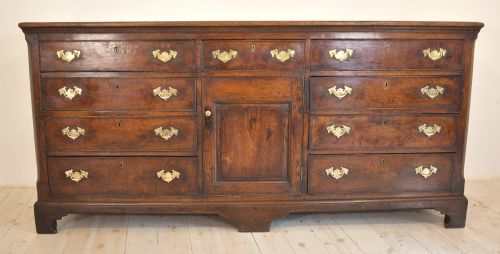
When you search for a traditional oak low dresser, you are looking at substantial utilitarian furniture designed for serving and storage, most frequently meeting examples from the eighteenth century, Georgian period, and subsequent revival styles.
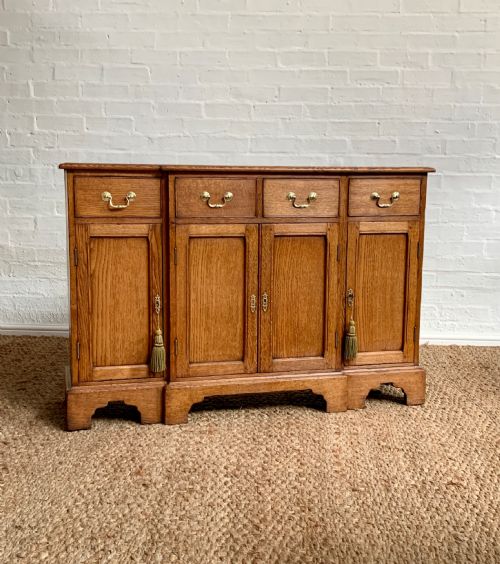
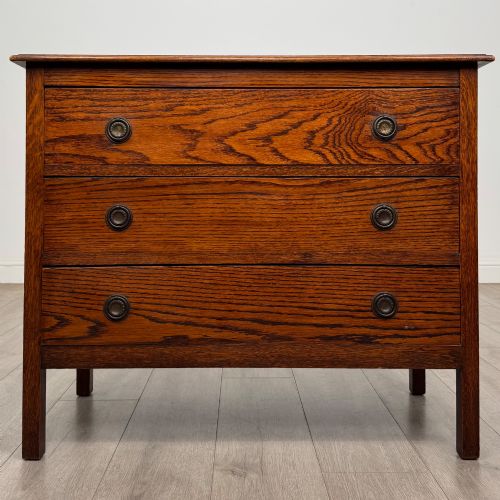
The pieces on this page span forms such as potboard dresser bases, sideboards, and low chests of drawers, often incorporating elm or pine alongside primary oak timbers.
Originating from English, Welsh, French, and Dutch traditions, these items range from rustic provincial pieces to formal Georgian designs featuring cabriole legs or breakfront profiles.
How they were made
Cabinet makers utilised solid oak for framing and structural integrity, frequently combining secondary timbers like elm and pine for internal or lesser-seen components.
Hardware such as brass handles and wrought iron hinges provide functional articulation to doors and drawers, while turned legs or bracket feet support the heavy timber bodies.
Materials recorded across the inventory include solid oak, brass, wrought iron, inlay timber, elm, and pine.
What varies in quality
The calibre of a piece rests upon the depth of the timber grain, the honesty of its construction, and the proportion of original surface patination accumulated over centuries.
Subtleties in regional craftsmanship - such as the execution of turned legs, breakfront mouldings, and potboard lower shelves - distinguish vernacular workshop pieces from refined urban furniture.
The Traditional Oak Low Dresser Glossary
- Potboard dresser base
- A low sideboard featuring an open lower shelf traditionally used for storing pots and serving dishes. This open staging sits beneath the main bank of drawers.
- Breakfront
- A cabinet front where the central section projects forward from the flanking sides. This architectural arrangement creates depth and varied proportions.
- Cabriole leg
- A furniture leg that curves outward in a convex arc before tapering inward to a foot. The design draws inspiration from animal limbs.
- Enfilade
- A long sideboard or buffet featuring a sequence of doors in a single line. This French form provides extensive interior cupboard storage.
Traditional Oak Low Dresser: Frequently Asked Questions
What is a low dresser base?
A low dresser base is a long, waist-height unit featuring drawers and sometimes cupboards, designed for domestic storage and serving.
Unlike taller plate-rack dressers, these low variants keep the wall space above clear while offering a solid top surface.
How do I date an oak dresser?
Dating relies on examining construction methods, timber choice, hardware fixings, and overall stylistic proportions.
Earlier pieces from the seventeenth and eighteenth centuries often display hand-cut joinery and native timbers like elm alongside the primary oak.
Where were these dressers made?
These items originate from various European regions including English counties like Lancashire, Welsh valleys, France, and the Netherlands.
Regional vernacular styles frequently dictate the specific leg turning, drawer arrangement, and timber selection.
Can I use a dresser base as a sideboard?
A dresser base functions well as a sideboard in modern dining rooms, hallways, or living spaces.
The deep drawers and sturdy top surfaces accommodate modern storage needs while introducing historical character to an interior.