
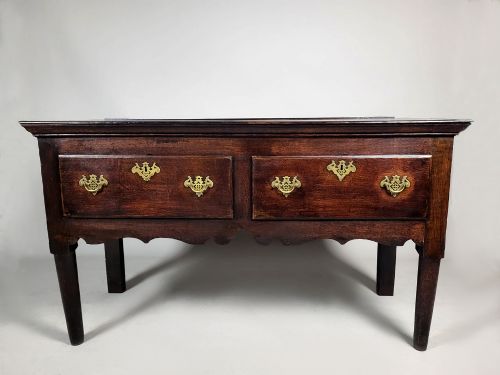
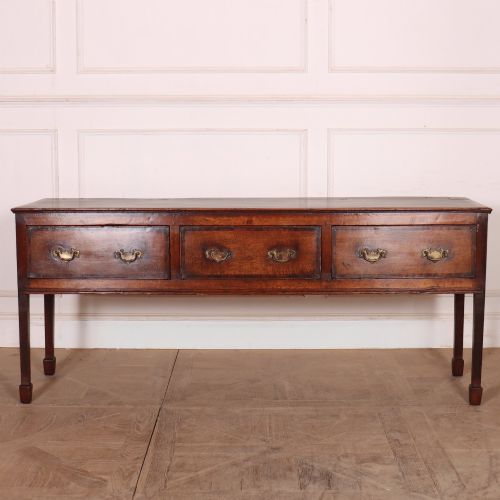
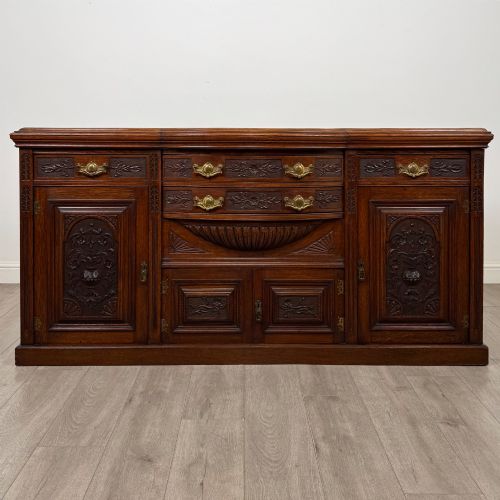
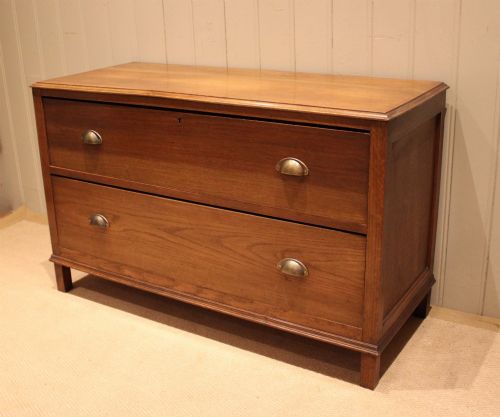
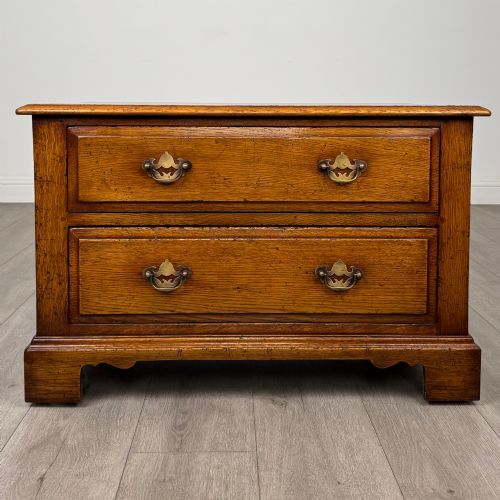
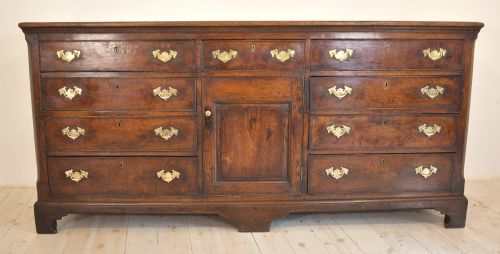
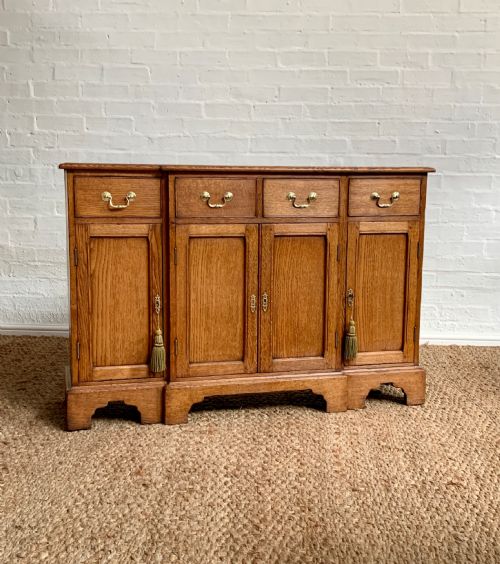
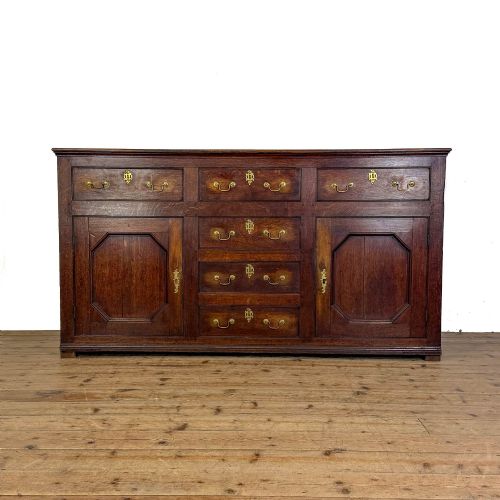
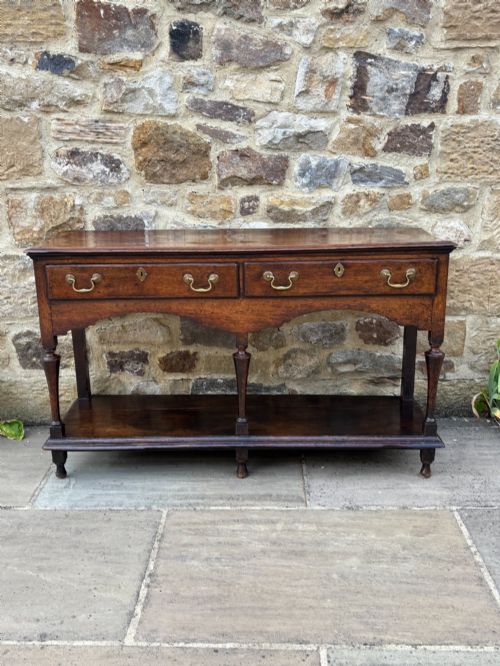
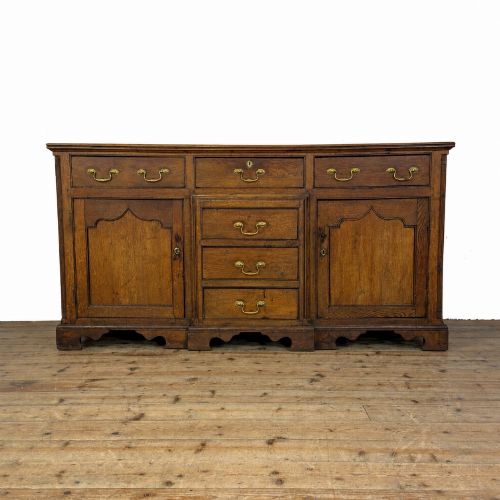
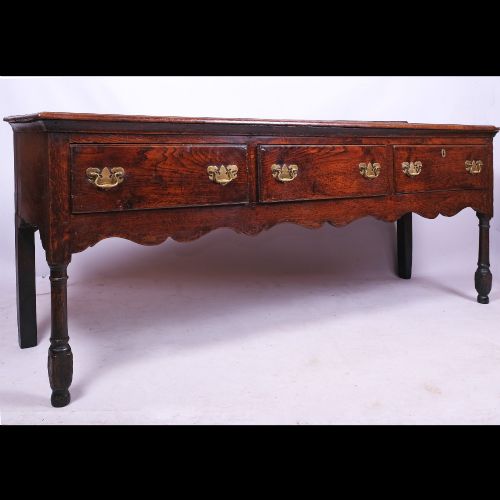
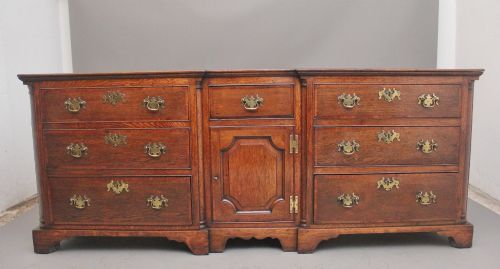

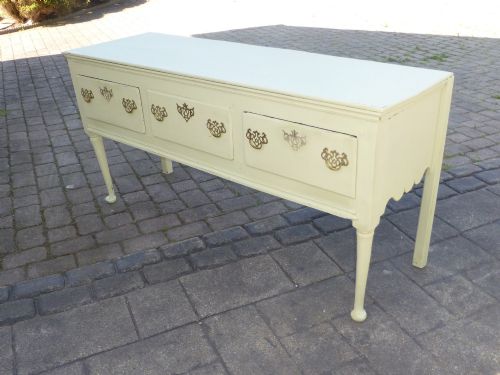
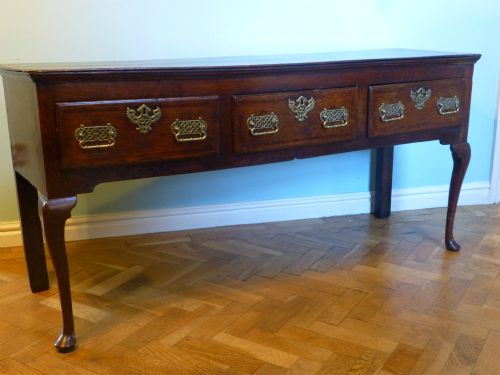

Brass Handled Oak Sideboard
A brass handled oak sideboard brings solid timber and honest metalwork into a dining room, offering deep drawers and wide surfaces for daily service.
Brass Handled Oak Sideboard
A brass handled oak sideboard encompasses heavy serving furniture built from robust timbers, appearing most frequently in the listings as eighteenth-century dresser bases and nineteenth-century sideboards. These pieces span periods from the seventeenth century through the Edwardian era, showing styles that range from plain English country to formal George III designs.
Buyers searching for a brass handled oak sideboard encounter forms that function primarily as storage and display, including potboards, chests of drawers, and three-tier buffets. The timber throughout these examples is predominantly oak, occasionally accompanied by painted finishes or mahogany details.
Regional variations appear across the selection, such as Lancashire dresser bases, alongside period interpretations reaching back to the seventeenth century. Each piece relies on the combination of heavy wood and original or period-appropriate brass handles to anchor its proportions.
What varies in quality
The degree of original survival determines much of the distinction across these pieces, particularly regarding the brass hardware and the timber surface. Examples retaining their original brasses and untouched oak patination stand apart from those with later replacements.
Proportion and structural ambition create further separation, moving from simple low chests of drawers to large eighteenth-century dressers with potboards and intricate cabriole leg arrangements. Finer items exhibit balanced drawer arrangements and clean joins that withstand centuries of daily use.
Even the humblest kitchen potboard has spent centuries silently guarding the family's spare crockery from rogue boots.
The Brass Handled Oak Sideboard Glossary
- Dresser base
- A low wooden unit featuring drawers and sometimes a lower shelf, designed for domestic storage and serving. These pieces form a significant portion of early oak furniture.
- Potboard
- An open lower shelf built into the base of a dresser, historically used for storing pots and heavy kitchen utensils. It provides structural stability to the legs.
- Cabriole leg
- A furniture leg that curves outward and then tapers inward, inspired by the shape of an animal's leg. This style appears on select eighteenth-century pieces.
- Buffet
- A tiered side table or sideboard intended for serving food and displaying silver or ceramics. Victorian examples often feature multiple stepped tiers.
- Lancashire dresser
- A regional variant of the traditional dresser originating from northwest England, known for generous proportions and deep drawers. These pieces reflect robust local carpentry traditions.
Brass Handled Oak Sideboard: Frequently Asked Questions
What is a dresser base?
A dresser base is a low wooden cabinet featuring multiple drawers and occasionally a potboard shelf underneath, designed for dining room service.
Unlike tall dressers with shelving racks attached above, these shorter units provide a wide flat top surface suitable for serving food or displaying objects.
How do I date an oak sideboard?
Dating relies on examining the timber grain, construction methods, and the style of the brass handles and drawer pulls.
Earlier pieces from the seventeenth and eighteenth centuries display hand-carved details and pegged joinery, while nineteenth-century Victorian examples often feature heavier tiered structures or machine-cut elements.
Where were these pieces used?
These sideboards and dresser bases originated in domestic kitchens, dining rooms, and great halls for storing household provisions and tablewares.
Today they function effectively in modern dining spaces or hallways as heavy storage consoles that anchor a room's layout.
Are the brass handles original?
Many pieces retain their period brass handles, though centuries of use often mean hardware has been replaced or restored.
Examining the fixing points and the wear patterns on the surrounding oak helps determine whether the brasses match the age of the woodwork.