
Traditional Oak Hall Furniture
Traditional oak hall furniture comprises robust wooden benches, settles, and stands designed for entranceways, offering practical seating and storage built from durable hardwoods.
Traditional Oak Hall Furniture
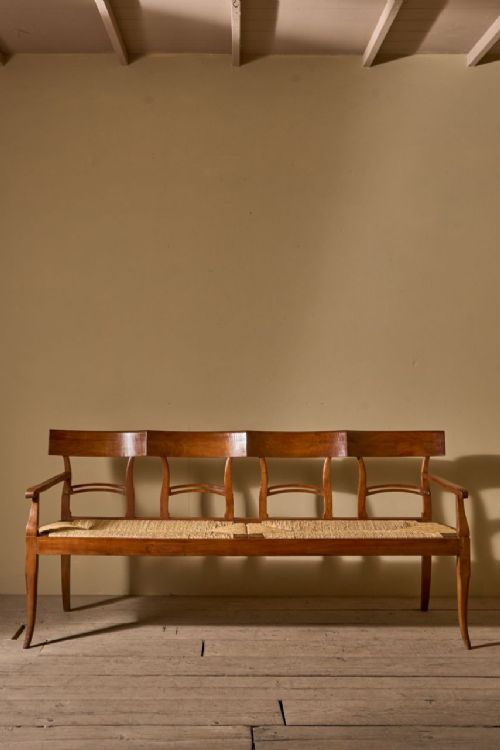
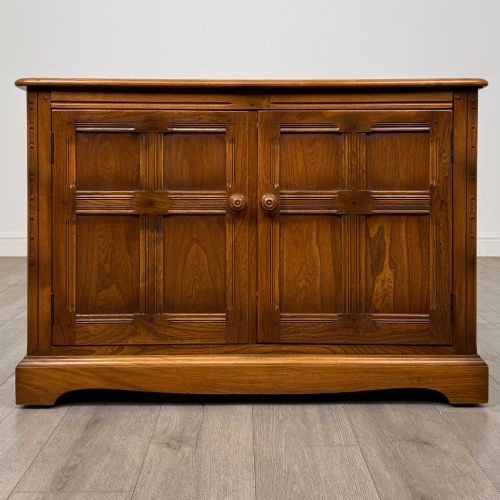
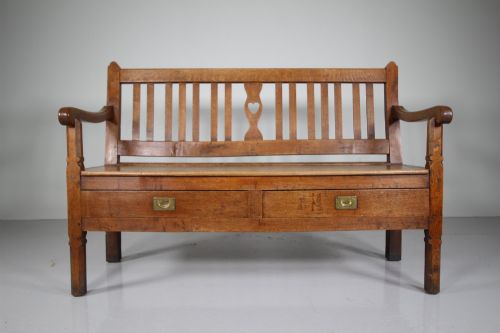
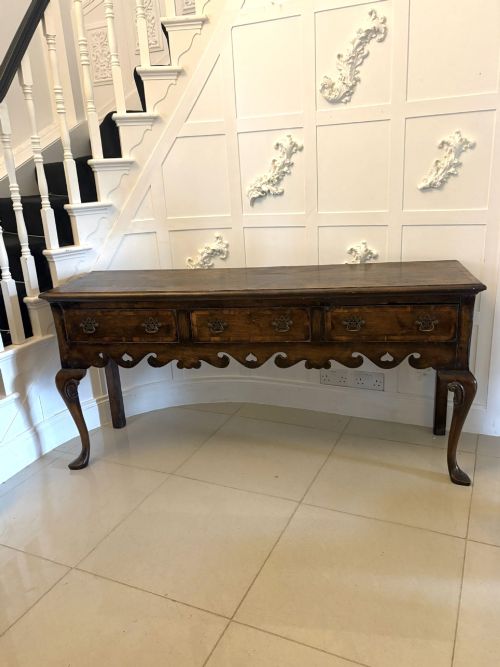
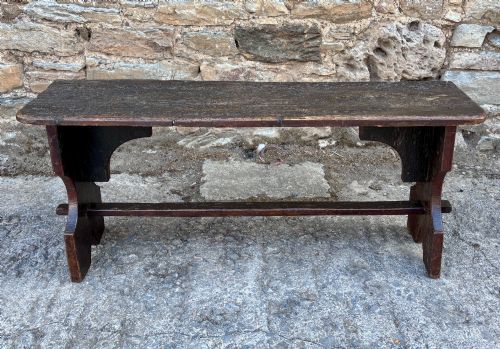
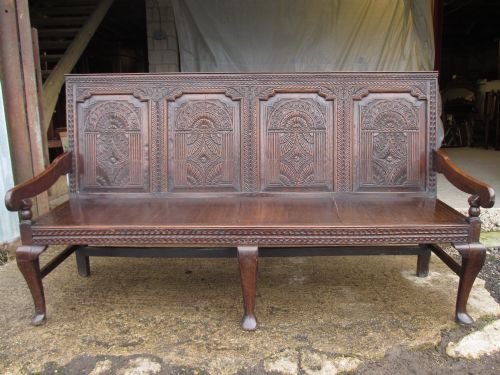
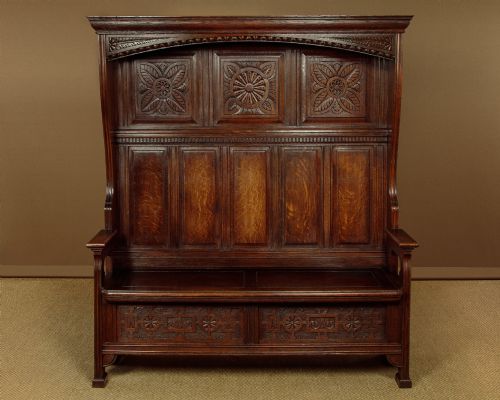
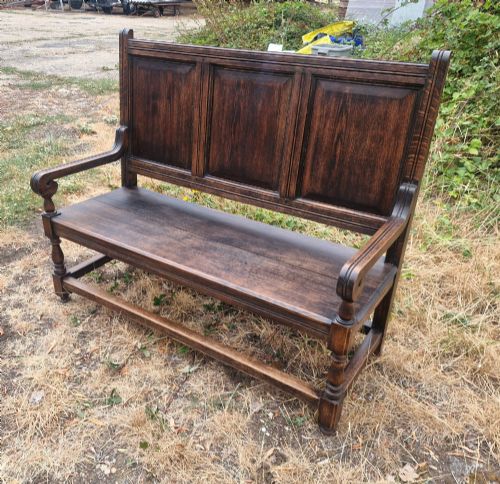
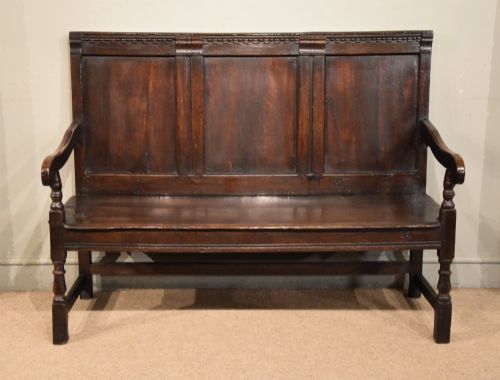
Traditional oak hall furniture centres on utilitarian pieces intended for the entryway, including benches, settles, cupboards, and hall stands. Settles with high backs and lift-up seats appear frequently alongside simpler benches and occasional side tables.
The pieces span multiple periods ranging from the 18th century through the Victorian and Edwardian eras up to the 1920s. Regional vernacular styles, such as Welsh country pieces, sit alongside revivalist interpretations like Jacobean Revival and Arts and Crafts designs.
Buyers most commonly encounter sturdy oak benches and multifunctional hall seats that incorporate storage for boots, coats, and umbrellas. These items reflect the domestic requirements of historic hallways, where space demanded robust and versatile furnishings.
Materials and Construction
Construction relies primarily on solid oak, occasionally supplemented by secondary timbers such as cherrywood, alongside metal hardware like iron and brass for hinges, locks, and coat hooks. Joinery techniques utilise panelled construction and pegged mortise and tenon joints to withstand heavy daily use in busy entranceways.
Surface treatments vary from traditional wax finishes that highlight the natural grain of golden and light oak to carved ornamentation featuring linenfold panels or geometric motifs. Certain primitive pieces incorporate hand-forged blacksmith ironwork on doors and lids, retaining original operational hardware.
Listings feature solid oak alongside iron, brass, rush, and cherrywood across periods from the 18th century to the 1920s.
Judging Quality
Quality rests in the integrity of the timber selection and the retention of original structural elements, such as hand-forged iron hinges, panelled backs, and unmodified lift-up seats. Pieces constructed from solid golden or vernacular oak demonstrate superior material honesty compared to later adaptations.
The crispness of carved details, where present, distinguishes master craftsmanship from simpler regional production, though rustic charm remains characteristic of vernacular country pieces. Proportion and functional cleverness, such as fold-over tops and integrated boot stores, also elevate the standing of a piece.
The Traditional Oak Hall Furniture Glossary
- Settle
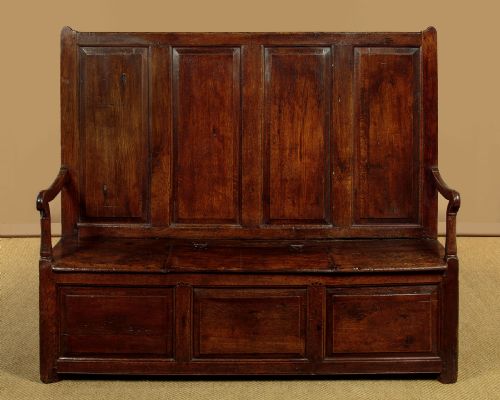
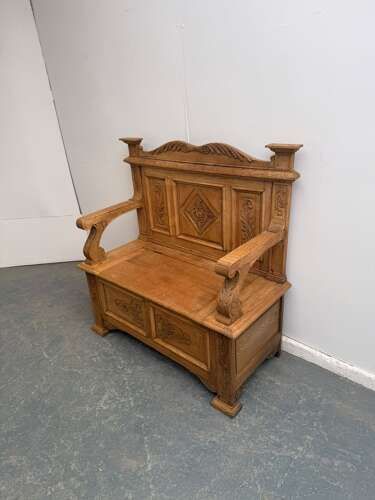
- A wooden bench with a high back, solid arms, and a closed base that often lifts to reveal a storage box. This form kept draughts away from the sitter in cold hallways.
- Lowboy
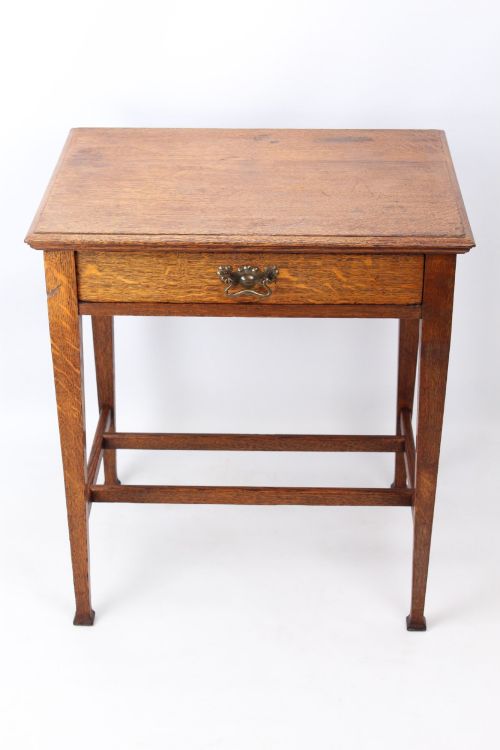
- A small side table with drawers, typically standing on four legs, used historically for storage or as a dressing table. The form dates back to the late seventeenth century and continued into the Georgian period.
- Court cupboard
- A heavy enclosed storage piece with upper and lower sections, often richly carved with panels. These items provided secure storage for household linens and dry goods.
- Linenfold
- A style of wood carving that imitates folded vertical folds of cloth, popular in Tudor and revivalist furniture. This decorative motif adds texture to flat wooden panels on cupboards and settles.
Traditional Oak Hall Furniture: Frequently Asked Questions
What is a monk's bench?
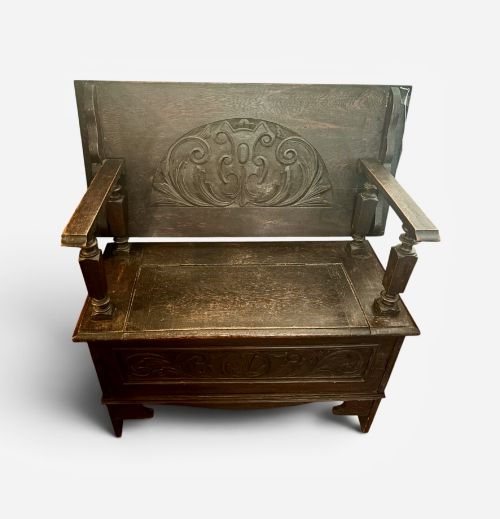
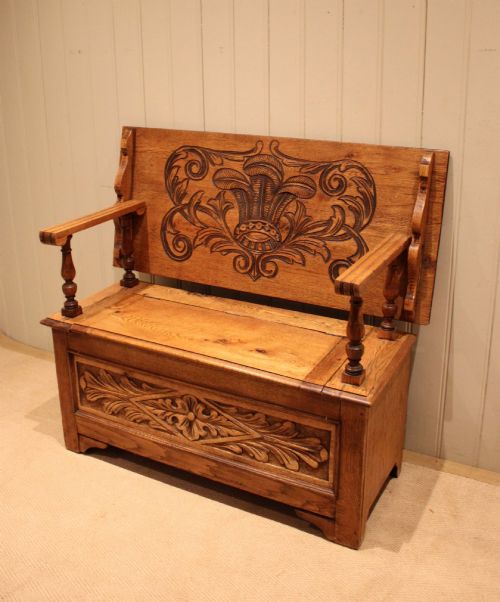
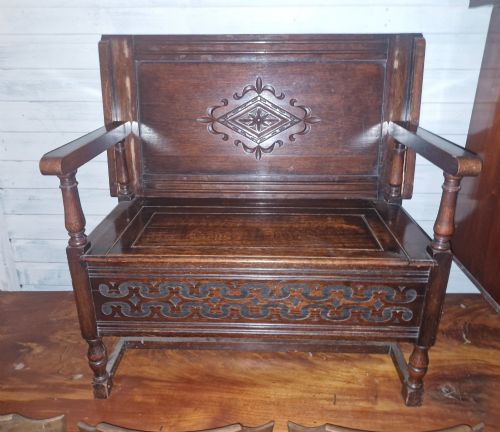
A monk's bench is a multifunctional piece featuring a hinged back that folds down over the armrests to transform the seat into a table.
Historically used in smaller domestic spaces, this design allowed a single item of furniture to serve both dining and seating functions in the hallway or living room.
How do I use a hall settle?
A hall settle provides sturdy seating near the front door while offering enclosed storage beneath the seat for boots, blankets, or accessories.
The high wooden back originally served to block cold draughts from entering through the front door into the main living areas.
How do I date oak furniture?
Dating oak pieces involves examining the construction methods, tool marks left by woodworkers, the style of any carvings, and the natural ageing of the timber.
Earlier pieces from the eighteenth century often feature hand-split boards and pegged joints, whereas later revival pieces from the Edwardian era show more uniform machine sawing.
Are hall stands practical today?
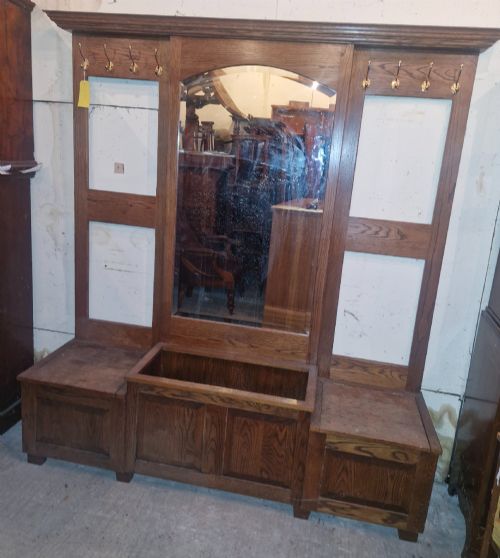
Modern hallways benefit greatly from traditional hall stands because they combine coat hooks, umbrella wells, and sometimes small mirrors into a single vertical footprint.
They organise entranceways efficiently while adding authentic historical character to contemporary homes.