
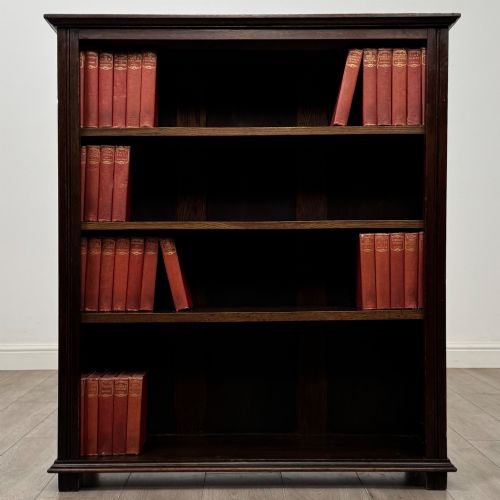
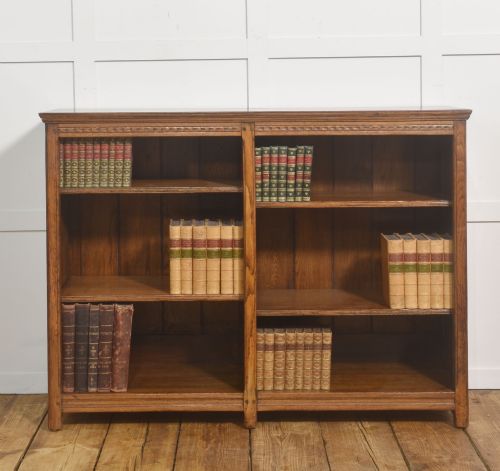
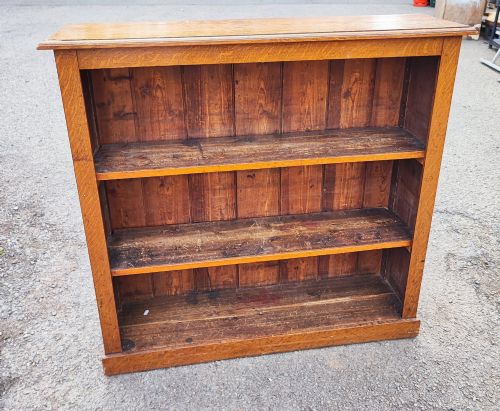
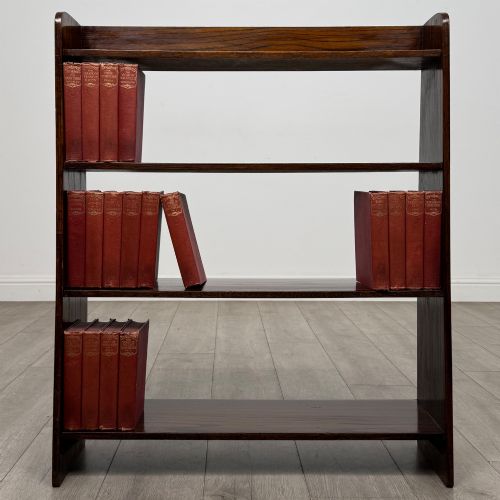
Traditional Oak Bookshelves
Traditional oak bookshelves bring honest timber warmth and upright utility to a room, offering sturdy shelves for serious volumes.
Traditional Oak Bookshelves
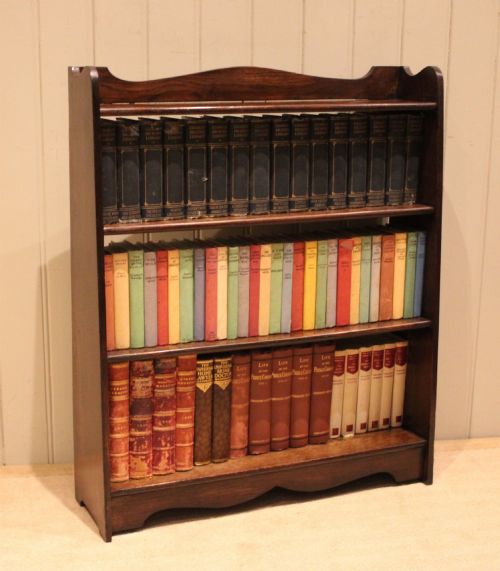
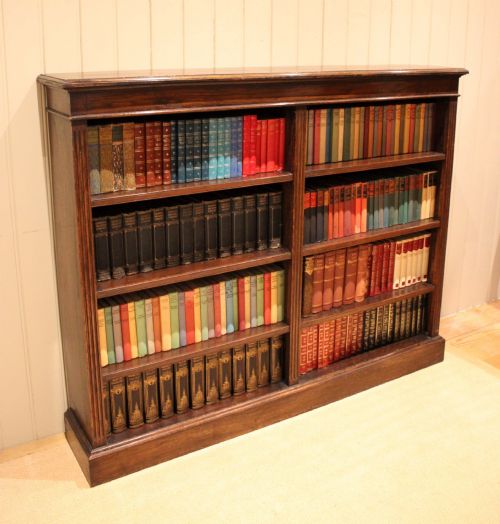
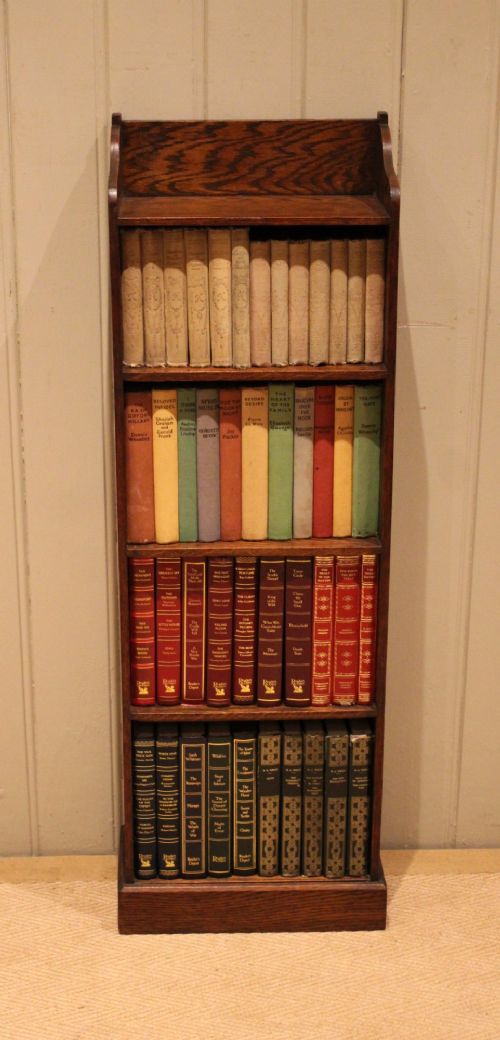
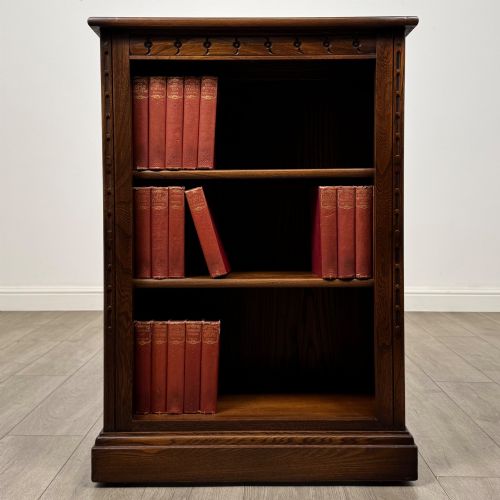
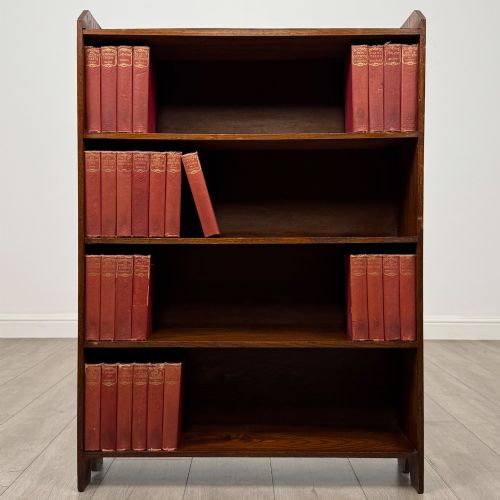
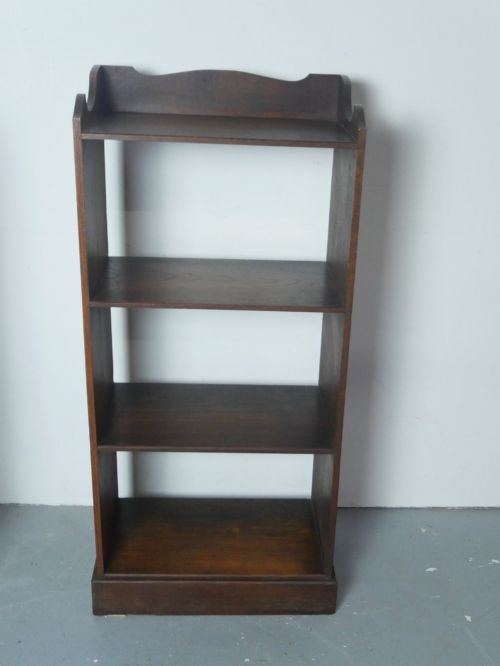
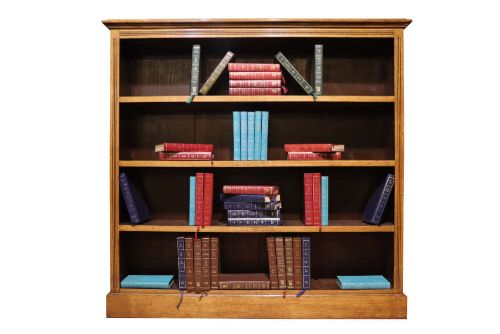
Traditional oak bookshelves are practical storage furniture designed to hold books upright in domestic or library spaces. When searching for traditional oak bookshelves, buyers encounter mostly open-fronted designs that display book spines clearly.
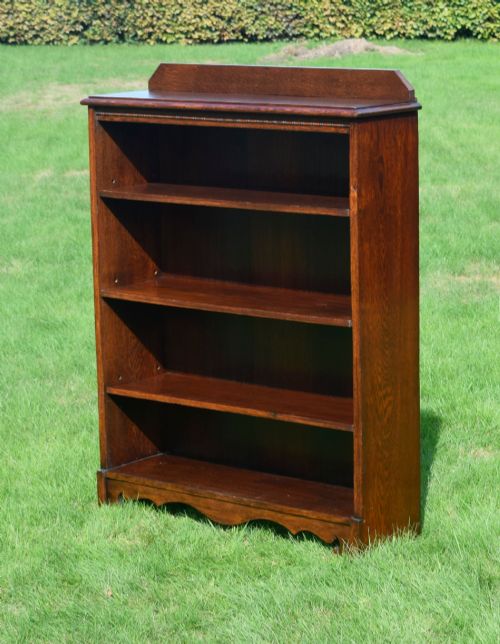
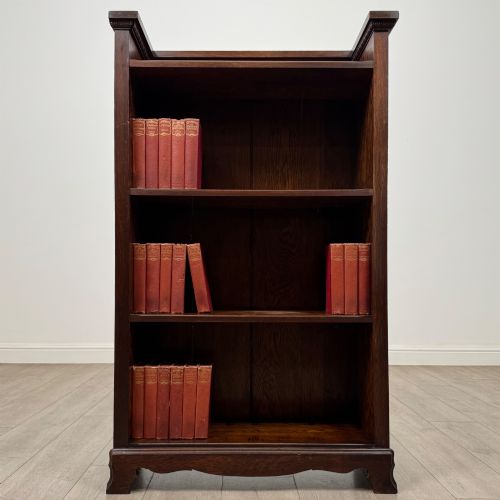
The pieces available here span from the late nineteenth century through the Edwardian era and into the interwar period of the 1920s and 1930s. The most common forms are open bookcases featuring either fixed or adjustable timber shelves.
Makers from the Victorian period onwards built these pieces primarily for home libraries and studies. They appear in various proportions, ranging from neat small units to large library bookcases.
How they were made
Cabinet makers constructed these bookcases predominantly using oak, including dark oak and golden oak variants, alongside occasional uses of solid oak and general wood. Some examples incorporate contrasting materials such as brass, iron, and metal for hardware or structural fittings.
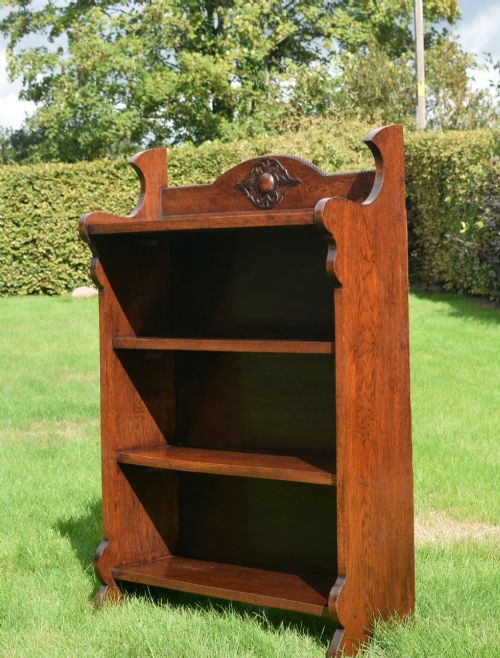
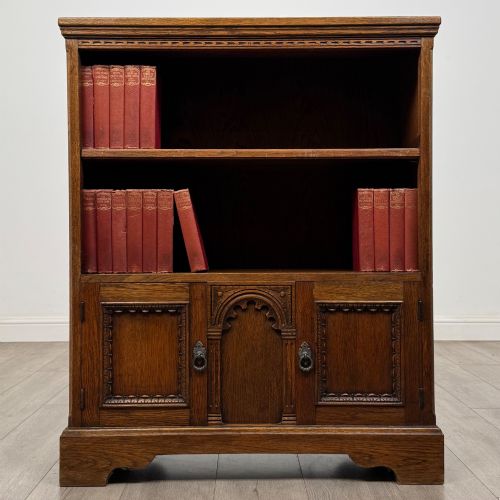
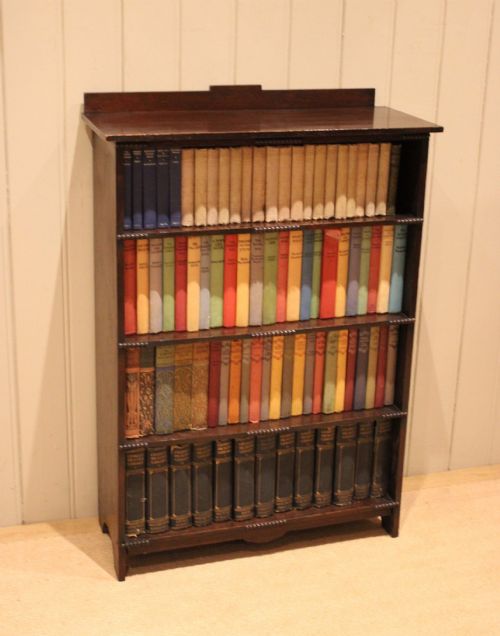
Construction techniques focused on utility and strength, utilising sturdy timber frames to support heavy rows of books. Details such as beaded edges and carved woodwork appear across Victorian and later pieces to add subtle decoration to the upright framing.
Some industrious Victorian readers clearly owned exceptionally tall libraries, necessitating library steps to reach the very top volumes.
What varies in quality
Quality in these bookcases rests on the selection of the timber and the substance of the construction. Solid oak builds and substantial library-scale proportions sit at the higher end of the range, offering greater weight and durability.
Refinement in detailing also separates standard units from finer examples. Subtle decorative touches like carved ornamentation, beaded edges, and functional adjustable shelving mechanisms distinguish the better-made pieces.
The Traditional Oak Bookshelves Glossary
- Open bookcase
- A shelving unit without doors that provides direct access to books. This form dominates the available selections.
- Adjustable shelves
- Shelving supported by movable pins or tracks that allows the vertical spacing to alter. This permits the storage of books in various heights.
- Golden oak
- A bright, warm timber finish popular during the Edwardian period. It highlights the natural grain of the wood.
- Beaded edge
- A narrow, rounded moulding run along the edge of a board or frame. It adds a neat linear accent to the bookcase silhouette.
- Library steps
- Climbing steps occasionally associated with tall bookcases. They provide safe access to upper shelf rows.
Traditional Oak Bookshelves: Frequently Asked Questions
Are these shelves adjustable?
Many of the listed pieces include adjustable shelves supported by internal mechanisms. This allows you to alter the shelf heights to fit different volumes.
Fixed-shelf variations also exist among the earlier Victorian and twentieth-century examples. Check individual descriptions to confirm the shelving configuration.
What is golden oak?
Golden oak is a lighter, warm-toned timber finish frequently seen on Edwardian furniture. It accentuates the natural grain patterns of the wood.
This finish brightens the appearance of the bookcase compared to darker Victorian or Jacobean Revival stains.
How do I date a bookcase?
Dating relies on stylistic markers such as carved ornamentation, edge detailing, and overall proportions. Victorian pieces often feature heavier carved oak, while Edwardian and 1920s examples lean towards simpler open frames.
Catalogued dates from the period provide the primary guide for establishing the era of manufacture.
Where should I place an open bookcase?
Open bookcases suit studies, living rooms, and home libraries where direct access to books is useful. Their open fronts keep volumes visible and within reach.
Position them against interior walls away from direct sunlight to protect the oak timber and book bindings.