

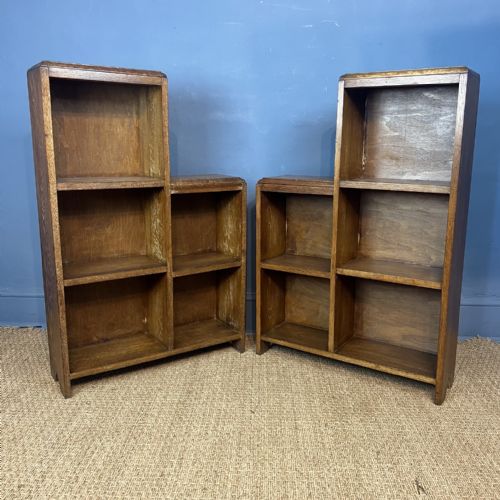


Pair of Bookshelf Units
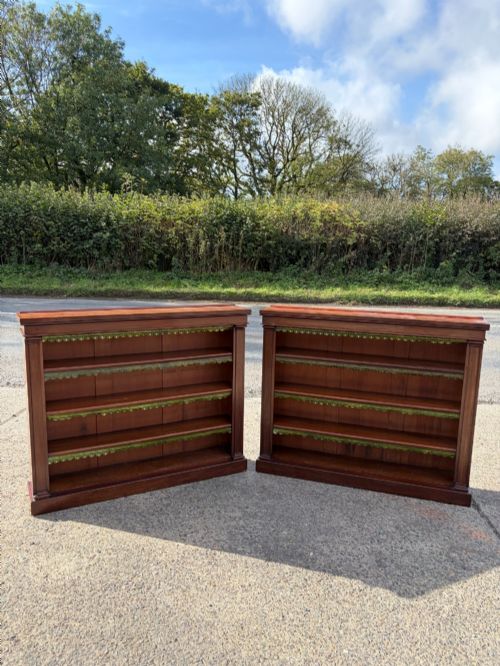
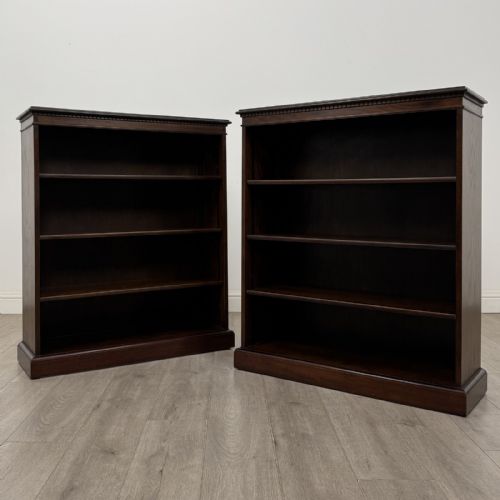
A fine pair of bookshelf units brings symmetry to a room, offering matched display and storage across diverse woods and periods.
Pair of Bookshelf Units
A search for a pair of bookshelf units leads directly to matched sets of open bookcases designed to hold libraries and display collections in balance. These pieces emerge across varied historical periods, including the nineteenth century, the Regency era, and the early twentieth century.
The versions most commonly met on this page take the form of open bookcases in woods such as oak, burr walnut, and mahogany. Makers also produced these matching configurations in rosewood, teak, and bamboo with rattan, spanning styles from Victorian and Georgian to Art Deco and Anglo-Indian.
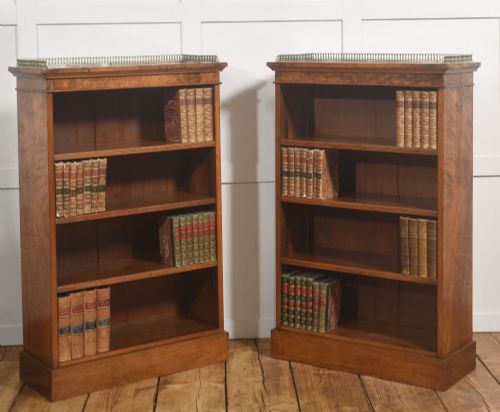
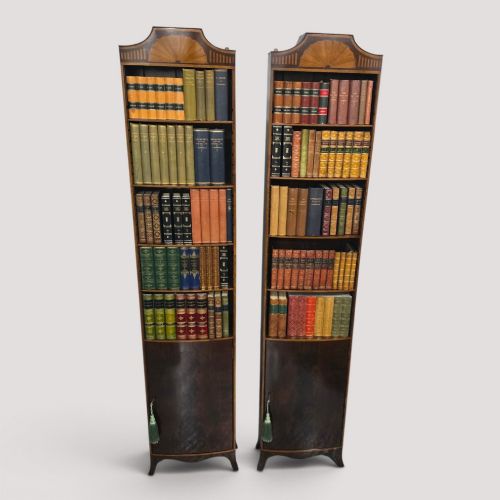
Buyers encounter formats ranging from low French low bookcases and slim adjustable shelves to waterfall designs finished with brass galleries or satinwood inlay. Each pairing provides a unified aesthetic for home libraries and living spaces.
Materials and construction methods
Cabinet makers utilised dense hardwoods such as mahogany, oak, and walnut to build sturdy carcases capable of supporting heavy volumes. Burr walnut veneers and satinwood inlay provided decorative surfaces on selected pieces.
Details such as brass galleries added functional and ornamental flourishes to the tops of open shelves. Workshops also incorporated bamboo and rattan for lighter structures in French Riviera and Anglo-Indian styles.
Pair of Bookshelf Units Retail Price Guide 2026
Typical asking prices for pair of bookshelf units among the pieces listed under this phrase on Sellingantiques today, from the lower quarter to the upper quarter. They describe what is for sale here now, not the wider market.
Listings feature woods including oak, burr walnut, mahogany, rosewood, satinwood, bamboo, and teak across the nineteenth and twentieth centuries.
Distinctions in quality
The refinement of the timber selection separates standard examples from exceptional ones, particularly where highly figured burr walnut or rich rosewood veneers are employed. Finely executed satinwood inlay and cast brass galleries indicate superior craftsmanship in a matched pair.
Proportion and utility also define the grade of the piece, seen in slim profiles and adjustable shelving systems that offer both elegance and practical adaptability for a library.
Heals
The Pair of Bookshelf Units Glossary
- Open bookcase
- A piece of furniture designed for storing books without doors enclosing the front shelves. This form allows immediate access to volumes and displays bindings clearly.
- Burr walnut
- Timber taken from the wart or burl of a walnut tree, yielding intricate swirling grain patterns. Cabinet makers prized this wood for decorative furniture faces.
- Waterfall bookcase
- A set of shelves where each tier steps back from the one below it, creating a cascading profile. This style gained popularity during the nineteenth and early twentieth centuries.
- Satinwood inlay
- Ornamental pieces of yellowish satinwood fitted flush into the surface of a darker wood to create contrasting patterns. It demonstrates high skill in decorative woodworking.
- Brass gallery
- A low metal railing fitted around the top edge of a cabinet or bookcase. It traditionally kept items from sliding off the surface.
Pair of Bookshelf Units: Frequently Asked Questions
What periods do these bookcases come from?
The pieces span the nineteenth century, the Regency era, and twentieth-century decades like 1920 and 1930.
Styles range from traditional Georgian and Victorian designs to Art Deco and Anglo-Indian interpretations.
Are matching pairs common?
Makers constructed many bookcases in balanced pairs to flank fireplaces, doorways, or windows in grand libraries.
Finding two matching units ensures symmetry in room decoration.
What woods were used?
Workshops utilised oak, mahogany, rosewood, walnut, and burr walnut for traditional British and European pieces.
Alternative materials like bamboo and rattan also appear in specific stylistic groupings.
How do waterfall shelves differ?
Waterfall bookcases feature graduated shelves that recede from bottom to top, creating a stepped silhouette.
This form provides a distinct decorative profile compared to standard straight-sided shelving units.