





Traditional Oak Book Display
A traditional oak book display brings sturdy timber and open shelving together to house a working library with character.
Traditional Oak Book Display
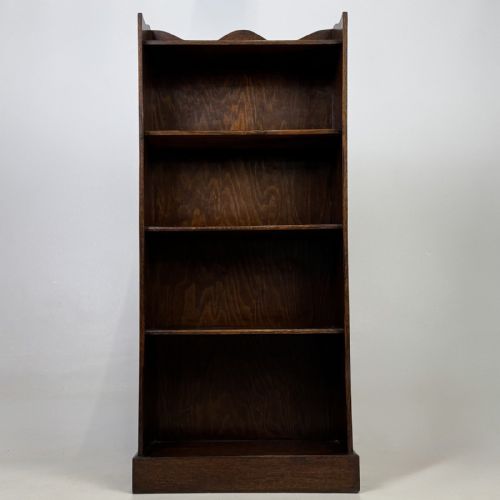
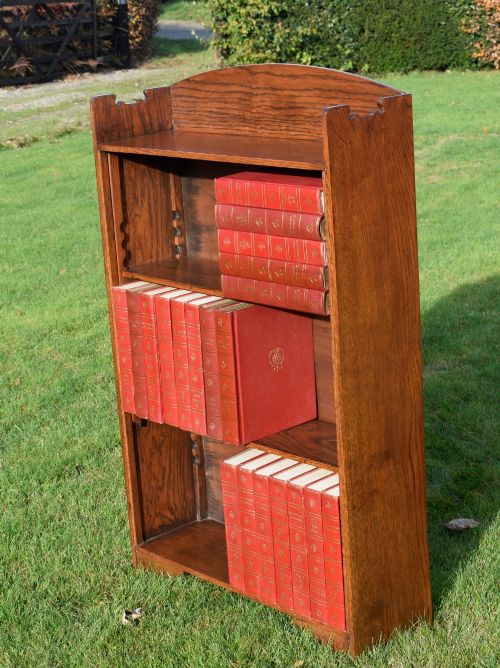
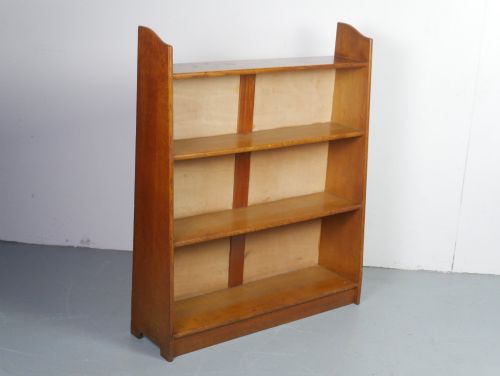
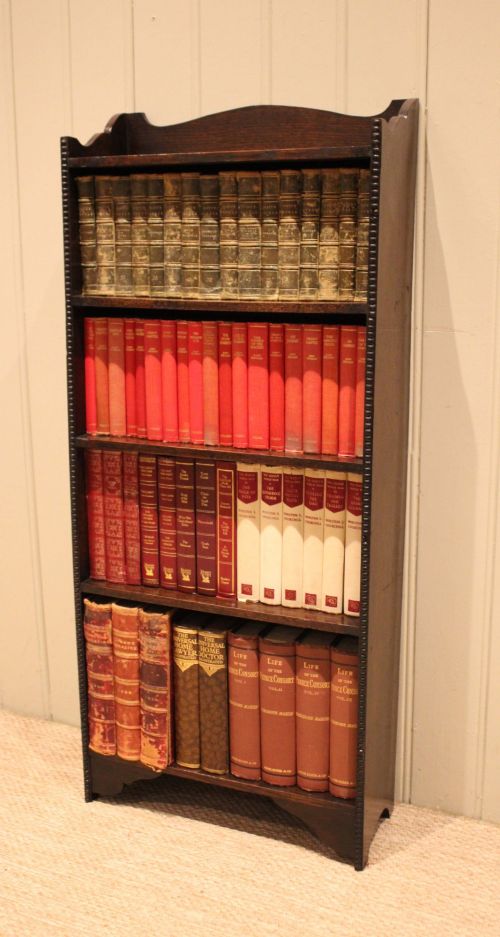
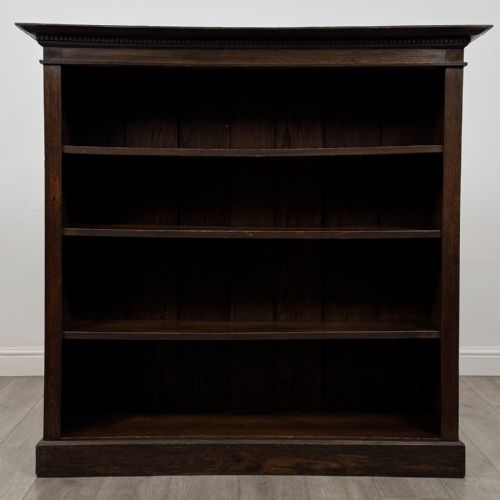
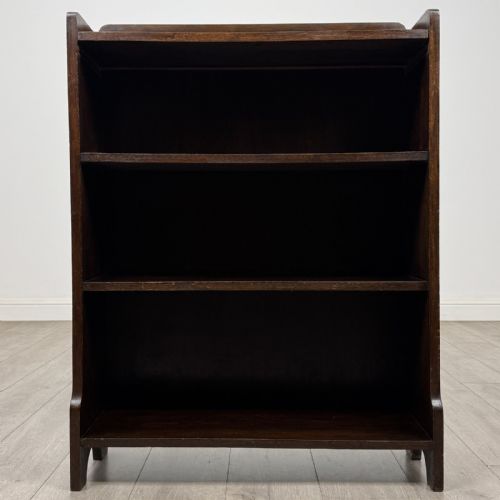
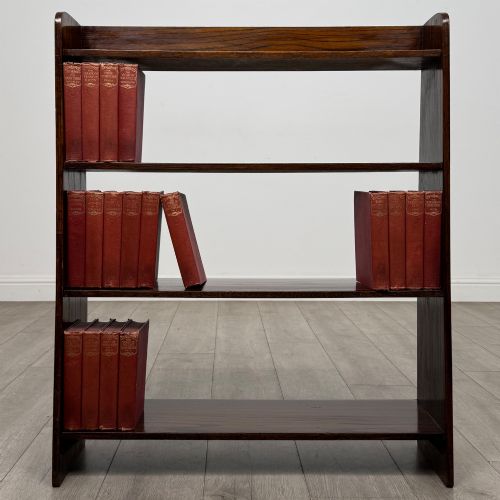
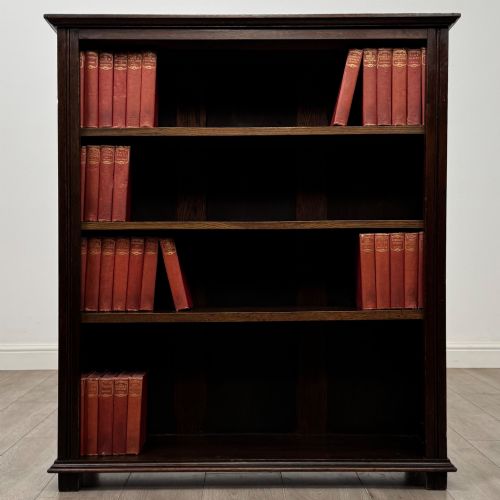
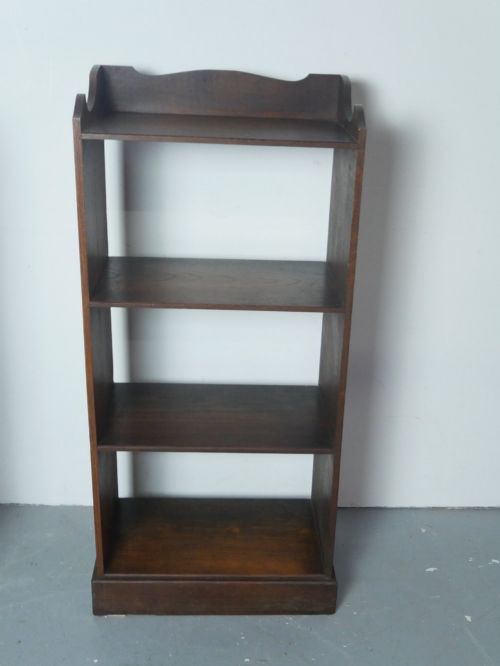
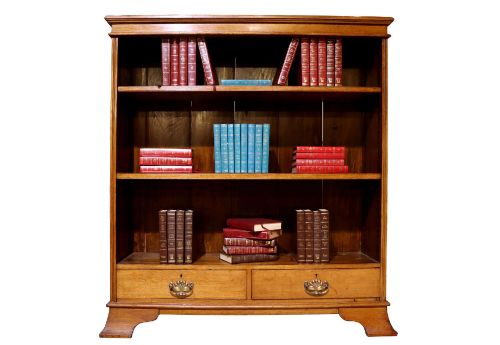
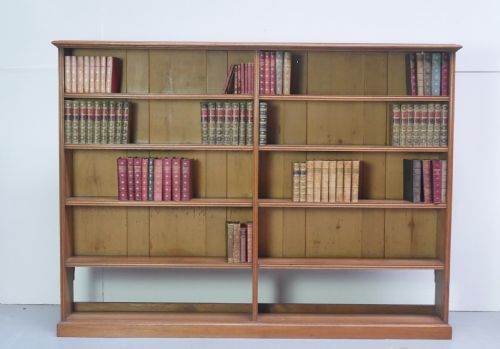
A traditional oak book display is typically encountered as an open bookcase or standing shelving unit, designed to keep volumes accessible while showing off the grain of the wood. The pieces found here span the Victorian, Edwardian, and 1920s periods, taking forms ranging from low, narrow compartments to tall, double-width structures.
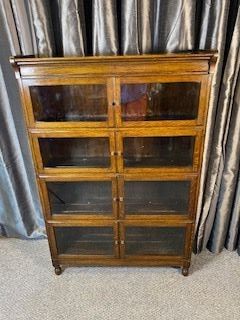
Many examples incorporate practical interior arrangements such as adjustable shelves, raised galleries, dentil cornices, or carved details along the frame. Alongside standard open formats, certain variations include glazed sections or closed doors at the base to balance display space with concealed storage.
The predominant material across these listings is oak, occasionally paired with brass fittings, glass panes, or iron hardware. These furnishings reflect traditional and Arts and Crafts design sensibilities, providing a functional centrepiece for a study or living room.
How they were made
Makers built these bookcases primarily using solid oak timbers, chosen for strength and pronounced grain patterns. Planks were joined using traditional woodworking techniques to support heavy rows of books without sagging.
Metal elements such as brass brackets, iron hinges, and painted or polished finishes were added to reinforce corners and protect edges. Glass panels appeared on partially glazed variants, framed securely within the wooden structure to protect contents from dust.
Traditional Oak Book Display Retail Price Guide 2026
Typical asking prices for traditional oak book display among the pieces listed under this phrase on Sellingantiques today, from the lower quarter to the upper quarter. They describe what is for sale here now, not the wider market.
Listings span several decades, featuring solid oak alongside brass and glass elements across Victorian and Edwardian periods.
What varies in quality
Quality in these bookcases depends on the selection of the timber and the crispness of any carved detailing, such as dentil cornices or raised galleries. Finely executed joints and the inclusion of working adjustable shelf mechanisms distinguish the better-constructed pieces.
The overall proportion and utility also define the range, from simple small proportions suitable for tight spaces to large double-width library bookcases designed for extensive collections.
Ercol
The Traditional Oak Book Display Glossary
- Open bookcase
- A piece of furniture designed for storing books with an unhindered front access rather than enclosed doors. This format keeps volumes immediately visible and reachable.
- Adjustable shelves
- Internal boards that can be moved to different heights using vertical slots or peg supports. This arrangement accommodates books of varying sizes within the same case.
- Raised gallery
- A low decorative railing or rim around the top surface of a piece. It prevents items placed on top from sliding off.
- Dentil cornice
- A moulding pattern featuring small, evenly spaced rectangular blocks that resemble teeth. It typically runs along the upper edge of a bookcase.
- Jacobean Revival
- A style drawing inspiration from early seventeenth-century design, often characterised by dark finishes and geometric carved motifs. Pieces in this tradition lean towards heavier ornamentation.
Traditional Oak Book Display: Frequently Asked Questions
What is a traditional oak book display?
A traditional oak book display is a piece of wooden furniture built with shelves to hold and exhibit books. Most examples take the form of open bookcases made during the Victorian and Edwardian eras.
These items range from small, narrow units to large double-width structures. They serve as functional storage that places the collection on open view.
How do I adjust the shelves?
Many period bookcases use internal wooden supports or metal pins fitted into vertical rows of holes. By shifting these supports, you can raise or lower individual shelves to fit taller volumes.
This system allows the interior layout to adapt as your book collection changes over time.
Where should I place a large oak bookcase?
Large oak bookcases require stable floor space against a solid wall, away from direct heat sources and strong sunlight. Placing them in a study, library, or living room helps protect the wood from sudden temperature shifts.
Ensure the wall is clear of dampness so the oak timber remains in good condition.
How do I tell Victorian bookcases apart from Edwardian ones?
Victorian oak bookcases often feature heavier carved details, darker patination, and more robust proportions. They reflect the ornate tastes of the nineteenth century.
Edwardian pieces tend to display lighter golden oak tones, cleaner lines, and simpler decorative elements such as raised galleries or dentil cornices.