







Traditional Nomad Weaving
Traditional nomad weaving brings the utilitarian artistry of tribal groups into your interior through hand-knotted wool rugs, bags, and trappings.
Traditional Nomad Weaving
When you search for traditional nomad weaving, you encounter portable textiles produced by pastoral tribes across Persia, Central Asia, and Anatolia. These pieces served practical domestic and nomadic functions rather than purely decorative ones, including floor coverings, storage bags, and animal trappings.
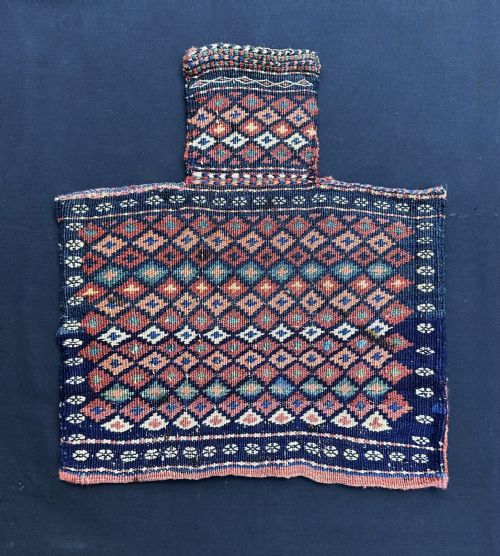
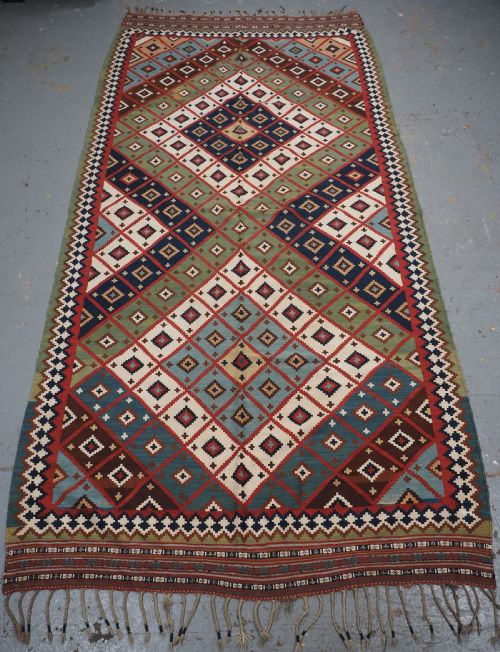
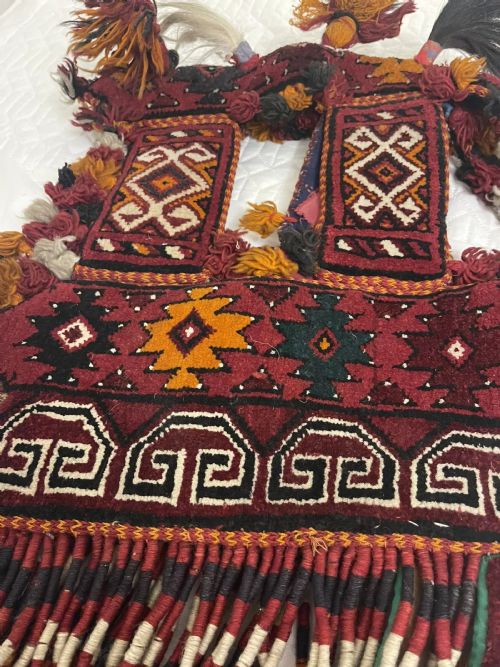
You are most likely to meet 19th-century examples on this page, specifically pieces from the 1880s, 1890s, and 1900s. The inventory includes Afshar salt bags and rugs, Tekke Turkmen torbas and chuval faces, Yomut trappings, Yuruk rugs, and Qashqai kilims.
The forms range from utilitarian salt bags woven in soumak work to wedding rugs, camel and horse headdresses, and flat-woven kilims. Each object reflects the specific tribal identity and weaving vocabulary of the group that produced it, utilising wool and cotton structures.
Materials and construction methods
The foundational material across these works is hand-spun wool, often paired with cotton for structural warps and wefts. Weavers utilised natural dyes to achieve deep palettes on dark or ivory grounds, working within traditional regional colour chemistries.
Construction techniques vary by object type, encompassing standard pile knots for rugs alongside flat-woven soumak work for durable storage bags like torbas and salt bags. These methods produced dense, resilient textiles capable of withstanding the rigours of a nomadic lifestyle.
Design execution relies on tribal motifs such as gul medallions, dragon and phoenix patterns, and banded structures. The execution was handled entirely by hand within tribal workshops and encampments without the aid of commercial machinery.
Traditional Nomad Weaving Retail Price Guide 2026
Typical asking prices for traditional nomad weaving among the pieces listed under this phrase on Sellingantiques today, from the lower quarter to the upper quarter. They describe what is for sale here now, not the wider market.
Some camels and horses once wore wedding headdresses featuring wool trappings woven by nomads to celebrate matrimonial processions.
Distinctions in quality
The upper tier of traditional nomad weaving is distinguished by the clarity of the design drawing and the integrity of the natural dyes. Superior examples display precise execution of intricate motifs like gul medallions or figurative elements such as the pillars of Persepolis.
Material preparation also dictates grade, with finely spun hand-spun wool yielding a tactile depth and lustre that inferior yarns lack. The tightness of the weave, particularly in soumak work and pile density, separates ordinary utility pieces from masterworks.
Preservation of the original structural boundaries, including kilim ends and side cords, maintains the integrity of the piece. Handling by specific tribes known for refined weaving standards, such as the Afshar or Qashqai, often signals superior technical execution.
The Traditional Nomad Weaving Glossary
- Torba
- A small Turkmen wall-hanging bag used for storage inside a yurt. These wide bags typically feature rows of guls and were often made as dowry items.
- Soumak
- A flat-weaving technique where coloured weft threads are wrapped over and under the warp threads in a herringbone pattern. This method creates a thicker, sturdier textile than standard kilim weaving.
- Gul
- An octagonal medallion motif frequently repeated across Turkmen carpets and trappings. Each tribal group utilised distinct gul variations to signal lineage and identity.
- Chuval
- A large storage bag produced by Turkmen nomads for bedding and household goods. They are usually wider than they are tall and display banded or güllü designs.
- Kilim
- A flat-woven textile produced without a pile by tightly interweaving warp and weft strands. These pieces are lightweight and function primarily as rugs or decorative covers.
Traditional Nomad Weaving: Frequently Asked Questions
How do I identify an Afshar rug?
Afshar rugs originate from the Kerman province in south Persia and are known for distinctive tribal motifs, boteh patterns, and structured geometric medallions. They frequently employ a deep colour palette with strong blues and reds.
Many utilitarian examples from this group take the form of salt bags or smaller format rugs woven with notable density.
What does soumak work mean?
Soumak work is a flat-weaving technique where weft threads wrap horizontally around the vertical warps to create a durable, textured surface. It provides extra strength compared to standard kilim weaves.
You will frequently find this technique utilised on nomadic storage bags designed to bear weight and resist daily wear.
How should I care for a nomad rug?
Keep nomad rugs out of direct, continuous sunlight to protect natural wool dyes from fading over time. Vacuum gently with suction only, avoiding beater bars that can damage hand-spun pile.
Rotate the rug periodically to ensure even wear across the surface in high-traffic areas of your home.